Planes of Motion: Sagittal, Frontal and Transverse Plane Explained (With Exercises)
The planes of motion are three imaginary flat surfaces that describe how the body moves. The sagittal plane splits the body into left and right, and holds forward and backward movements like squats. The frontal plane splits front from back, and holds side to side movements. The transverse plane splits top from bottom, and holds rotation.

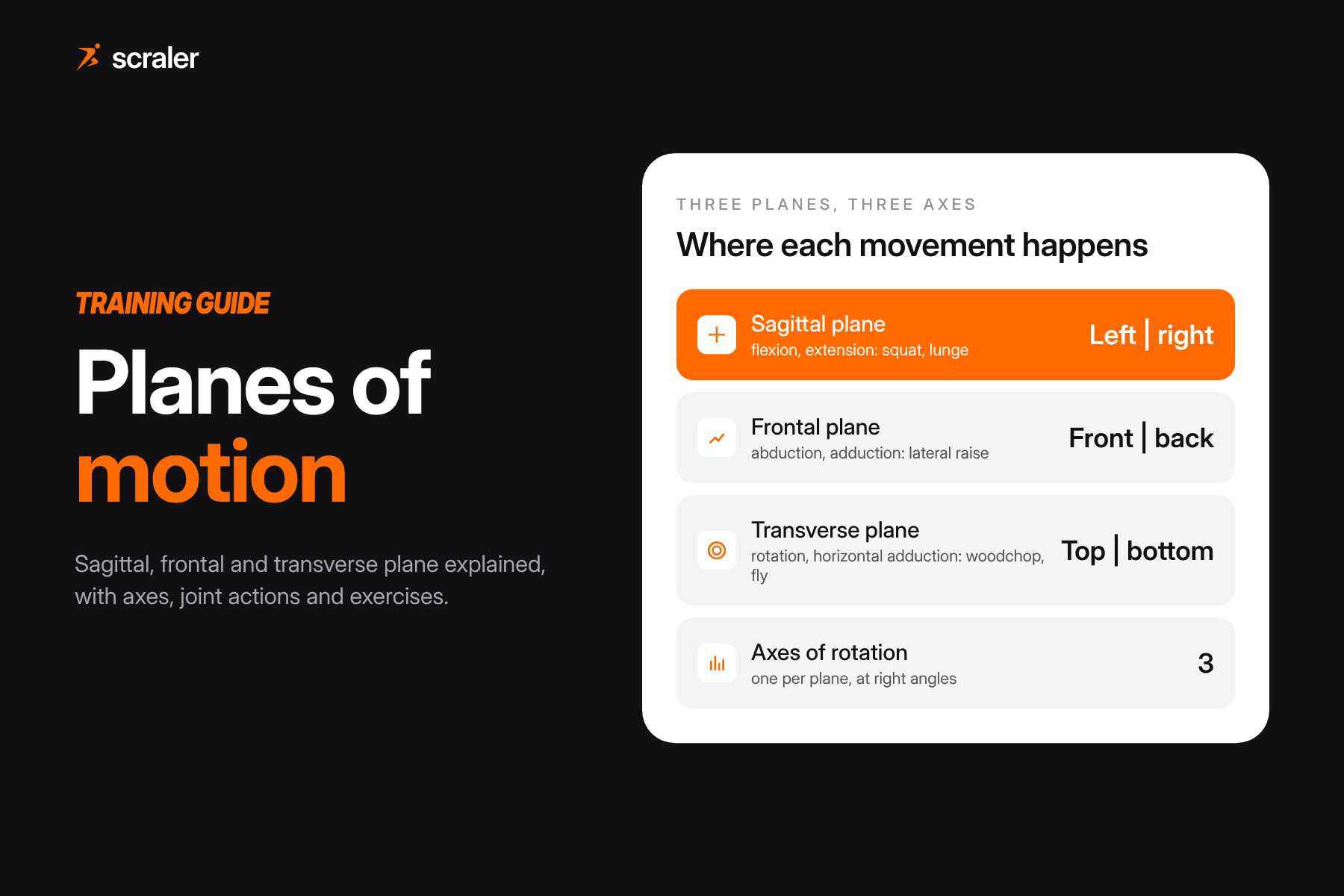
- Sagittal plane = left and right halves. Flexion and extension, such as squats, lunges, curls and running.
- Frontal plane = front and back halves. Abduction, adduction and side bending, such as lateral raises and lateral lunges.
- Transverse plane = top and bottom halves. Rotation, pronation and supination, and horizontal abduction and adduction, such as woodchops and chest flyes.
- Each plane turns around an axis at right angles to it: mediolateral for sagittal, anteroposterior for frontal, longitudinal for transverse.
- In our experience most gym programs are heavy on the sagittal plane. Strength gains are specific to the movements you train, so add frontal and transverse work on purpose.
What are the planes of motion?
Anatomists describe the body with three planes, each at right angles to the other two. OpenStax Anatomy and Physiology names them the sagittal, frontal (or coronal) and transverse planes. A plane is a slice through the body. A movement is said to happen "in" a plane when the moving body part travels parallel to that slice.
As with every movement term, the reference point is standard anatomical position: standing upright, feet forward, arms by the sides, palms facing forward. A biceps curl is a sagittal plane movement whether the client stands, sits or lies on an incline bench, because the elbow bends forward relative to the body.
- Sagittal plane
- Divides left from right
- Frontal plane
- Divides front from back
- Transverse plane
- Divides top from bottom
- Main action
- Flexion, abduction, rotation
What is the sagittal plane?
The sagittal plane is a vertical plane that divides the body into right and left sides. The one that runs exactly down the middle, splitting the body into equal halves, is the midsagittal or median plane. Movements in the sagittal plane go forward and backward.
- Joint actions: flexion and extension at the neck, spine, shoulder, elbow, wrist, hip and knee; dorsiflexion and plantar flexion at the ankle.
- Gym examples: squat, deadlift, lunge, step-up, biceps curl, triceps pushdown, front raise, calf raise, crunch.
- Everyday examples: walking, running, climbing stairs, jumping straight up.
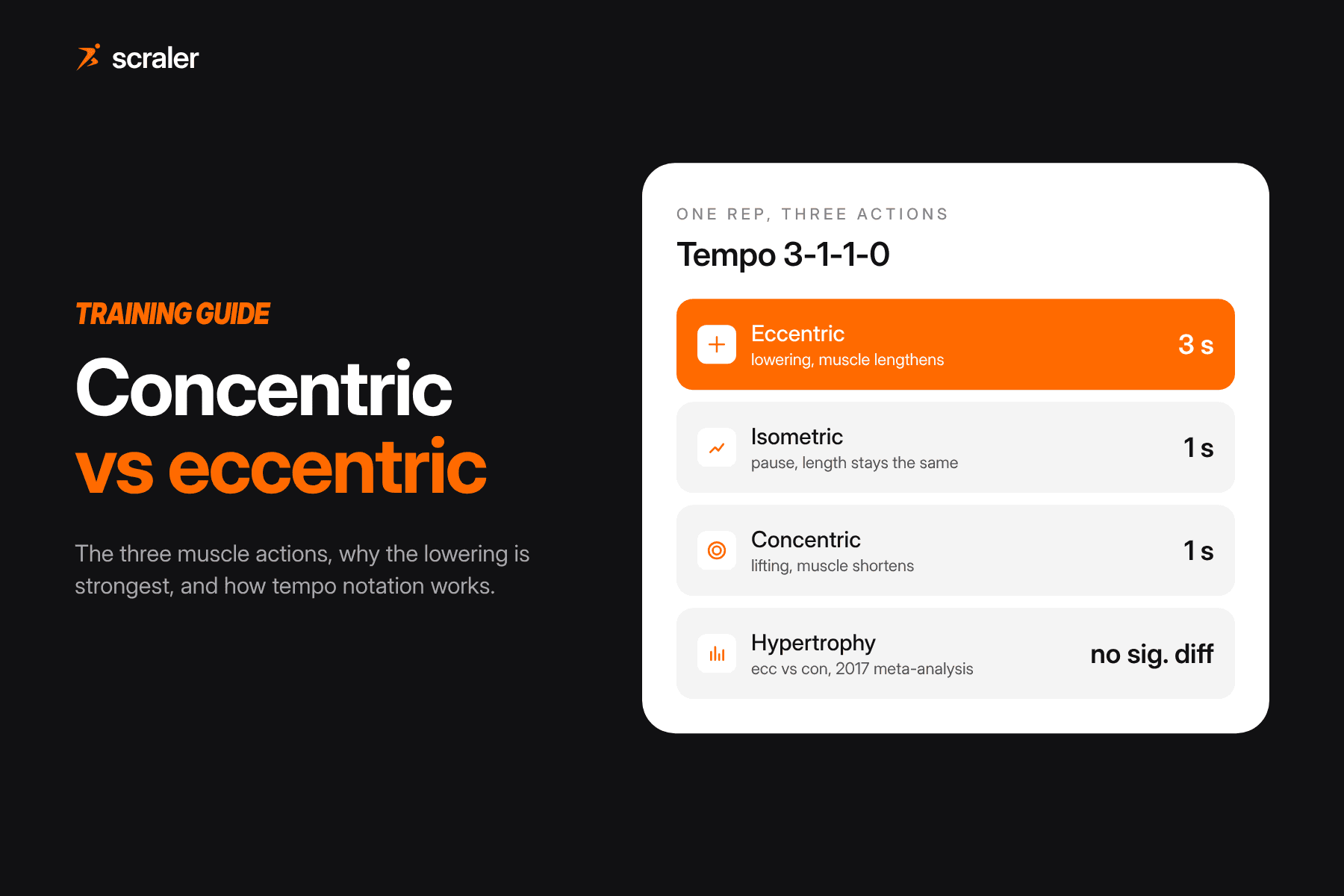
Most strength programs live here. The big lower body lifts and most arm work are sagittal. Each of those movements also has a lifting and a lowering phase; our guide to concentric vs eccentric muscle actions covers how to use both.
What is the frontal plane?
The frontal plane, also called the coronal plane, is a vertical plane that divides the body into a front (anterior) and back (posterior) part. Movements in the frontal plane go side to side.
- Joint actions: abduction and adduction at the shoulder and hip; side bending of the spine (lateral flexion); radial and ulnar deviation at the wrist; inversion and eversion of the foot.
- Gym examples: lateral raise, lateral lunge, banded lateral walk, hip abduction and adduction machines, wide grip pulldown, side bend.
- Everyday examples: side shuffles, stepping sideways off a curb, a tennis player moving along the baseline.
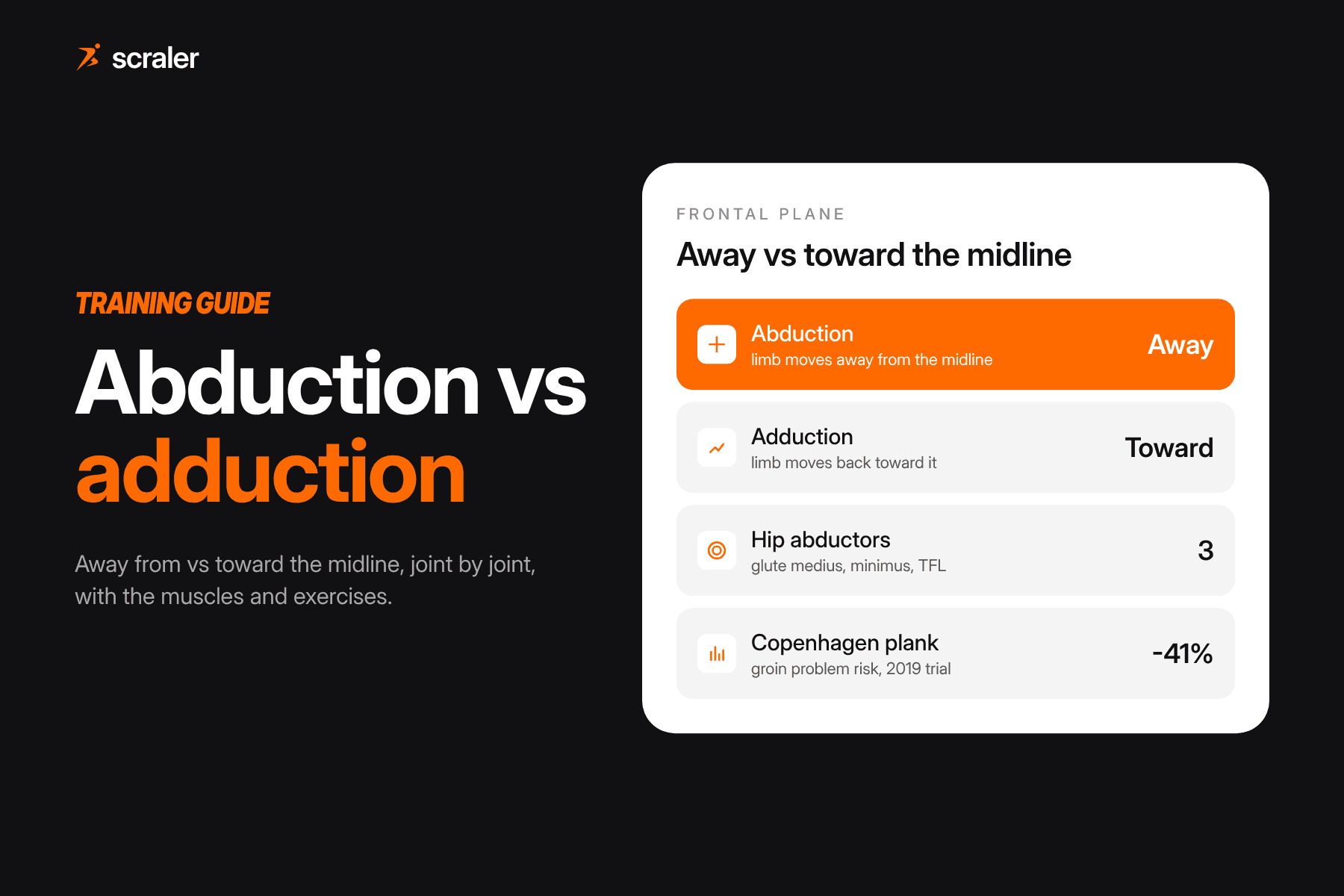
Abduction and adduction are the main frontal plane pair. We cover them joint by joint, with the muscles involved, in abduction vs adduction, so this post only places them in the bigger picture.
What is the transverse plane?
The transverse plane, also called the horizontal or axial plane, divides the body into an upper and a lower part. Movements in the transverse plane are rotations, the kind of motion you would see from directly above.
- Joint actions: internal and external rotation at the shoulder and hip; rotation of the spine and neck; pronation and supination of the forearm; horizontal abduction and adduction at the shoulder and hip.
- Gym examples: cable woodchop, medicine ball rotational throw, Russian twist, band external rotation, chest fly, reverse fly.
- Everyday examples: turning to look behind you, swinging a golf club or bat, throwing a ball, turning a door handle.
What are the axes of rotation for each plane?
Joints rotate. When the elbow bends, the forearm swings around a line running through the joint. That line is the axis of rotation, and it always sits at right angles to the plane the movement happens in.
- Axis of rotation
- Mediolateral (also called frontal or coronal axis)
- Axis runs
- Side to side
- Picture it as
- A rod through both hips; the thigh swings around it in a squat
- Axis of rotation
- Anteroposterior (also called sagittal axis)
- Axis runs
- Front to back
- Picture it as
- A rod through the shoulder from front to back; the arm swings around it in a lateral raise
- Axis of rotation
- Longitudinal (vertical axis)
- Axis runs
- Top to bottom
- Picture it as
- A rod from head to feet; the trunk turns around it in a woodchop
| Plane | Axis of rotation | Axis runs | Picture it as |
|---|---|---|---|
| Sagittal | Mediolateral (also called frontal or coronal axis) | Side to side | A rod through both hips; the thigh swings around it in a squat |
| Frontal | Anteroposterior (also called sagittal axis) | Front to back | A rod through the shoulder from front to back; the arm swings around it in a lateral raise |
| Transverse | Longitudinal (vertical axis) | Top to bottom | A rod from head to feet; the trunk turns around it in a woodchop |
Textbooks do not agree on axis names. The side to side axis is called the mediolateral, frontal, coronal or transverse axis, and the front to back axis the anteroposterior or sagittal axis. That trips people up, because the frontal axis is the one sagittal plane movements turn around. If a client or student is confused, describe the direction the axis runs instead of its name.
Which joint actions and exercises belong to each plane?
- Joint actions
- Flexion, extension, dorsiflexion, plantar flexion
- Exercise examples
- Squat, deadlift, lunge, biceps curl, triceps pushdown, front raise, calf raise
- Joint actions
- Abduction, adduction, lateral flexion of the spine, radial and ulnar deviation, inversion, eversion
- Exercise examples
- Lateral raise, lateral lunge, banded lateral walk, wide grip pulldown, side bend, Copenhagen plank
- Joint actions
- Internal and external rotation, spinal rotation, pronation, supination, horizontal abduction and adduction
- Exercise examples
- Cable woodchop, medicine ball rotational throw, band external rotation, chest fly, reverse fly
| Plane | Joint actions | Exercise examples |
|---|---|---|
| Sagittal | Flexion, extension, dorsiflexion, plantar flexion | Squat, deadlift, lunge, biceps curl, triceps pushdown, front raise, calf raise |
| Frontal | Abduction, adduction, lateral flexion of the spine, radial and ulnar deviation, inversion, eversion | Lateral raise, lateral lunge, banded lateral walk, wide grip pulldown, side bend, Copenhagen plank |
| Transverse | Internal and external rotation, spinal rotation, pronation, supination, horizontal abduction and adduction | Cable woodchop, medicine ball rotational throw, band external rotation, chest fly, reverse fly |
Two points keep the labels honest. First, a plane describes a joint action, not a whole exercise. In a bench press the shoulder moves mainly in the transverse plane (horizontal adduction) while the elbow extends. In a lunge the hip, knee and ankle all move in the sagittal plane, but the hip also has to stop the pelvis tipping sideways. Second, real movements are often diagonal and cross planes: a woodchop rotates the trunk and flexes the shoulders at the same time. Sources label the push-up and the fly differently for this reason. Classify an exercise by its main joint action and move on.
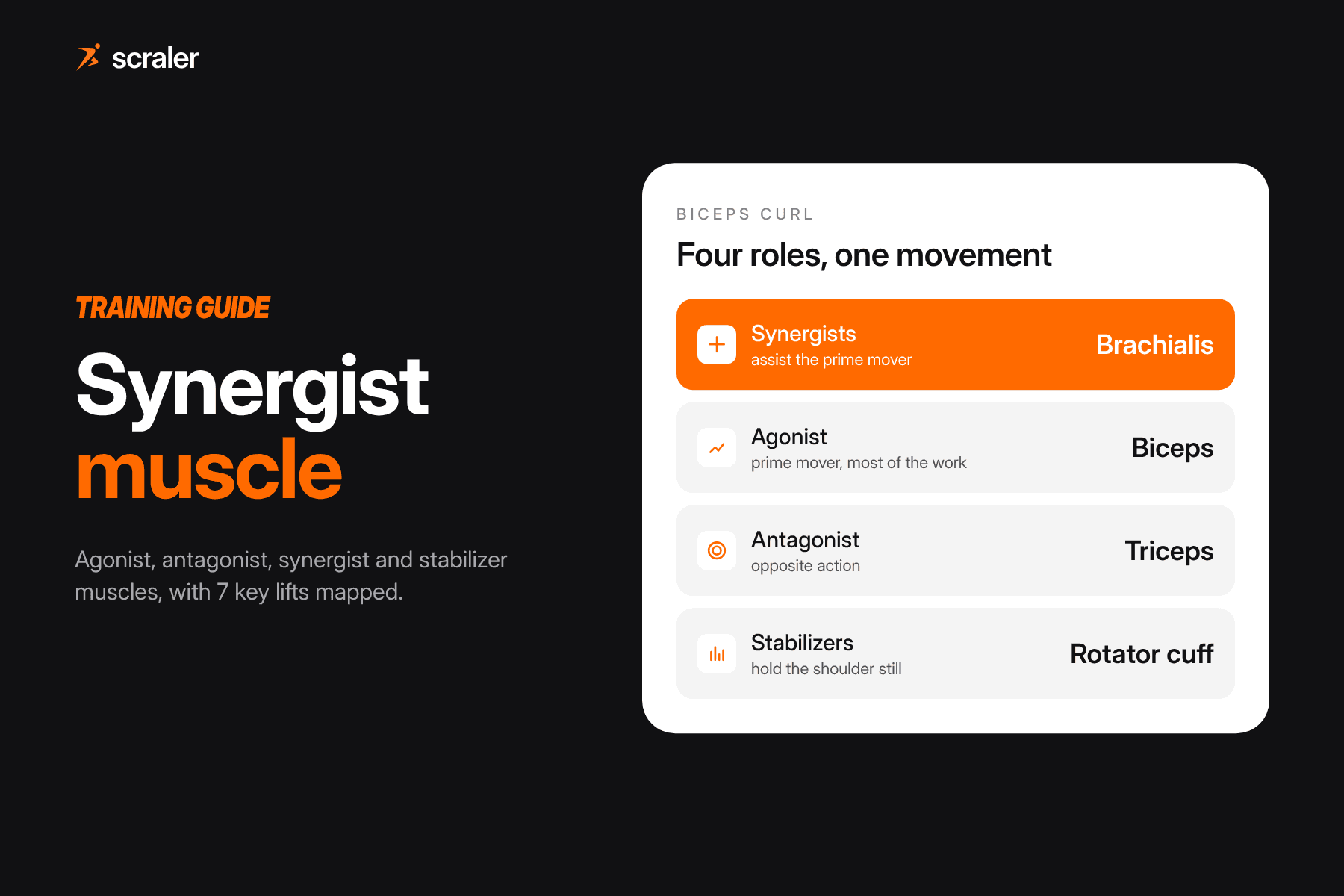
Movements also need more than one muscle per joint. If you want to know which muscles start, assist and brake a movement, see agonist, antagonist and synergist muscles.
Why should trainers program across all three planes?
The research case rests on specificity. A 1995 review by Morrissey, Harman and Johnson in Medicine and Science in Sports and Exercise found that training effects are greatest when the test uses the same type of exercise as the training, and that strength gains are greatest at the speeds and joint angles that were trained, with only some carryover. A client who only squats, deadlifts and curls gets strong at those movements. It does not follow that they get equally strong at moving sideways or rotating.
The rest is coaching practice, not proven fact. Daily life and most sports involve stepping sideways, turning and reaching across the body, and the major certifying bodies (NASM, ACE) teach trainers to include all three planes. We have not found good evidence that a multiplanar program on its own prevents injury in general gym clients, so we do not sell it to clients that way. We sell it as being strong and capable in the movements they actually do.
- Field and court sports: cutting, shuffling and rotating are part of the sport, so they belong in the program.
- Throwing, racket and golf athletes: transverse plane power is the main event. Rotational throws and cable rotations fit here.
- General clients: a little frontal and transverse work each week covers the gaps a squat, hinge, push and pull program leaves.
- Older adults: sideways stepping and turning are everyday tasks; practicing them under control is reasonable, alongside a proper balance assessment.
What does a multiplanar workout look like?
Here is a full body session we use with intermediate clients. It is our own coaching practice, not a tested protocol. Each main block pairs exercises from different planes, so the client gets all three without a longer workout.
- Exercise
- Leg swings forward and back, then side to side; open book thoracic rotation
- Plane
- All three
- Sets x reps (coaching practice)
- 1 x 10 each
- Exercise
- Goblet squat
- Plane
- Sagittal
- Sets x reps (coaching practice)
- 3 x 8 to 10
- Exercise
- Half-kneeling cable woodchop
- Plane
- Transverse
- Sets x reps (coaching practice)
- 3 x 10 per side
- Exercise
- Lateral lunge
- Plane
- Frontal
- Sets x reps (coaching practice)
- 3 x 8 per side
- Exercise
- One-arm dumbbell row
- Plane
- Sagittal (shoulder extension)
- Sets x reps (coaching practice)
- 3 x 10 per side
- Exercise
- Push-up or dumbbell bench press
- Plane
- Transverse (horizontal adduction)
- Sets x reps (coaching practice)
- 3 x 8 to 12
- Exercise
- Pallof press
- Plane
- Resists transverse rotation
- Sets x reps (coaching practice)
- 3 x 10 per side
- Exercise
- Side plank, then dumbbell lateral raise
- Plane
- Resists frontal bending, then frontal
- Sets x reps (coaching practice)
- 2 x 30 s per side, 2 x 15
| Block | Exercise | Plane | Sets x reps (coaching practice) |
|---|---|---|---|
| Warm-up | Leg swings forward and back, then side to side; open book thoracic rotation | All three | 1 x 10 each |
| A1 | Goblet squat | Sagittal | 3 x 8 to 10 |
| A2 | Half-kneeling cable woodchop | Transverse | 3 x 10 per side |
| B1 | Lateral lunge | Frontal | 3 x 8 per side |
| B2 | One-arm dumbbell row | Sagittal (shoulder extension) | 3 x 10 per side |
| C1 | Push-up or dumbbell bench press | Transverse (horizontal adduction) | 3 x 8 to 12 |
| C2 | Pallof press | Resists transverse rotation | 3 x 10 per side |
| Finisher | Side plank, then dumbbell lateral raise | Resists frontal bending, then frontal | 2 x 30 s per side, 2 x 15 |
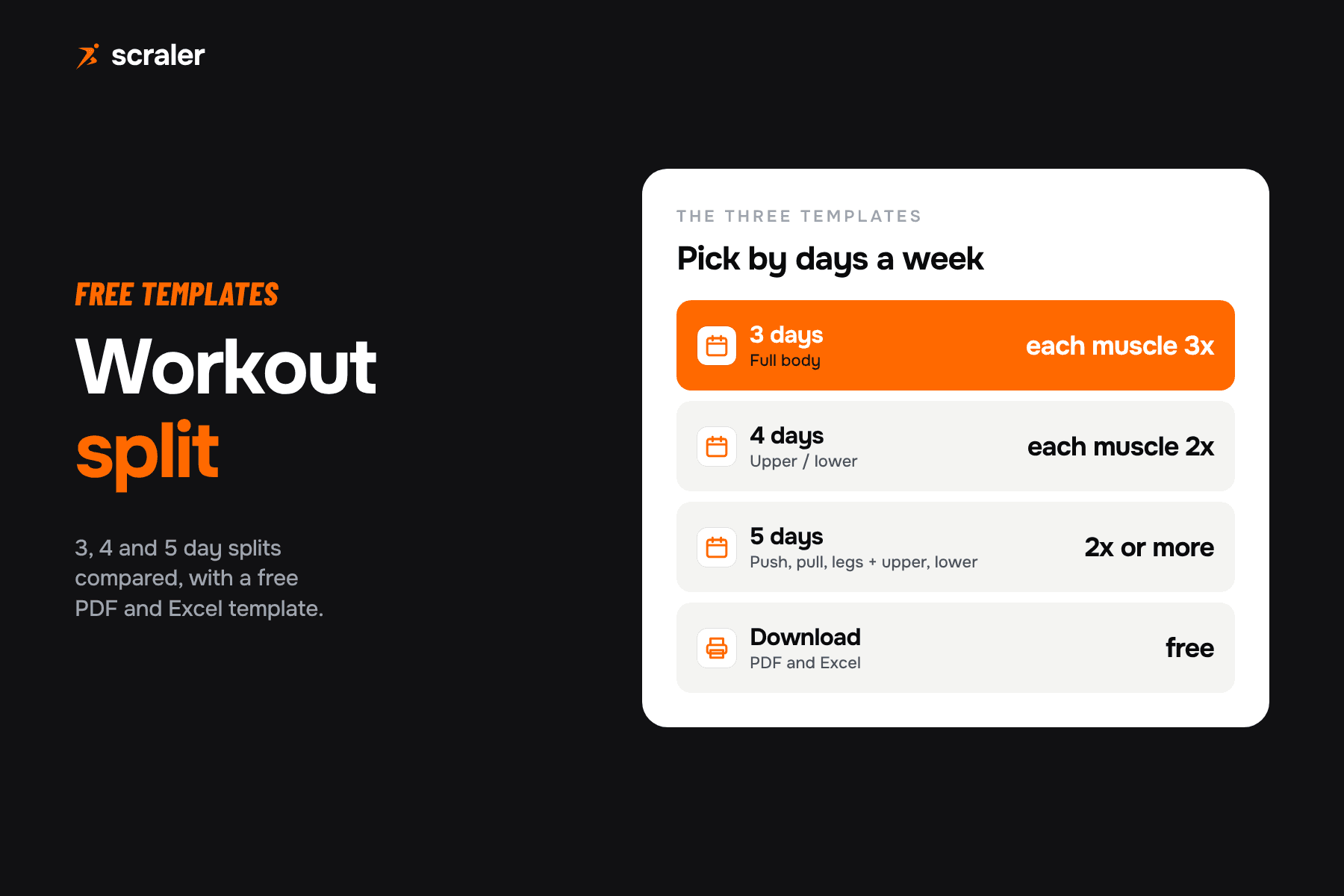
Progress it like any other program: add reps, then load, as in a progressive overload scheme. For a beginner, swap the lateral lunge for a banded lateral walk and the woodchop for a lighter band version. In a workout split, spread the planes across the week instead: one frontal and one transverse exercise on each lower and upper body day.
How do you check a program for missing planes?
This is a quick audit we run on any program, ours included:
- 1.Label the main joint action of every exercise in the week as sagittal, frontal or transverse.
- 2.Count per plane. If every exercise is sagittal, add at least one frontal and one transverse exercise per week, for example a lateral lunge and a cable woodchop.
- 3.Check both directions. Train abduction and adduction, internal and external rotation, and rotation to both sides.
- 4.Include stability work. Add an anti-rotation or anti-lateral flexion drill, such as a Pallof press or side plank.
- 5.Match the client. A golfer needs more transverse work than a powerlifter; a fitness assessment with a single-leg squat and a rotation screen tells you where to start.
How do you program planes of motion in Scraler?
Scraler does not have a plane of motion tag or filter in the exercise library, so you plan this in the workout builder itself. You can name sections of a workout, for example "Sagittal strength" or "Rotation and anti-rotation", and pair exercises from different planes into supersets or circuits, like the A1 and A2 blocks above. Each exercise has a notes field for cues such as "rotate from the trunk, hips face forward" and can carry an RPE or RIR target. Exercises can carry a demo video, and if you coach a variation the library does not have, such as a half-kneeling woodchop, add it as a custom exercise with your own video.
Group exercises into named sections and supersets, add coaching notes and videos, and send the plan to every client.
See workout planningFrequently asked questions
- What are the three planes of motion?
- The sagittal plane divides the body into left and right and holds forward and backward movements. The frontal (coronal) plane divides it into front and back and holds side to side movements. The transverse plane divides it into top and bottom and holds rotation.
- What is the sagittal plane?
- The sagittal plane is a vertical plane that divides the body into right and left sides. Flexion and extension happen in it, so squats, lunges, deadlifts, biceps curls, calf raises, walking and running are all sagittal plane movements.
- What movements happen in the frontal plane?
- Side to side movements: abduction and adduction at the shoulder and hip, side bending of the spine, radial and ulnar deviation at the wrist, and inversion and eversion of the foot. Examples are lateral raises, lateral lunges and banded lateral walks.
- What movements happen in the transverse plane?
- Rotations: internal and external rotation at the shoulder and hip, spinal rotation, forearm pronation and supination, and horizontal abduction and adduction. Examples are cable woodchops, rotational medicine ball throws, chest flyes and reverse flyes.
- What are the axes of rotation?
- Each plane turns around an axis at right angles to it. Sagittal plane movements turn around a mediolateral axis (side to side), frontal plane movements around an anteroposterior axis (front to back), and transverse plane movements around a longitudinal axis (top to bottom).
- Is a squat a sagittal plane exercise?
- Yes. The hips, knees and ankles flex and extend, which is sagittal plane movement. The hip muscles still work to keep the knees and pelvis from moving sideways, but the main joint actions are sagittal.
- Is a push-up sagittal or transverse?
- Sources disagree. At the shoulder, a push-up is mainly horizontal adduction, a transverse plane action, while the elbows extend. Many fitness sources still list it as sagittal. Classify it by the joint action you care about.
- Why train in all three planes of motion?
- Strength gains are specific to the movements, speeds and joint angles you train, so a program built only on sagittal lifts leaves sideways and rotational movement untrained. Adding frontal and transverse exercises is standard coaching practice, especially for sports with cutting, throwing or swinging.
Keep reading