Personal Training Session Ideas: 12 PT Session Templates (30 to 60 Minutes)
Good personal training session ideas share one structure: warm-up, main block, finisher and cooldown. In a 30 minute personal training session that is about 5, 18, 4 and 3 minutes. In 60 minutes, about 10, 35, 10 and 5. Below are 12 PT session templates by goal, each with exercises, sets, reps and rest.

- Every PT session runs in four parts: warm-up, main block, finisher, cooldown. Only the minutes change between a 30 and a 60 minute session.
- In 30 minutes, cut exercises, not the warm-up. Two or three main lifts done well beat six rushed ones.
- Use the 12 templates as starting points: strength, fat loss conditioning, a beginner first session, older adults, athletes, mobility, partners and small groups.
- Keep sessions varied by rotating accessories and finishers, and keep the main lifts fixed for 4 to 6 weeks so progress stays measurable.
This guide is for personal trainers who plan sessions for clients every week. It gives you a time structure for 30 and 60 minute sessions, 12 ready templates you can copy into your program, and a simple rule for keeping sessions fresh without losing progression. The templates are our own coaching programs, so adjust loads, exercises and rest to the client in front of you.
How do you structure a PT session?
A PT session has four parts. The warm-up raises body temperature and rehearses the movements of the day. The main block is the reason the client booked: the strength, conditioning or skill work you progress week to week. The finisher is a short, hard piece that ends on a high. The cooldown brings the heart rate down and gives you time to talk about the next session.
- 1Warm-up
General movement, then mobility and ramp-up sets for the first lift
- 2Main block
Two to three key exercises in 30 minutes, four to six in 60, the part you progress and log
- 3Finisher
A short circuit, interval or carry, 4 to 10 minutes
- 4Cooldown
Easy movement, stretching and a quick check-in
The warm-up is worth protecting. A 2010 meta-analysis of 32 high-quality studies found that warming up improved performance in 79% of the criteria examined, for warm-ups that went beyond stretching alone. The authors asked for more randomized trials, so treat it as good support rather than proof. For the ramp-up sets on the first heavy lift, the warm-up set calculator works out the weights for you.
How do you structure a 30 minute personal training session?
A 30 minute personal training session has no room for long transitions. Set up the equipment before the client arrives, pick two or three main exercises, and pair them as supersets so you rest one muscle while the other works. Do not cut the warm-up to save time. Cut an exercise instead.
- 30 minute session
- 5 min
- 60 minute session
- 10 min
- What happens
- General movement, mobility for the day's lifts, 2 to 3 ramp-up sets
- 30 minute session
- 18 min
- 60 minute session
- 35 min
- What happens
- 2 to 3 exercises in 30 minutes, 4 to 6 in 60 minutes
- 30 minute session
- 4 min
- 60 minute session
- 10 min
- What happens
- Circuit, intervals or carries
- 30 minute session
- 3 min
- 60 minute session
- 5 min
- What happens
- Easy movement, stretching, notes and next session
| Part | 30 minute session | 60 minute session | What happens |
|---|---|---|---|
| Warm-up | 5 min | 10 min | General movement, mobility for the day's lifts, 2 to 3 ramp-up sets |
| Main block | 18 min | 35 min | 2 to 3 exercises in 30 minutes, 4 to 6 in 60 minutes |
| Finisher | 4 min | 10 min | Circuit, intervals or carries |
| Cooldown | 3 min | 5 min | Easy movement, stretching, notes and next session |
The minutes are our own split, not a guideline. If a client is new or the main lift is heavy, borrow two minutes from the finisher for the warm-up. If you sell 30 minute sessions, price and package them on purpose: our guide to personal training packages shows how to set session length, frequency and price together.
How do you structure a 60 minute PT session?
A 60 minute session has time for a proper warm-up, a heavy compound lift with full rest, accessory work and a real conditioning piece. The risk is the opposite of the 30 minute session: drift. Write the session down with sets, reps and rest so the hour has a shape, and finish on time so the cooldown and check-in actually happen.
A useful order for the main block: the most technical or heaviest lift first, while the client is fresh, then a second compound lift, then accessories in supersets. Single-joint work and core go last.
What are good personal training session ideas by goal?
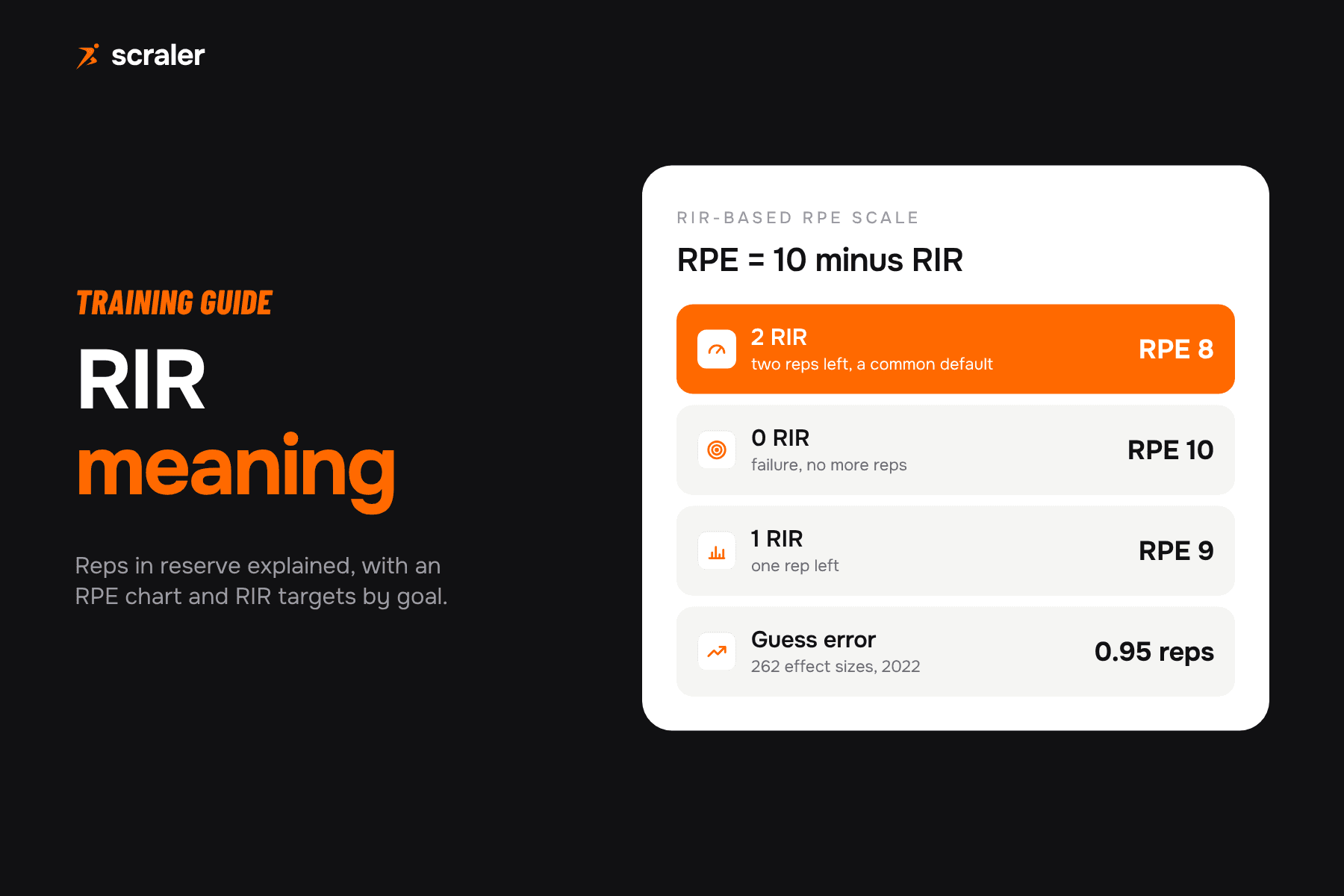
The 12 templates below cover the goals most trainers see. Warm-up and cooldown follow the structure above unless the template says otherwise. RPE means rating of perceived exertion on a 1 to 10 scale, where RPE 8 leaves about two reps in reserve. If you are new to that, read what RIR means first, or convert ratings with the RPE calculator.
1. Full body strength (30 minutes)
- Exercise
- Bike or row, then goblet squat and push-up practice
- Sets x reps
- 3 min + 2 x 5
- Rest or effort
- Easy
- Exercise
- Trap bar deadlift
- Sets x reps
- 4 x 5
- Rest or effort
- RPE 7 to 8, 90 s after A2
- Exercise
- Dumbbell bench press
- Sets x reps
- 4 x 8
- Rest or effort
- RPE 8
- Exercise
- Split squat
- Sets x reps
- 3 x 8 per leg
- Rest or effort
- 60 s after B2
- Exercise
- Chest-supported row
- Sets x reps
- 3 x 10
- Rest or effort
- RPE 8
- Exercise
- Farmer carry
- Sets x reps
- 4 x 30 m
- Rest or effort
- 30 s rest
- Exercise
- Hip flexor and chest stretch
- Sets x reps
- 1 x 30 s each side
- Rest or effort
- Easy
| Block | Exercise | Sets x reps | Rest or effort |
|---|---|---|---|
| Warm-up (5 min) | Bike or row, then goblet squat and push-up practice | 3 min + 2 x 5 | Easy |
| Main A1 | Trap bar deadlift | 4 x 5 | RPE 7 to 8, 90 s after A2 |
| Main A2 | Dumbbell bench press | 4 x 8 | RPE 8 |
| Main B1 | Split squat | 3 x 8 per leg | 60 s after B2 |
| Main B2 | Chest-supported row | 3 x 10 | RPE 8 |
| Finisher (4 min) | Farmer carry | 4 x 30 m | 30 s rest |
| Cooldown (3 min) | Hip flexor and chest stretch | 1 x 30 s each side | Easy |
2. Lower body strength (60 minutes)
- Exercise
- Bike, hip and ankle mobility, empty bar squats, ramp-up sets
- Sets x reps
- 5 min + 3 ramp sets
- Rest or effort
- Easy to moderate
- Exercise
- Back squat
- Sets x reps
- 5 x 5
- Rest or effort
- RPE 7 to 8, 2 to 3 min
- Exercise
- Romanian deadlift
- Sets x reps
- 4 x 8
- Rest or effort
- RPE 8, 2 min
- Exercise
- Walking lunge
- Sets x reps
- 3 x 10 per leg
- Rest or effort
- 60 s after C2
- Exercise
- Hamstring curl
- Sets x reps
- 3 x 12
- Rest or effort
- RPE 8
- Exercise
- Standing calf raise
- Sets x reps
- 3 x 15
- Rest or effort
- 45 s
- Exercise
- Sled push or bike sprints
- Sets x reps
- 6 x 20 s on, 60 s off
- Rest or effort
- Hard
- Exercise
- Easy walk, quad and glute stretch
- Sets x reps
- 30 s holds
- Rest or effort
- Easy
| Block | Exercise | Sets x reps | Rest or effort |
|---|---|---|---|
| Warm-up (10 min) | Bike, hip and ankle mobility, empty bar squats, ramp-up sets | 5 min + 3 ramp sets | Easy to moderate |
| Main A | Back squat | 5 x 5 | RPE 7 to 8, 2 to 3 min |
| Main B | Romanian deadlift | 4 x 8 | RPE 8, 2 min |
| Main C1 | Walking lunge | 3 x 10 per leg | 60 s after C2 |
| Main C2 | Hamstring curl | 3 x 12 | RPE 8 |
| Main D | Standing calf raise | 3 x 15 | 45 s |
| Finisher (8 min) | Sled push or bike sprints | 6 x 20 s on, 60 s off | Hard |
| Cooldown (5 min) | Easy walk, quad and glute stretch | 30 s holds | Easy |
3. Upper body strength (60 minutes)
- Exercise
- Row, band pull-aparts, scapular push-ups, ramp-up sets
- Sets x reps
- 4 min + 2 x 15
- Rest or effort
- Easy
- Exercise
- Barbell bench press
- Sets x reps
- 5 x 5
- Rest or effort
- RPE 7 to 8, 2 to 3 min
- Exercise
- Weighted or assisted pull-up
- Sets x reps
- 4 x 6 to 8
- Rest or effort
- RPE 8, 2 min
- Exercise
- Seated dumbbell shoulder press
- Sets x reps
- 3 x 10
- Rest or effort
- 60 s after C2
- Exercise
- Single-arm cable row
- Sets x reps
- 3 x 12 per side
- Rest or effort
- RPE 8
- Exercise
- Cable triceps pressdown
- Sets x reps
- 3 x 12
- Rest or effort
- 45 s after D2
- Exercise
- Dumbbell curl
- Sets x reps
- 3 x 12
- Rest or effort
- RPE 8
- Exercise
- Push-up and inverted row ladder
- Sets x reps
- AMRAP 8 min
- Rest or effort
- Moderate
- Exercise
- Chest, lat and forearm stretch
- Sets x reps
- 30 s holds
- Rest or effort
- Easy
| Block | Exercise | Sets x reps | Rest or effort |
|---|---|---|---|
| Warm-up (10 min) | Row, band pull-aparts, scapular push-ups, ramp-up sets | 4 min + 2 x 15 | Easy |
| Main A | Barbell bench press | 5 x 5 | RPE 7 to 8, 2 to 3 min |
| Main B | Weighted or assisted pull-up | 4 x 6 to 8 | RPE 8, 2 min |
| Main C1 | Seated dumbbell shoulder press | 3 x 10 | 60 s after C2 |
| Main C2 | Single-arm cable row | 3 x 12 per side | RPE 8 |
| Main D1 | Cable triceps pressdown | 3 x 12 | 45 s after D2 |
| Main D2 | Dumbbell curl | 3 x 12 | RPE 8 |
| Finisher (8 min) | Push-up and inverted row ladder | AMRAP 8 min | Moderate |
| Cooldown (5 min) | Chest, lat and forearm stretch | 30 s holds | Easy |
4. Fat loss conditioning circuit (30 minutes)
Conditioning for fat loss works best when it keeps strength in the session. Use loaded compound moves in a timed circuit rather than an hour of random cardio. For a longer equipment-light version, see our full body circuit workout.
- Exercise
- Jumping jacks, inchworms, bodyweight squats
- Work:rest
- 2 min + 2 x 8
- Rounds
- 1
- Exercise
- Goblet squat
- Work:rest
- 40 s : 20 s
- Rounds
- 4 rounds
- Exercise
- Push-up (incline if needed)
- Work:rest
- 40 s : 20 s
- Rounds
- 4 rounds
- Exercise
- Kettlebell swing
- Work:rest
- 40 s : 20 s
- Rounds
- 4 rounds
- Exercise
- Dumbbell row
- Work:rest
- 40 s : 20 s
- Rounds
- 4 rounds
- Exercise
- Bike or rower
- Work:rest
- 40 s : 20 s, then 30 s rest
- Rounds
- 4 rounds
- Exercise
- Easy walk, breathing, hamstring stretch
- Work:rest
- 3 min
- Rounds
- 1
| Block | Exercise | Work:rest | Rounds |
|---|---|---|---|
| Warm-up (5 min) | Jumping jacks, inchworms, bodyweight squats | 2 min + 2 x 8 | 1 |
| Circuit | Goblet squat | 40 s : 20 s | 4 rounds |
| Circuit | Push-up (incline if needed) | 40 s : 20 s | 4 rounds |
| Circuit | Kettlebell swing | 40 s : 20 s | 4 rounds |
| Circuit | Dumbbell row | 40 s : 20 s | 4 rounds |
| Circuit | Bike or rower | 40 s : 20 s, then 30 s rest | 4 rounds |
| Cooldown (3 min) | Easy walk, breathing, hamstring stretch | 3 min | 1 |
5. Interval and EMOM session (30 minutes)
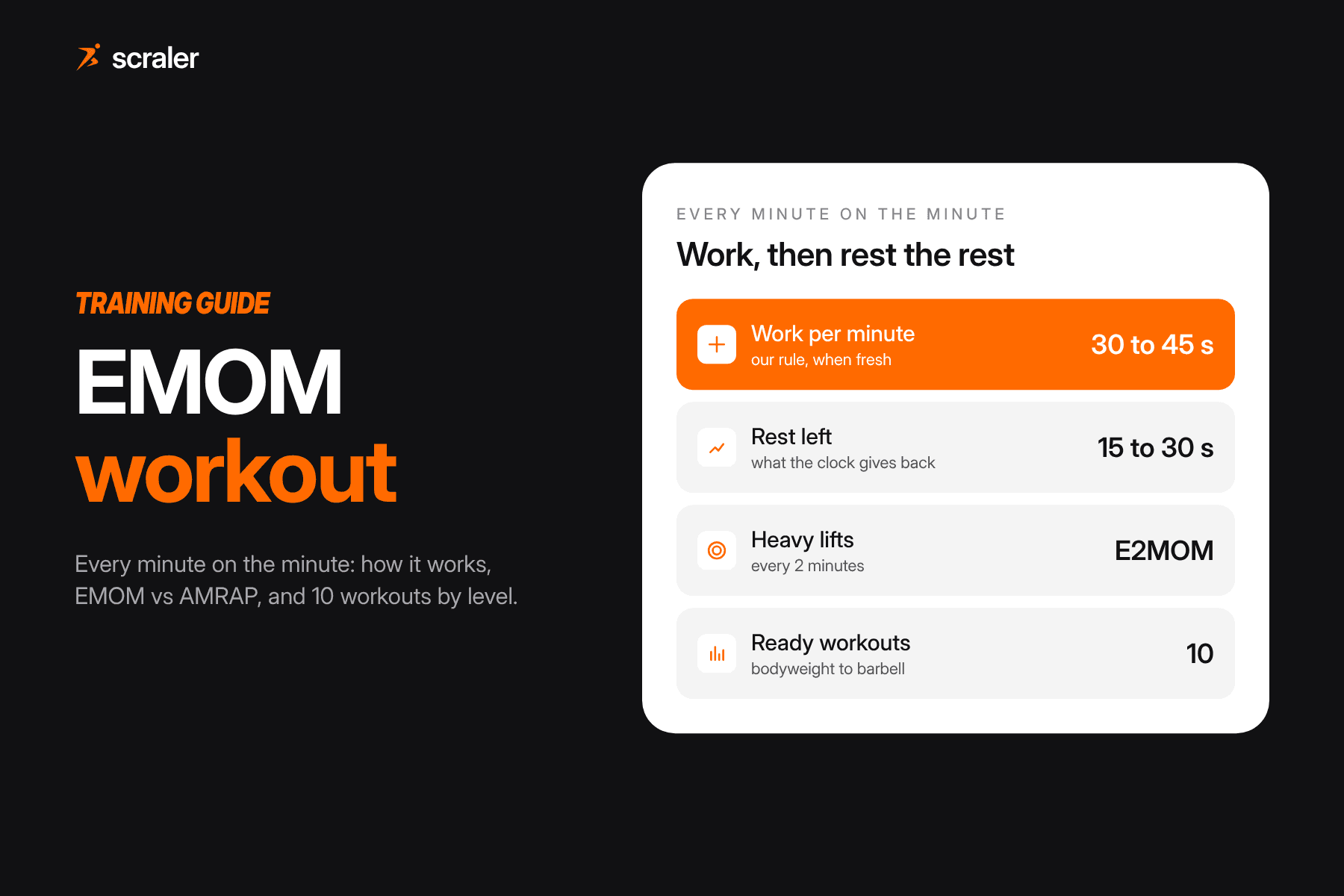
EMOM means every minute on the minute: the client starts a set at the top of each minute and rests for what is left of it. Our EMOM workout guide explains how to pick reps so each minute still leaves rest, with 10 more EMOMs by goal.
- Exercise
- Rower, leg swings, light kettlebell deadlifts
- Prescription
- 3 min + 2 x 10
- Notes
- Easy
- Exercise
- Kettlebell swing
- Prescription
- 12 reps
- Notes
- Rest the rest of the minute
- Exercise
- Burpee or step-back burpee
- Prescription
- 8 reps
- Notes
- Scale to keep 20 s rest
- Exercise
- Dumbbell thruster
- Prescription
- 10 reps
- Notes
- Moderate load
- Exercise
- Rest or easy plank
- Prescription
- 30 s
- Notes
- Repeat 4 times
- Exercise
- Assault bike
- Prescription
- 5 x 15 s hard, 45 s easy
- Notes
- Hard
- Exercise
- Walk and stretch
- Prescription
- 4 min
- Notes
- Easy
| Block | Exercise | Prescription | Notes |
|---|---|---|---|
| Warm-up (5 min) | Rower, leg swings, light kettlebell deadlifts | 3 min + 2 x 10 | Easy |
| EMOM 16 min, minute 1 | Kettlebell swing | 12 reps | Rest the rest of the minute |
| EMOM minute 2 | Burpee or step-back burpee | 8 reps | Scale to keep 20 s rest |
| EMOM minute 3 | Dumbbell thruster | 10 reps | Moderate load |
| EMOM minute 4 | Rest or easy plank | 30 s | Repeat 4 times |
| Finisher (5 min) | Assault bike | 5 x 15 s hard, 45 s easy | Hard |
| Cooldown (4 min) | Walk and stretch | 4 min | Easy |
6. Beginner first session (60 minutes)
The first session is half assessment, half training. Run the screening and baseline tests first, using our fitness assessment form, then teach a handful of patterns at an easy effort. Leave the client feeling capable, not wrecked. The 2009 ACSM progression stand puts novices at 8 to 12RM loads, so start lighter than that while you learn how they move.
- What you do
- Goals, health screening, resting measures
- Sets x reps
- n/a
- Effort
- n/a
- What you do
- Walk or bike, basic mobility
- Sets x reps
- 5 min + 1 round
- Effort
- Easy
- What you do
- Bodyweight squat, hinge, lunge, push-up, plank
- Sets x reps
- 1 to 2 x 5 each
- Effort
- Observe only
- What you do
- Goblet squat, dumbbell RDL, incline push-up, cable row
- Sets x reps
- 2 x 10 each
- Effort
- RPE 5 to 6
- What you do
- Stretching and a plan for the first month
- Sets x reps
- n/a
- Effort
- Easy
| Block | What you do | Sets x reps | Effort |
|---|---|---|---|
| Intake (15 min) | Goals, health screening, resting measures | n/a | n/a |
| Warm-up (8 min) | Walk or bike, basic mobility | 5 min + 1 round | Easy |
| Movement screen (10 min) | Bodyweight squat, hinge, lunge, push-up, plank | 1 to 2 x 5 each | Observe only |
| Main (20 min) | Goblet squat, dumbbell RDL, incline push-up, cable row | 2 x 10 each | RPE 5 to 6 |
| Cooldown (7 min) | Stretching and a plan for the first month | n/a | Easy |
7. Beginner 30 minute session (weeks 2 to 6)
- Exercise
- Bike, bodyweight squats, band pull-aparts
- Sets x reps
- 3 min + 2 x 10
- Rest or effort
- Easy
- Exercise
- Goblet squat
- Sets x reps
- 3 x 10
- Rest or effort
- RPE 6 to 7, 60 s after A2
- Exercise
- Lat pulldown
- Sets x reps
- 3 x 10
- Rest or effort
- RPE 6 to 7
- Exercise
- Dumbbell RDL
- Sets x reps
- 3 x 10
- Rest or effort
- 60 s after B2
- Exercise
- Incline dumbbell press
- Sets x reps
- 3 x 10
- Rest or effort
- RPE 6 to 7
- Exercise
- Dead bug and side plank
- Sets x reps
- 2 rounds of 30 s each
- Rest or effort
- Moderate
- Exercise
- Stretching
- Sets x reps
- 30 s holds
- Rest or effort
- Easy
| Block | Exercise | Sets x reps | Rest or effort |
|---|---|---|---|
| Warm-up (5 min) | Bike, bodyweight squats, band pull-aparts | 3 min + 2 x 10 | Easy |
| Main A1 | Goblet squat | 3 x 10 | RPE 6 to 7, 60 s after A2 |
| Main A2 | Lat pulldown | 3 x 10 | RPE 6 to 7 |
| Main B1 | Dumbbell RDL | 3 x 10 | 60 s after B2 |
| Main B2 | Incline dumbbell press | 3 x 10 | RPE 6 to 7 |
| Finisher (4 min) | Dead bug and side plank | 2 rounds of 30 s each | Moderate |
| Cooldown (3 min) | Stretching | 30 s holds | Easy |
8. Older adult strength and balance (45 to 60 minutes)
The WHO 2020 guidelines ask adults 65 and older for varied multicomponent activity that emphasizes functional balance and strength on 3 or more days a week. The ACSM 2011 position stand also recommends neuromotor exercise involving balance, agility and coordination on 2 to 3 days a week. So a session for this group trains strength and balance in the same hour. Get medical clearance where the screening calls for it.
- Exercise
- Seated marching, arm circles, sit-to-stand practice
- Sets x reps
- 5 min + 1 x 8
- Notes
- Easy
- Exercise
- Tandem stance, single-leg stand near support, heel-to-toe walk
- Sets x reps
- 3 x 20 to 30 s each
- Notes
- Hand near a rail
- Exercise
- Box squat to a bench
- Sets x reps
- 3 x 10
- Notes
- RPE 6 to 7
- Exercise
- Seated cable row
- Sets x reps
- 3 x 10 to 12
- Notes
- RPE 6 to 7
- Exercise
- Step-up to a low box
- Sets x reps
- 3 x 8 per leg
- Notes
- Hold support if needed
- Exercise
- Wall or incline push-up
- Sets x reps
- 3 x 10
- Notes
- RPE 6 to 7
- Exercise
- Suitcase carry
- Sets x reps
- 4 x 20 m per side
- Notes
- Upright posture
- Exercise
- Calf, chest and hip stretches
- Sets x reps
- 2 x 30 s each
- Notes
- Easy
| Block | Exercise | Sets x reps | Notes |
|---|---|---|---|
| Warm-up (8 min) | Seated marching, arm circles, sit-to-stand practice | 5 min + 1 x 8 | Easy |
| Balance (8 min) | Tandem stance, single-leg stand near support, heel-to-toe walk | 3 x 20 to 30 s each | Hand near a rail |
| Main A | Box squat to a bench | 3 x 10 | RPE 6 to 7 |
| Main B | Seated cable row | 3 x 10 to 12 | RPE 6 to 7 |
| Main C | Step-up to a low box | 3 x 8 per leg | Hold support if needed |
| Main D | Wall or incline push-up | 3 x 10 | RPE 6 to 7 |
| Finisher (5 min) | Suitcase carry | 4 x 20 m per side | Upright posture |
| Cooldown (5 min) | Calf, chest and hip stretches | 2 x 30 s each | Easy |
9. Athletic power and speed (60 minutes)
- Exercise
- Jog, dynamic drills (A-skips, carioca), build-up sprints
- Sets x reps
- 6 min + 3 x 20 m
- Rest or effort
- Moderate
- Exercise
- Box jump
- Sets x reps
- 4 x 3
- Rest or effort
- Full rest, 90 s
- Exercise
- Medicine ball rotational throw
- Sets x reps
- 3 x 5 per side
- Rest or effort
- 60 s
- Exercise
- Sprint
- Sets x reps
- 6 x 20 m
- Rest or effort
- 90 s walk back
- Exercise
- Front squat
- Sets x reps
- 4 x 4
- Rest or effort
- RPE 8, 2 to 3 min
- Exercise
- Single-leg RDL
- Sets x reps
- 3 x 6 per leg
- Rest or effort
- 60 s after B2
- Exercise
- Push press
- Sets x reps
- 3 x 5
- Rest or effort
- RPE 8
- Exercise
- Walk, hip and hamstring stretching
- Sets x reps
- 30 s holds
- Rest or effort
- Easy
| Block | Exercise | Sets x reps | Rest or effort |
|---|---|---|---|
| Warm-up (12 min) | Jog, dynamic drills (A-skips, carioca), build-up sprints | 6 min + 3 x 20 m | Moderate |
| Power A | Box jump | 4 x 3 | Full rest, 90 s |
| Power B | Medicine ball rotational throw | 3 x 5 per side | 60 s |
| Speed | Sprint | 6 x 20 m | 90 s walk back |
| Strength A | Front squat | 4 x 4 | RPE 8, 2 to 3 min |
| Strength B1 | Single-leg RDL | 3 x 6 per leg | 60 s after B2 |
| Strength B2 | Push press | 3 x 5 | RPE 8 |
| Cooldown (6 min) | Walk, hip and hamstring stretching | 30 s holds | Easy |
10. Mobility and recovery session (30 minutes)
The ACSM stand recommends flexibility work for each major muscle-tendon group on at least 2 days a week, with a total of 60 seconds per exercise. Its tables list static holds of 10 to 30 seconds for most adults, so 2 to 6 holds per stretch get you there. Use this session as a deload day or for clients who are sore from a hard week.
- Exercise
- Easy bike or walk
- Prescription
- 4 min
- Notes
- Easy
- Exercise
- Cat-cow, world's greatest stretch, 90/90 hip switch
- Prescription
- 2 x 5 each
- Notes
- Slow and controlled
- Exercise
- Half-kneeling hip flexor, pigeon or figure-4 stretch
- Prescription
- 2 x 30 s per side
- Notes
- 60 s total each
- Exercise
- Thoracic rotation, doorway chest stretch, lat stretch
- Prescription
- 2 x 30 s per side
- Notes
- 60 s total each
- Exercise
- Knee-to-wall ankle mobility
- Prescription
- 2 x 10 per side
- Notes
- Pain free
- Exercise
- Breathing, legs up the wall
- Prescription
- 3 min
- Notes
- Easy
| Block | Exercise | Prescription | Notes |
|---|---|---|---|
| Warm-up (4 min) | Easy bike or walk | 4 min | Easy |
| Flow (8 min) | Cat-cow, world's greatest stretch, 90/90 hip switch | 2 x 5 each | Slow and controlled |
| Hips (6 min) | Half-kneeling hip flexor, pigeon or figure-4 stretch | 2 x 30 s per side | 60 s total each |
| Upper back (6 min) | Thoracic rotation, doorway chest stretch, lat stretch | 2 x 30 s per side | 60 s total each |
| Ankles (3 min) | Knee-to-wall ankle mobility | 2 x 10 per side | Pain free |
| Cooldown (3 min) | Breathing, legs up the wall | 3 min | Easy |
11. Partner session (60 minutes)
Partner sessions work best when the two clients take turns. One works while the other rests, so the rest periods are built in and you coach one person at a time. Each partner uses their own load.
- Exercise
- Partner mirror drill, mobility, light goblet squats
- Format
- 5 min + 2 x 10
- Notes
- Easy
- Exercise
- Partner A: deadlift. Partner B: plank
- Format
- 4 rounds, swap after each set
- Notes
- 5 reps per set
- Exercise
- Partner A: dumbbell bench press. Partner B: band row
- Format
- 4 rounds, swap
- Notes
- 8 reps per set
- Exercise
- Partner A: walking lunge. Partner B: wall sit
- Format
- 3 rounds, swap
- Notes
- 10 reps per leg
- Exercise
- You go, I go: rower 200 m while partner holds a farmer carry
- Format
- AMRAP 8 min
- Notes
- Count total meters
- Exercise
- Partner-assisted hamstring stretch
- Format
- 2 x 30 s each
- Notes
- Gentle pressure only
| Block | Exercise | Format | Notes |
|---|---|---|---|
| Warm-up (10 min) | Partner mirror drill, mobility, light goblet squats | 5 min + 2 x 10 | Easy |
| Main A | Partner A: deadlift. Partner B: plank | 4 rounds, swap after each set | 5 reps per set |
| Main B | Partner A: dumbbell bench press. Partner B: band row | 4 rounds, swap | 8 reps per set |
| Main C | Partner A: walking lunge. Partner B: wall sit | 3 rounds, swap | 10 reps per leg |
| Finisher (8 min) | You go, I go: rower 200 m while partner holds a farmer carry | AMRAP 8 min | Count total meters |
| Cooldown (5 min) | Partner-assisted hamstring stretch | 2 x 30 s each | Gentle pressure only |
12. Small group session, 3 to 4 clients (60 minutes)
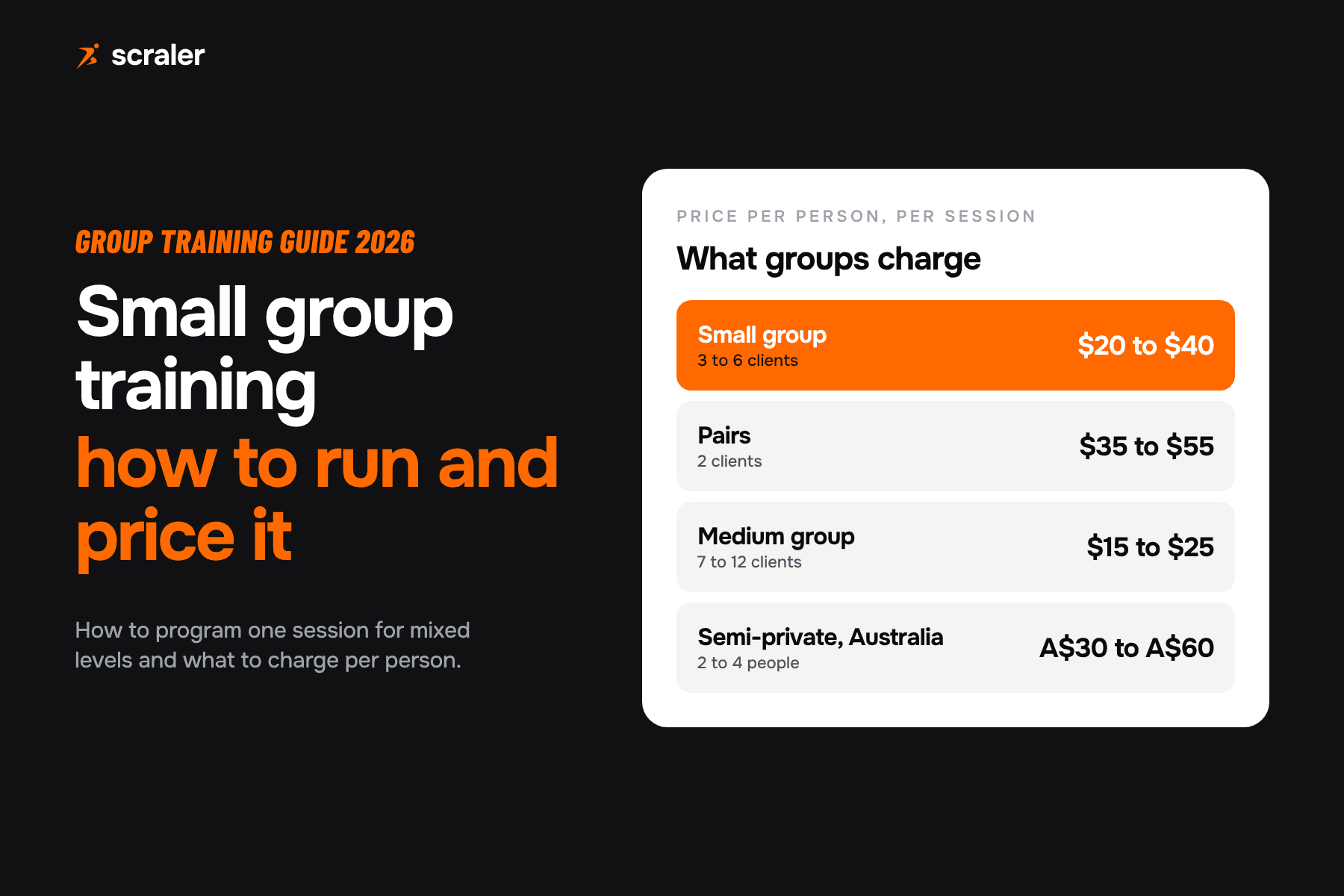
With three or four clients, use stations so everyone is working and you can coach the most technical station. Our guide to small group personal training covers group size, pricing and scheduling.
- Station or exercise
- Group warm-up: jog, dynamic mobility, bodyweight squats
- Prescription
- 10 min
- Notes
- Together
- Station or exercise
- Kettlebell or barbell deadlift
- Prescription
- 8 reps
- Notes
- Coach stays here
- Station or exercise
- Dumbbell bench press or push-up
- Prescription
- 10 reps
- Notes
- Self-paced
- Station or exercise
- TRX or cable row
- Prescription
- 12 reps
- Notes
- Self-paced
- Station or exercise
- Reverse lunge
- Prescription
- 8 per leg
- Notes
- Self-paced
- Station or exercise
- All four stations
- Prescription
- 2 rotations, 4 min per station
- Notes
- 30 s to change
- Station or exercise
- Team relay on rower or bike
- Prescription
- 6 min total meters
- Notes
- Group score
- Station or exercise
- Group stretch and next-session notes
- Prescription
- 5 min
- Notes
- Together
| Block | Station or exercise | Prescription | Notes |
|---|---|---|---|
| Warm-up (10 min) | Group warm-up: jog, dynamic mobility, bodyweight squats | 10 min | Together |
| Station 1 | Kettlebell or barbell deadlift | 8 reps | Coach stays here |
| Station 2 | Dumbbell bench press or push-up | 10 reps | Self-paced |
| Station 3 | TRX or cable row | 12 reps | Self-paced |
| Station 4 | Reverse lunge | 8 per leg | Self-paced |
| Rotation | All four stations | 2 rotations, 4 min per station | 30 s to change |
| Finisher (6 min) | Team relay on rower or bike | 6 min total meters | Group score |
| Cooldown (5 min) | Group stretch and next-session notes | 5 min | Together |
How do you keep PT sessions varied while still progressing?
Variety and progression pull in opposite directions. Change everything every week and you cannot tell whether the client got stronger. Change nothing and the client gets bored. The fix is to split each session into a fixed part and a rotating part.
- The 1 or 2 main lifts per session
- The rep range for those lifts
- The order of the main block
- The weekly session count
- Warm-up drills
- Accessory exercise variations
- Finisher format: circuit, EMOM, carries, sprints
- Cooldown stretches and equipment
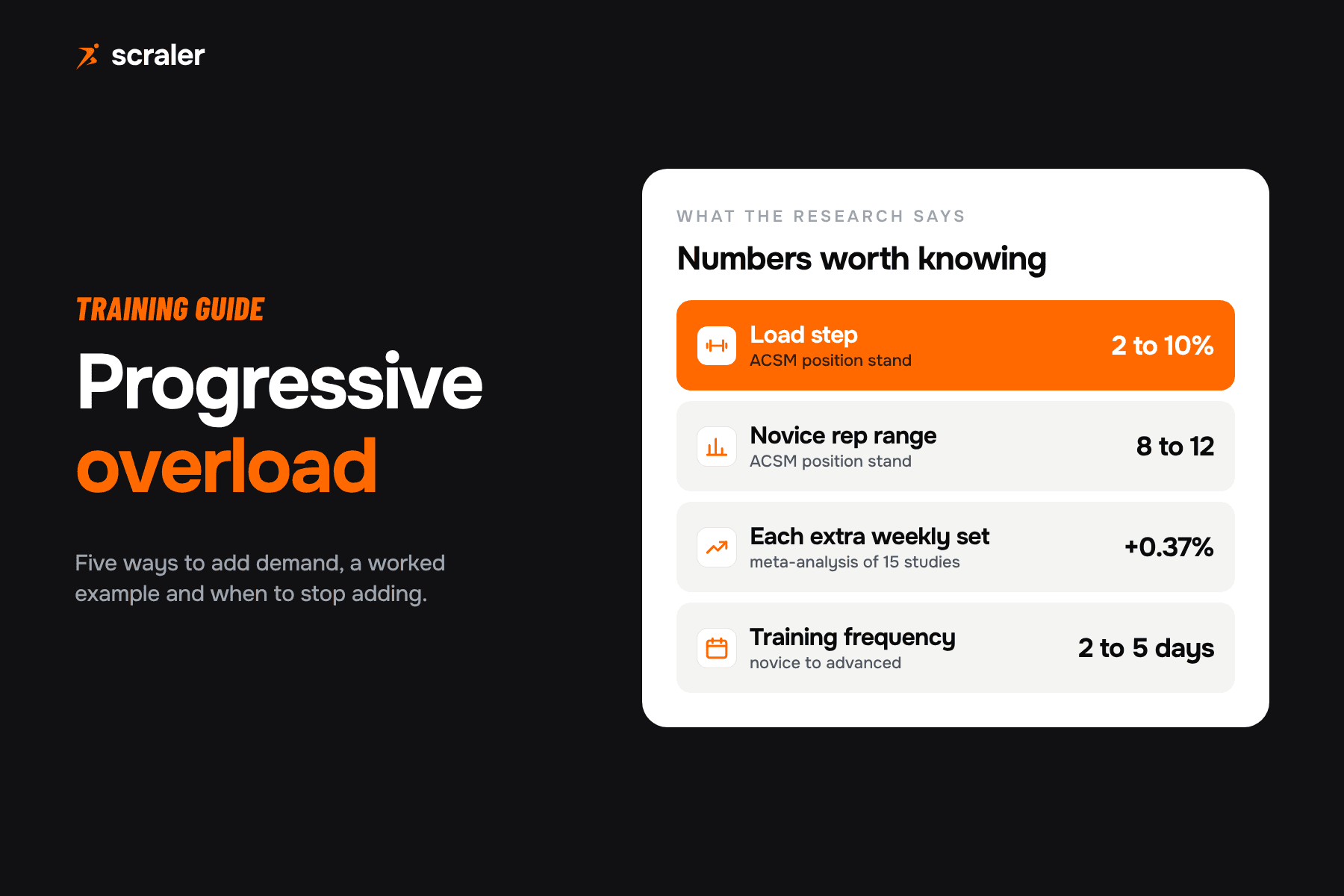
Progress the fixed part with a simple rule. The 2009 ACSM progression stand recommends raising the load 2 to 10% once a client can do one to two reps over the target. Our guide to progressive overload shows how to run that as double progression. RPE helps too: the RIR-based RPE scale by Zourdos and colleagues was built as a practical tool for regulating daily training load, so you can keep the plan and adjust the weight to how the client feels that day.
How do you plan and log PT sessions in Scraler?
In the Scraler workout builder you can split a workout into named sections, such as Warm-up, Main, Finisher and Cool-down, and the sections travel with the workout into plans and the client's app. Circuits and supersets get their own rounds and rest, so the templates above can be built as they are written.
When you train a client in person, Live workout lets you open their session on your own phone, tablet or laptop and log every set while they train. You see what they lifted last time next to each exercise, so you know whether to go heavier, and the session lands in their history and program like any other workout.
Build warm-up, main, finisher and cool-down sections, link circuits and supersets, and log each set during the session with last time's numbers in view.
See workout planningFrequently asked questions
- What should a 30 minute personal training session include?
- A 30 minute personal training session should include about 5 minutes of warm-up, 18 minutes of main work with two or three exercises, a 4 minute finisher and a 3 minute cooldown. Pair exercises as supersets to save time, and cut an exercise rather than the warm-up.
- What are some 30 minute personal training session ideas?
- Good options are a full body strength session with two supersets, a 40:20 conditioning circuit, a 16 minute EMOM with swings, burpees and thrusters, a beginner session with four basic lifts, and a 30 minute mobility session for deload weeks.
- How do you structure a PT session?
- Use four parts in order: warm-up, main block, finisher and cooldown. Put the heaviest or most technical lift first in the main block, accessories after it, and leave time at the end to check in and plan the next session.
- Is a 30 minute PT session enough?
- It can be, if the session is focused. The 2011 ACSM position stand recommends resistance exercise for each major muscle group on 2 to 3 days a week, and two or three well-chosen 30 minute sessions a week can cover that with full body templates.
- What should a first personal training session look like?
- Spend the first part on goals, health screening and a few baseline tests, then teach squat, hinge, push and pull patterns at an easy effort, around RPE 5 to 6. End with a clear plan for the first month so the client knows what comes next.
- How long should the warm-up be in a PT session?
- We use about 5 minutes in a 30 minute session and about 10 minutes in a 60 minute one, longer for heavy or athletic days. A 2010 meta-analysis found warm-ups that went beyond stretching improved performance in 79% of the criteria examined.
- How do you keep personal training sessions interesting?
- Keep the main lifts and rep ranges fixed for 4 to 6 weeks so you can measure progress, and rotate the warm-up drills, accessory variations and finisher formats. Clients get variety and you still see whether they are getting stronger.
- What exercises are good for a session with older adults?
- Combine strength and balance: box squats, seated rows, step-ups, incline push-ups, suitcase carries and supported single-leg stands. The WHO recommends balance and strength focused activity on 3 or more days a week for adults 65 and older.
Keep reading