What Is a PAR-Q? Every Question Explained (With Examples)
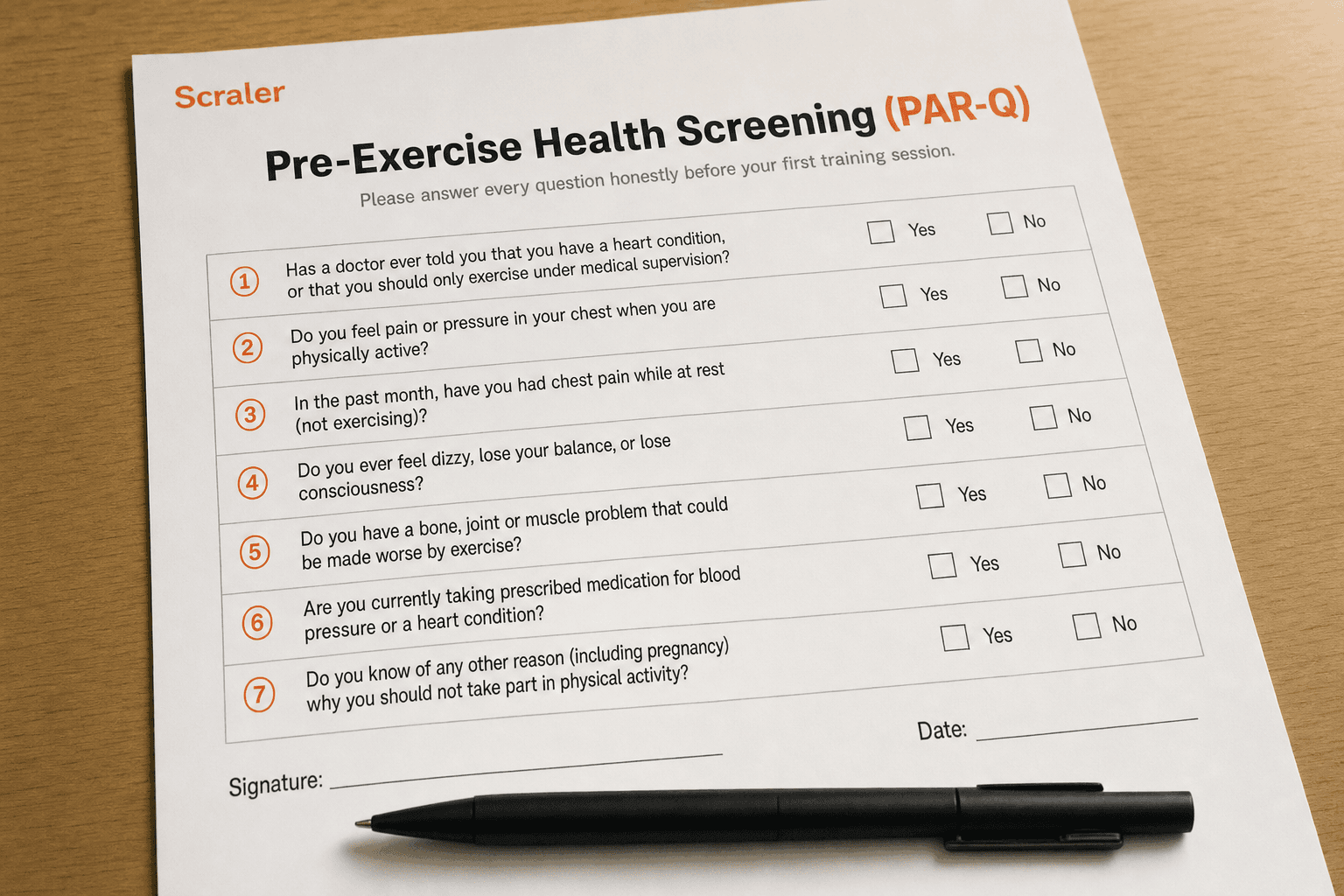
PAR-Q stands for Physical Activity Readiness Questionnaire: the short health screen a client completes before starting to train with you. Seven yes/no questions, two minutes to fill in, and it answers the only pre-exercise question that really matters: is there any medical reason this person should talk to a doctor before we start?


Where the PAR-Q comes from
The PAR-Q was developed in Canada in the 1970s as a public-health tool: a self-administered filter that lets the overwhelming majority of people start exercising immediately, while catching the small group who genuinely need medical input first. It worked so well it became the global default in the fitness industry: UK Level 2 and Level 3 qualifications teach it, insurers expect it, and in 2011 an updated version called the PAR-Q+ replaced the original (the differences are here).
The seven questions, explained
Wording varies between forms because the official document is copyrighted, so trainers work with paraphrased versions like our free template, but every real PAR-Q screens the same seven areas:
- Diagnosed heart condition
- Chest pain during activity
- Chest pain at rest
- Dizziness or fainting
- Bone & joint problems
- BP or heart medication
- Any other reason
1. Diagnosed heart condition
Has a doctor ever said the client has a heart condition, or told them to exercise only under medical supervision? This is the headline question. A yes does not mean no training (cardiac patients train all the time); it means training starts after a doctor has set the boundaries, not before.
2. Chest pain during activity
Chest pain or pressure brought on by exertion is the classic symptom of restricted blood flow to the heart. Someone who gets it has not necessarily been diagnosed with anything, which is exactly why the question exists.
3. Chest pain at rest in the past month
Pain at rest is, if anything, a stronger flag than pain during effort, and "in the past month" keeps the question about the client now, not a scare from years ago.
4. Dizziness, balance loss, or fainting
Fainting and unexplained dizziness can point at cardiovascular or neurological causes, and either way they are a safety problem around loaded barbells. A yes here shapes exercise selection even after a GP clears the client.
5. Bone or joint problems
The most common yes you will actually see. A dodgy knee or a disc issue rarely needs a GP visit, but you need it in writing before you programme jump squats. This answer feeds directly into programming, which is why it belongs on the screen even though it rarely blocks training.
6. Blood pressure or heart medication
Medication changes how a body responds to exercise: beta-blockers cap heart rate, which quietly breaks any HR-based intensity target from a heart rate zone calculator. The client is under care for something; you need to know it exists.
7. Any other reason
The catch-all: pregnancy, recent surgery, a condition that did not fit the first six boxes, or plain gut feeling. It exists so a client can never truthfully say "the form never asked".

What happens when a client answers yes
- 1Client answers yes
The form has done its job: a flag, not a diagnosis.
- 2Recommend the GP
One written sentence: "please check with your GP before we start."
- 3Adapt or wait
Programme around the flag, or hold off until clearance.
- 1.Do not diagnose. You are a trainer, not a doctor: the form flags, the GP assesses. That division of labour is what protects you.
- 2.Recommend the GP conversation in writing. "Based on your answers, please check with your GP before we start": one sentence, dated, kept with the form.
- 3.Train around the flag, or wait. A joint issue means you programme around it today. A cardiac flag means you wait for clearance. Judgement, but documented judgement.
- 4.Record the outcome. Client came back cleared? Note it. Client says "my physio is happy with squats"? Note that too, with the date.
Scraler includes this exact screening as a one-click onboarding template; new clients complete it before their first session, and flagged answers are waiting on their profile.
Try it freeFrequently asked questions
- Who fills in the PAR-Q: the trainer or the client?
- The client, in their own words, before the first session. The trainer reviews the answers and acts on any yes. It is a self-screen, not an assessment the trainer performs. For the tests you run yourself, use a fitness assessment form.
- How often should a PAR-Q be renewed?
- Best practice is annually, and immediately after any relevant change: a new diagnosis, injury, surgery, medication, or pregnancy.
- Is a PAR-Q a medical exam?
- No. It is a screening questionnaire that decides one thing: whether the client should see a doctor before starting. It does not certify anyone as healthy.
- Does a yes answer mean the client cannot train?
- Almost never. It means the client should get medical input first, and the trainer should programme around the flag until they do. Most yes answers, joint problems especially, just shape the programme.