Client Accountability for Personal Trainers: 7 Systems That Work
Accountability is the product most personal training clients are actually buying. They know they should train and eat properly; what they are paying for is someone who will notice when they do not. The trainers who keep clients for years are not more motivating than everyone else — they have systems that notice automatically, so noticing does not depend on their memory on a busy Thursday.

Why accountability usually fails
Not from lack of care. It fails because it is stored in the trainer’s head. You mean to follow up with the client who missed Tuesday, then you coach six sessions, and by Friday it is stale and awkward to raise. Every system below exists to move accountability out of your memory and into something that runs whether you remember or not.
The seven systems
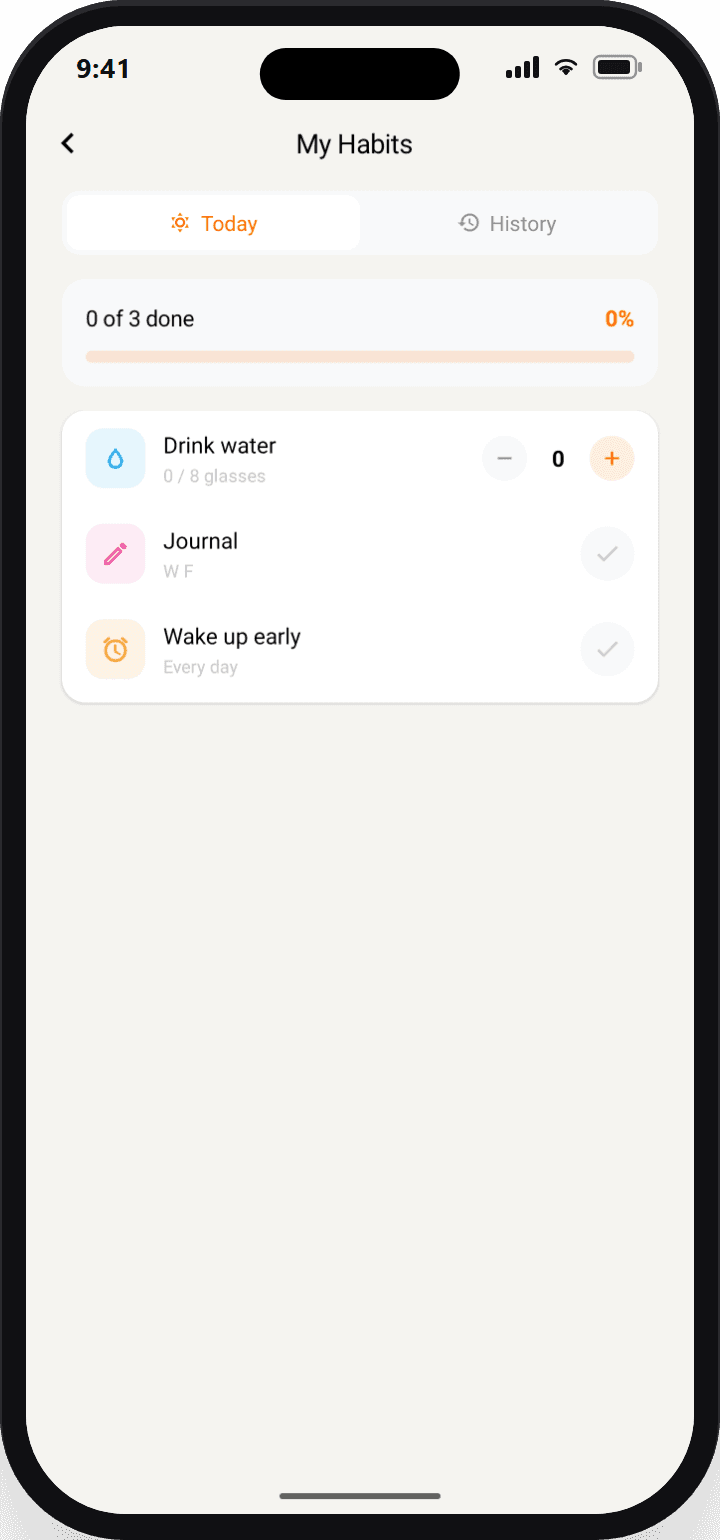
1. Tracked daily habits
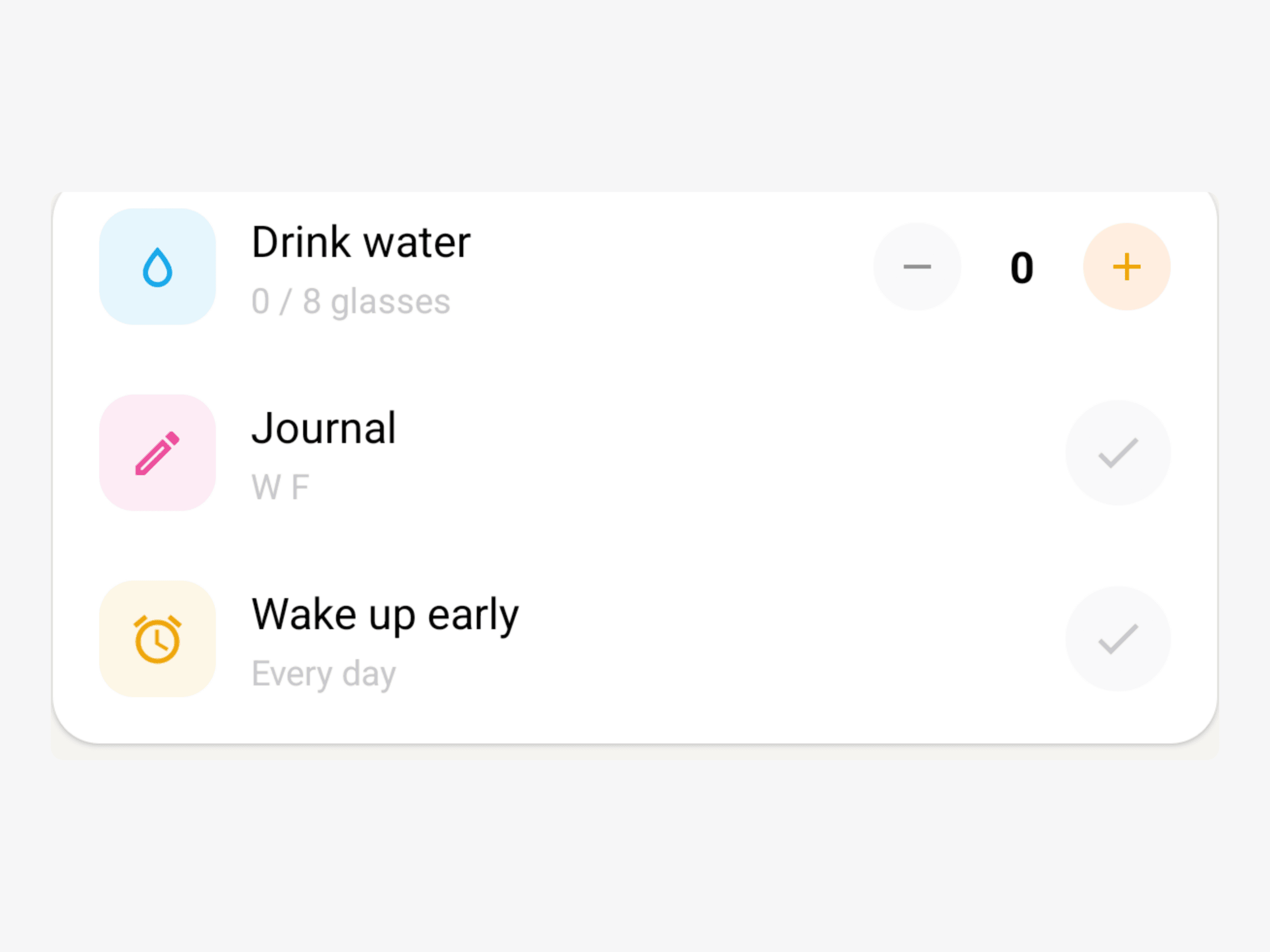
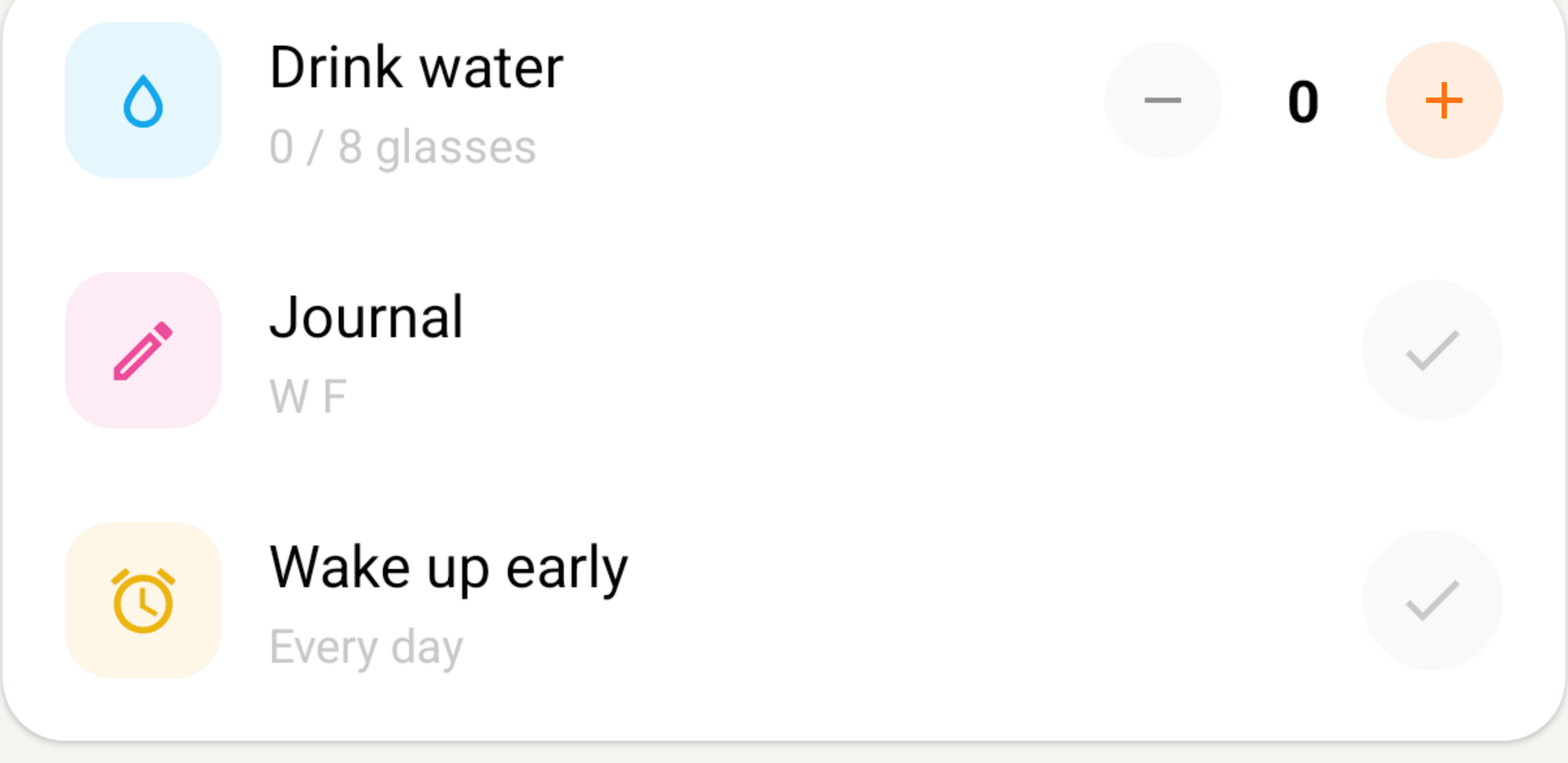
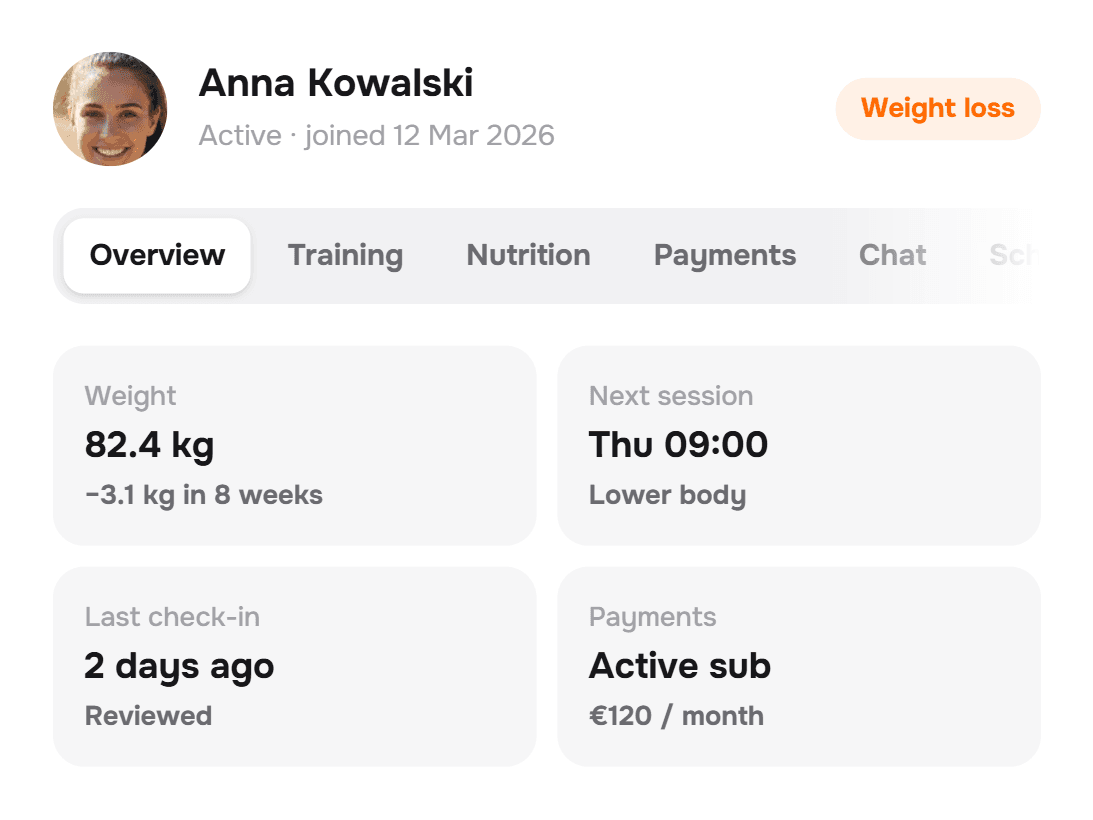
The foundation. Two or three assigned behaviours the client ticks off daily gives you a continuous signal instead of a weekly guess — and gives them a small win on days the scale gives them nothing. It also removes the worst conversation in coaching: "how was your week?" answered with "yeah, alright". Start with our guide to habit tracking.
2. A scheduled check-in they cannot forget
Same day, same questions, every week, sent automatically. The recurrence is what makes it work — a check-in you remember to send when you have time is one that stops happening in your busiest month, which is exactly when your clients most need it.
3. Data the client logs themselves
Weight, photos, food, sets and weights. Self-logged data is accountability twice over: it tells you what happened, and the act of logging changes what happens. People eat differently when they know they are writing it down.
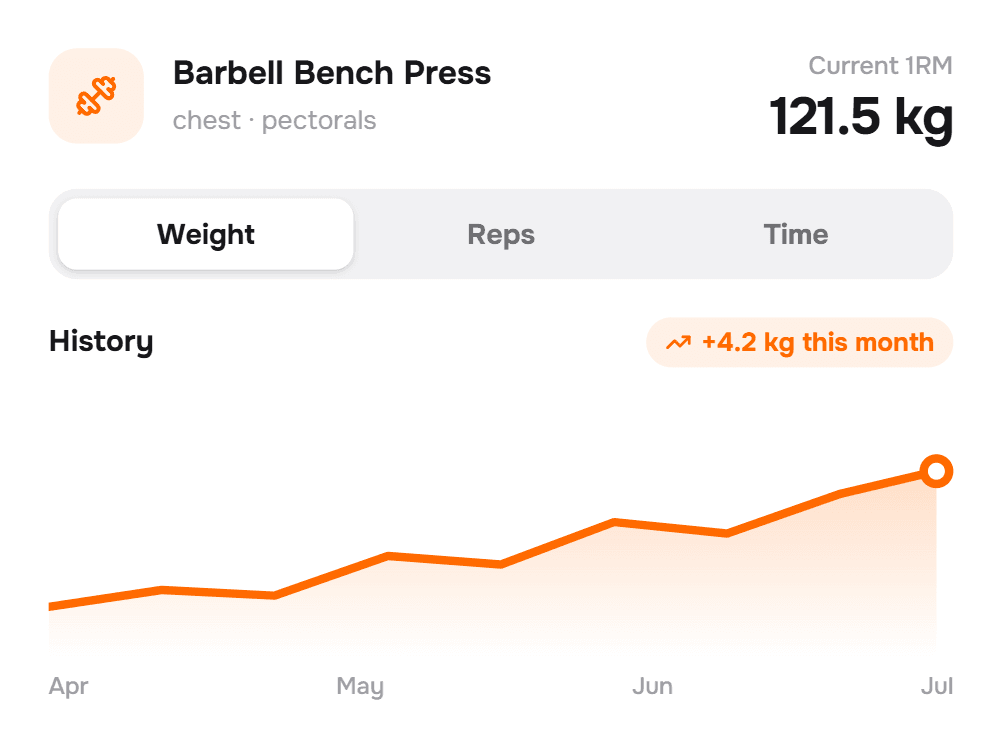
4. Progression they can see
Streaks, personal records, a completion percentage, a strength curve going up. Motivation is not a personality trait you either have or lack — it is largely a function of whether progress is visible. Make it visible and clients supply their own.
5. A message channel that is not WhatsApp
Coaching conversation sitting in the same thread as their family group chat gets lost, and it puts you on call at 11pm with no boundary. A dedicated channel inside the coaching app keeps the history findable and the relationship professional.
6. Early warnings you do not have to look for
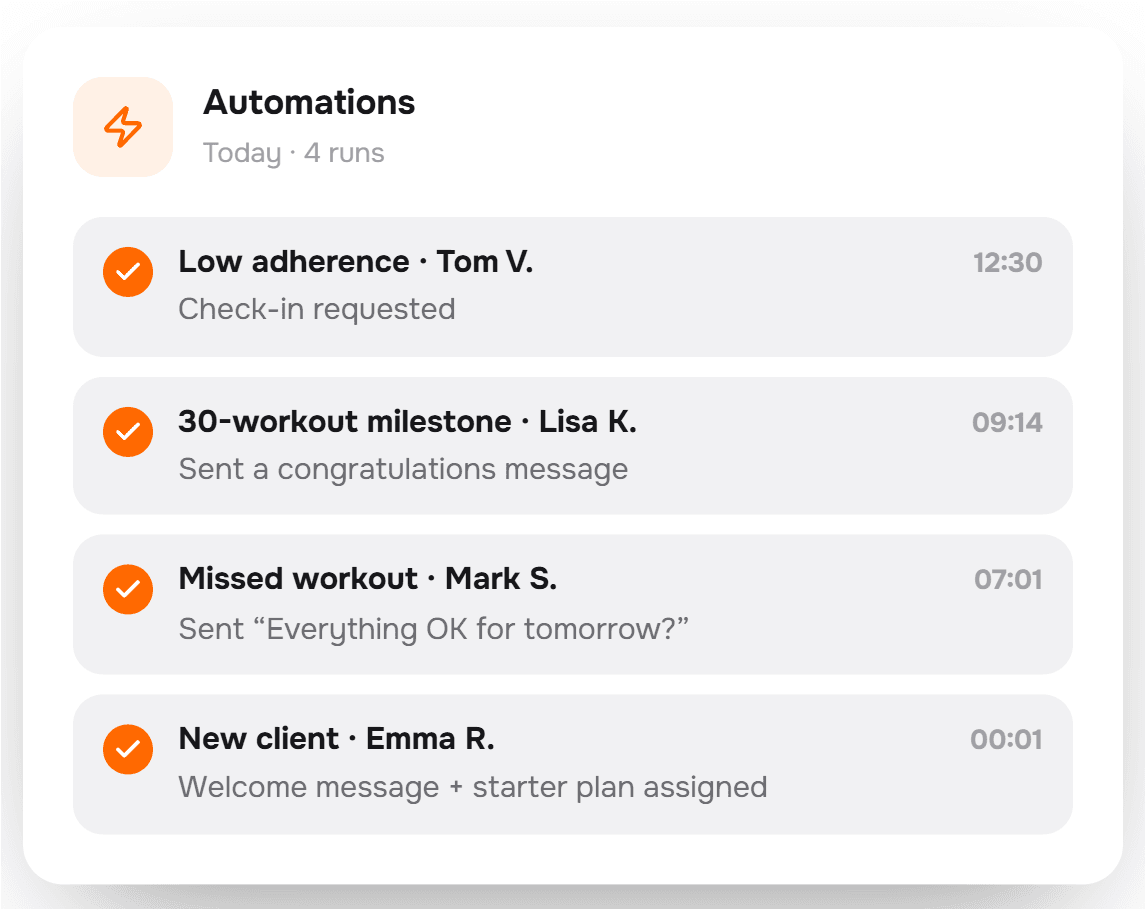
The client who cancels next month has already been telling you for three weeks — missed sessions, a completion rate sliding from 90% to 40%, an unanswered check-in. Whether you catch it depends entirely on whether something surfaces it without you going looking.
7. Consequences that are conversations
The point of noticing is what you do next. A short, non-judgemental message the week a pattern appears — "I noticed steps dropped off after the 12th, what changed?" — is worth more than any amount of firm talk at the next session. Curious beats disappointed, every time.
Would it still run during your busiest week of the year? If the answer depends on you remembering, it is not a system — it is an intention.
This is not just for online coaching
In-person trainers often assume accountability is handled by the fact that clients turn up. But the session is the part they were always going to do — the result is decided in the days between. If anything, in-person trainers benefit more, because they currently rely on conversation and memory where online coaches were forced to build systems.
What this does to your business
- Clients stay longer, because results and the feeling of being watched over both improve.
- You spot churn weeks early, when it is still a conversation rather than a cancellation email.
- Your check-ins get shorter and better, because you arrive already knowing what happened.
- You stop carrying it all in your head, which is the part that actually burns trainers out.
Habits, recurring check-ins, progress tracking and client chat in one place — so noticing does not depend on your memory.
Start freeFrequently asked questions
How do personal trainers keep clients accountable?
With systems rather than willpower: assigned daily habits the client logs, recurring check-ins that send automatically, self-logged progress data, visible progression, a dedicated message channel, and something that surfaces a drop in engagement before it becomes a cancellation.
How do you deal with a client who stops logging?
Treat it as information, not defiance. Message the week it starts, ask what changed rather than why they stopped, and be willing to cut the tracked list back to a single habit. A client running one habit at 90% is in a far better position than one running four at 20%.
Is an accountability app better than messaging clients directly?
The messaging still matters — it is the app that decides whether you know what to message about. In practice you want both: automatic tracking that surfaces the signal, and a human message that responds to it.
How early can you tell a client is going to quit?
Usually a few weeks, if you are tracking anything. A completion rate that falls sharply, two missed sessions in a fortnight, or a skipped check-in are all reliable early signals — but only if something is watching for them rather than relying on you to notice.