How Many Habits Should You Give a Client? (And Which Ones First)
Enthusiastic trainers assign eight habits. Experienced trainers assign two. The difference is not ambition — it is that the eight-habit client logs nothing by week three and the two-habit client is still going in month six. This is how to choose the first two, when to add a third, and how to read the completion data you get back.
The number is two or three
It is the standing recommendation across coaching platforms, and it survives contact with reality for a simple reason: habits compete for the same limited pool of daily attention. A fourth habit does not get its own budget — it takes a slice from the other three. Past about three, you stop adding behaviour and start adding a sense of failure.
- Client completes five on a good day and feels behind
- Nothing becomes automatic — everything stays effortful
- One bad week breaks every streak at once
- By week three, the list goes unopened
- Both get done most days, so both become normal
- Attention is concentrated where it matters
- A bad week costs one streak, not eight
- Month three: they still log, and you add a third
You are not asking less of the client. You are asking for the same total change over a longer window, in an order they can actually absorb. The trainer who assigns two habits in January has usually installed six by June. The one who assigned eight has installed none.
Which two to pick first
Do not pick the habits with the biggest theoretical payoff. Pick the intersection of "this would move the needle for this client" and "this client could genuinely do it on their worst week".
- 1Start with the constraint, not the ideal. If someone sleeps five hours and eats 40g of protein, sleep is not the fashionable answer but it is the one gating everything else. Ask what is actually limiting them, not what would be optimal.
- 2Pick one you can measure and one you can feel. A numeric habit (steps, protein, litres) gives you data. A qualitative one (bedtime, a walk after dinner) gives them a felt win. The mix keeps both of you engaged.
- 3Size it to the worst week, not the best. Whatever number they say they can hit, they said it on a good day, in front of you. Set the target at what survives a bad week — you can always raise it.
- 4Make it a behaviour, not an outcome. "Lose 1kg" is not a habit; it is not under their direct control on any given day. "10,000 steps" is. Habits must be things the client can decide to do.
When to add the next one
The habit is close to automatic. There is now room for another one.
Hold. Do not add anything. Either lower the target or work out what is blocking the bad days.
The habit is wrong, the target is wrong, or something in their life changed. Fix or remove it — never stack on top of it.
The temptation at 60% is to add a habit to "build momentum". It does the opposite. A client who is already missing half the time reads a new assignment as evidence you are not paying attention.
Reading a completion rate properly
| What you see | What it usually means | What to do |
|---|---|---|
| 90%+ for a month | The habit is installed and no longer needs coaching attention | Raise the target or add a new habit |
| Consistent 60–70% | The target is slightly too high, or the cadence is wrong | Lower the number, or drop from daily to four days a week |
| Perfect weekdays, zero weekends | A context problem, not a motivation problem | Change the habit for weekends or exclude those days from the schedule |
| Was 90%, now 40% | Something changed in their life — this is a churn warning | Message them this week. Do not wait for the check-in |
| 100% every day, no misses at all | Either genuinely easy, or being ticked without being done | Make it harder, or replace it with something with a real number attached |
That fourth row is the most valuable thing habit data gives you. A collapse in completion reliably precedes a cancellation by a few weeks, and it is the only early warning most trainers ever get. More on that in our guide to client accountability systems.
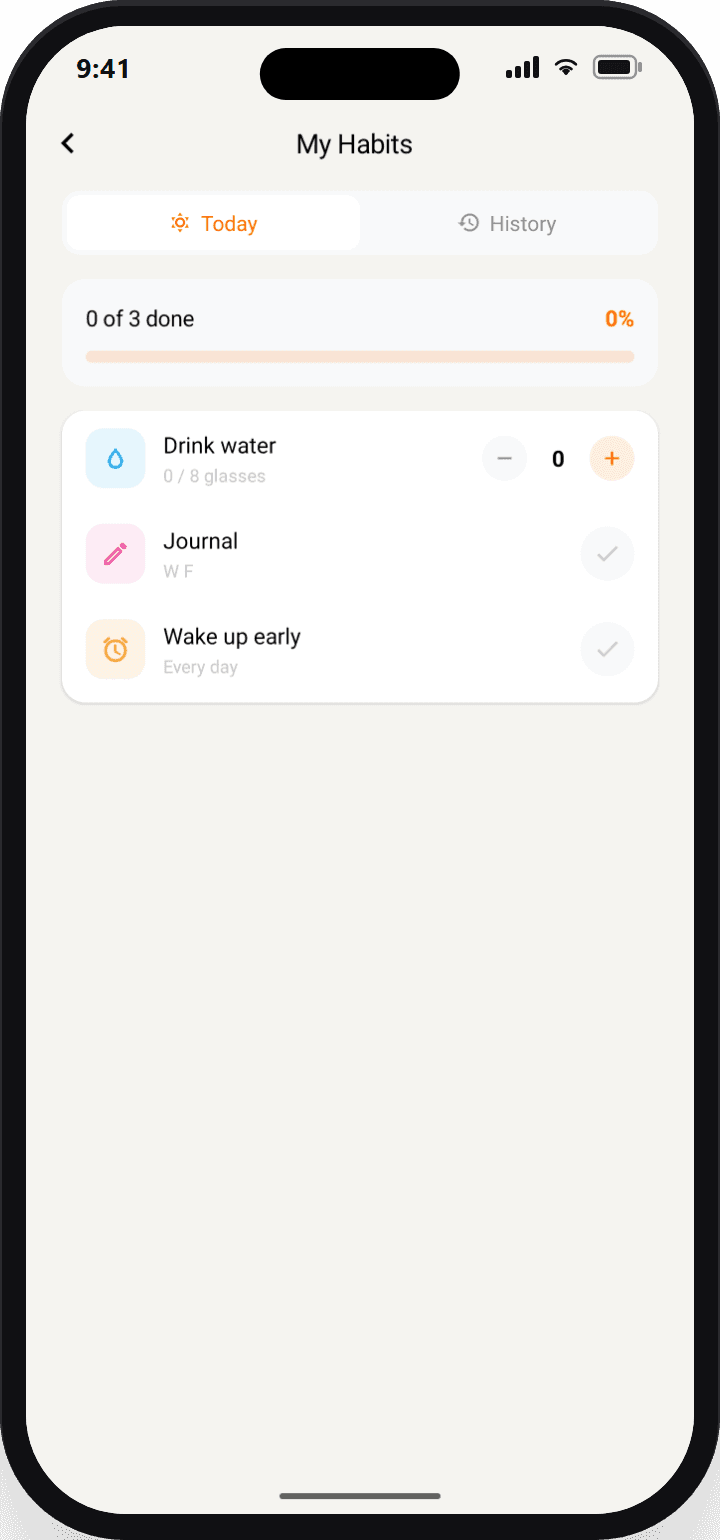
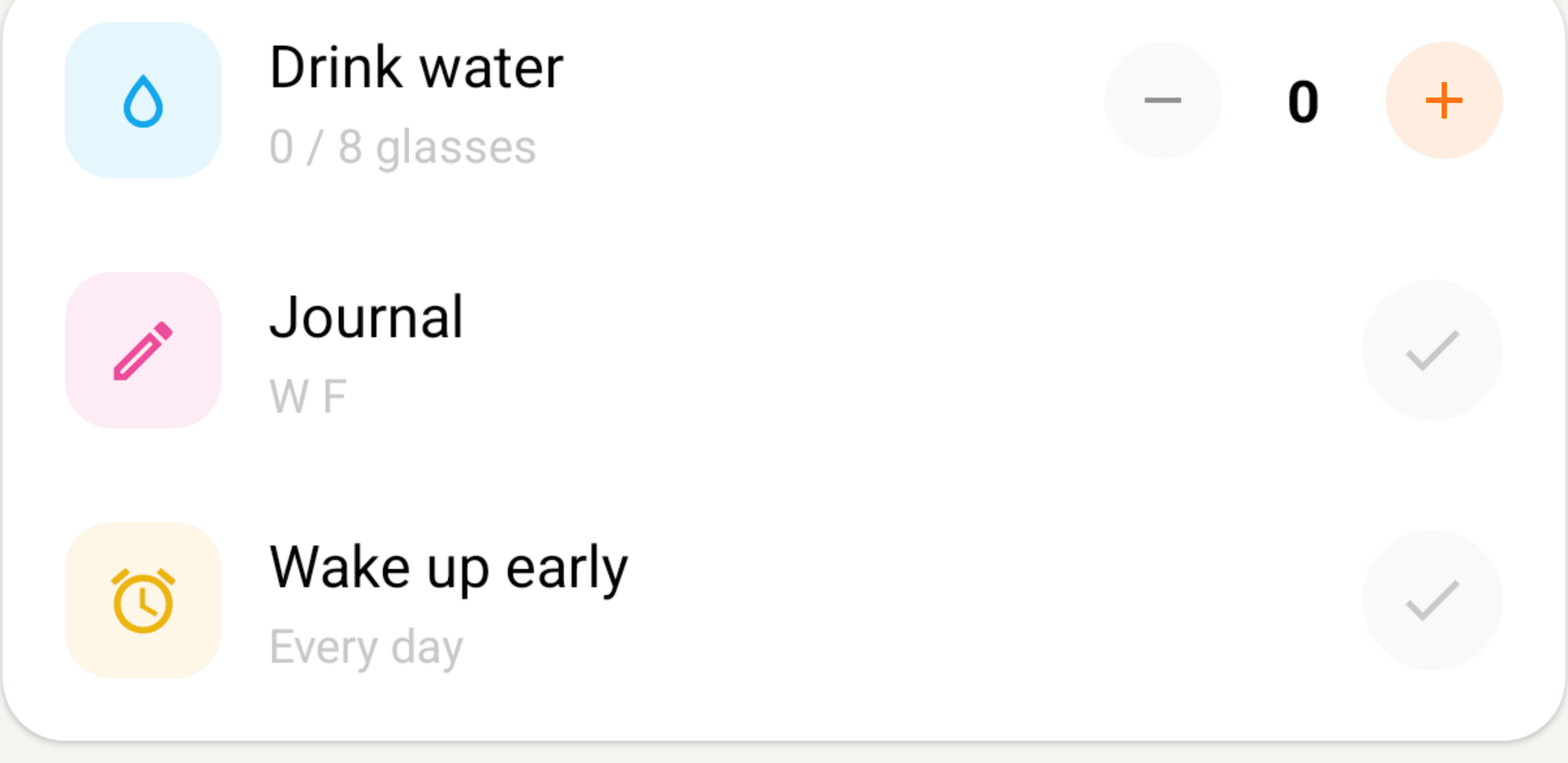
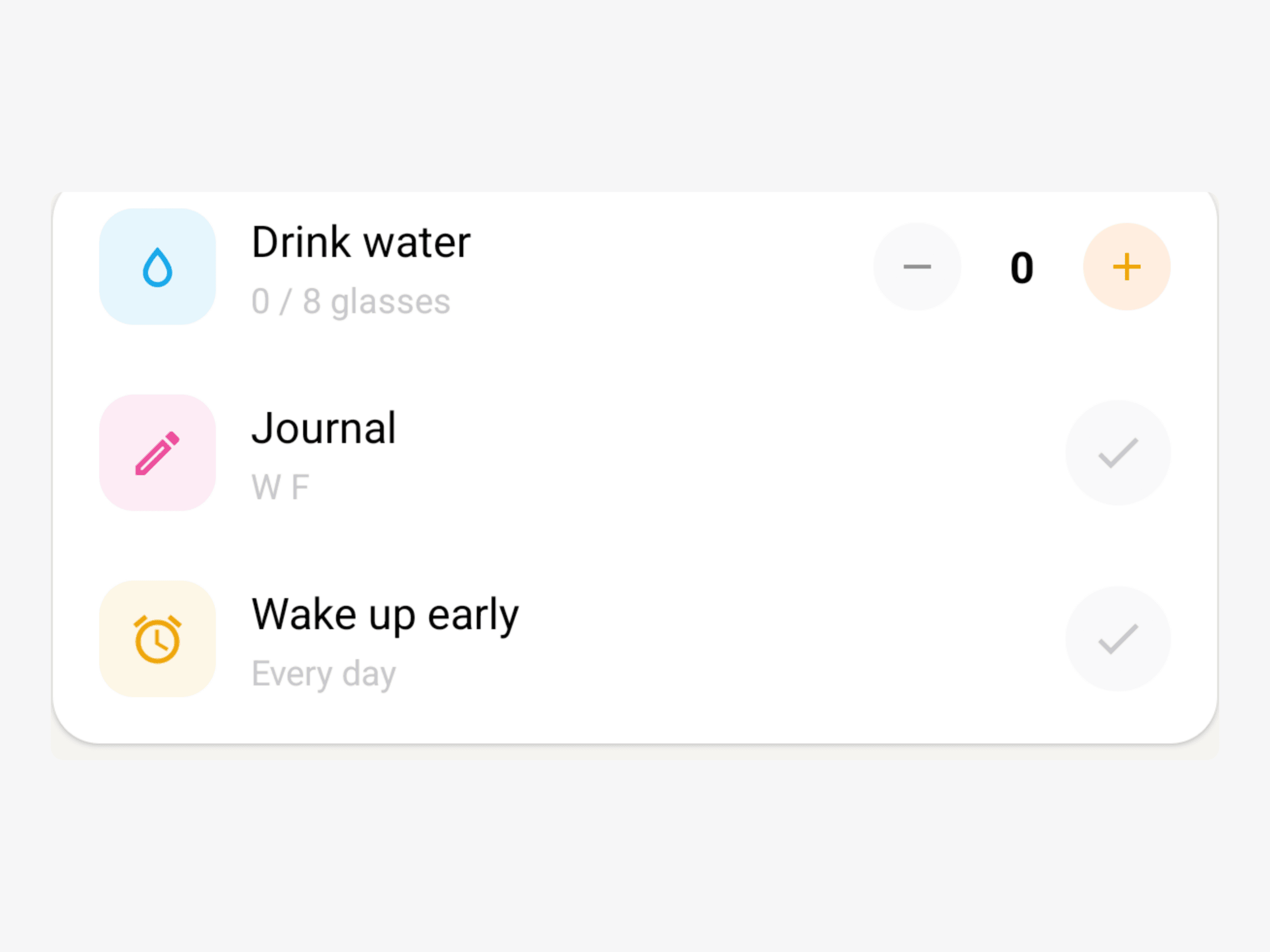
Pick from 26 ready-made habits or build your own, set the cadence per client, and watch completion rates instead of guessing.
Start freeFrequently asked questions
How many habits should a client work on at once?
Two or three. It is the standard recommendation across coaching platforms and it holds because habits compete for the same daily attention. Beyond three, completion rates for every habit tend to fall rather than the client simply doing more.
How long before a habit becomes automatic?
There is no reliable fixed number, and the popular "21 days" figure has no real support behind it. In practice, treat consistent completion above roughly 80% for two weeks as the signal that a habit is stable enough to build on.
What if a client wants to take on more habits than you assign?
Let them run extra behaviours informally, but keep the tracked list at two or three. What you track is what you coach and review; a long tracked list dilutes both.
Should every client get the same starter habits?
No. Hydration and steps are a common default because they are easy and broadly useful, but the right first habit is the one addressing that client’s actual constraint — which is often sleep or protein rather than anything more visible.