Habit Tracker for Personal Trainers: The Complete Guide (2026)
You see a client for three hours a week. The other 165 decide the result. A habit tracker is how you get a say in those 165 hours — a short list of daily behaviours you assign, your client ticks off in a second, and you can both see honestly at the end of the month. This guide covers what habit tracking is for, how to run it without adding admin, and what separates a tracker built for coaches from a consumer app you tell clients to download.
What a habit tracker actually is (for a trainer)
A consumer habit app is a personal to-do list with streaks. A trainer habit tracker is a two-sided tool: you assign the habits and set the cadence, the client logs them, and the completion data comes back to you. That second half is the entire point. Without it you are not coaching habits — you are recommending them and hoping.
- The client picks their own habits
- You never see whether they logged anything
- Lives outside your coaching relationship
- Nothing to review at the next check-in
- You assign the habits and the targets
- Completion rate and streaks land on your dashboard
- Sits beside their programme, meals and check-ins
- Gives every check-in a factual starting point
Why habit coaching moves results more than better programming
Almost nobody fails because their programme was suboptimal. They fail because they trained twice instead of four times, slept six hours, and ate whatever was nearest at 8pm. Adherence is the variable with the most room left in it, and habits are the only lever that touches adherence directly.
- It makes the invisible visible. "How was your week?" gets you a vibe. A completion percentage gets you a fact — and clients are noticeably more honest with a checkbox than with your face.
- It gives small wins somewhere to land. Weight moves slowly and unfairly. A 12-day streak moves every single day, which keeps someone engaged through a fortnight where the scale does nothing.
- It converts your coaching into behaviour. Advice given in session becomes a line on their home screen the next morning. That is the whole gap most trainers are trying to close.
- It tells you who needs a nudge before they churn. A client whose completion quietly drops from 90% to 40% is telling you they are about to cancel, three weeks early.
How to run habit coaching in practice
The single most common mistake. A client who is given eight habits completes none of them by week three. Start with the two behaviours that would change the most if they changed.
"Eat better" is not a habit. "160g protein" is. If the client has to interpret it, they will interpret it generously on a bad day.
Daily is not always right. Three days a week that gets done beats seven days that gets abandoned — and you can raise it once it sticks.
Open the completion data, name the streak, name the gap, adjust one thing. Five minutes. Then leave it alone until next time.
Never add a new habit while an existing one is under about 80% completion. You are not adding a habit at that point — you are diluting the one that was nearly working.
What to actually put on the list
Habit libraries tend to cluster into the same handful of categories, because these are the behaviours that do most of the work for most clients.
If you want the long version, we have a list of 50 habit ideas sorted by client type — and a separate guide on how many to assign at once.
What to look for in habit tracking software
| Feature | Why it matters |
|---|---|
| A ready-made habit library | Assigning from a list takes seconds. Building every habit from scratch means you stop doing it by month two. |
| Custom habits | Your coaching has specifics a library cannot guess. You need to add your own and have them sit beside the built-ins. |
| Per-client scheduling | Daily, set weekdays, or every N days. One cadence for everyone is how habits get abandoned. |
| Numeric targets, not just checkboxes | 3 litres, 10,000 steps, 160g — a number the client logs against beats a tick that means anything. |
| One-tap logging on mobile | If logging a full day takes more than a few seconds, compliance dies within a fortnight. |
| Streaks and completion rate | Streaks are for the client’s motivation. Completion rate is for your coaching decisions. You want both. |
| A history calendar | A month grid showing done, missed and off-days turns "how has it been going?" into a five-second glance. |
| Built into the same app as everything else | A separate habit app is one more login your client will stop opening. It has to live where their programme lives. |
That last row is the one people underrate. Habit tracking bolted on as a separate tool gets used for a month. Habit tracking on the same home screen as today’s workout gets used because it is already in front of them.
How it works in Scraler
- 26 habits ready to assign, grouped into six categories — water, steps, protein, sleep, training, reading and the rest — plus your own custom habits with their own icon and colour.
- Assign in one tap. Pick the client, set the target, choose the cadence. No form to build first.
- Cadence per assignment. Every day, specific weekdays, or every third day — and one-off days when you just want to drop something onto a single date.
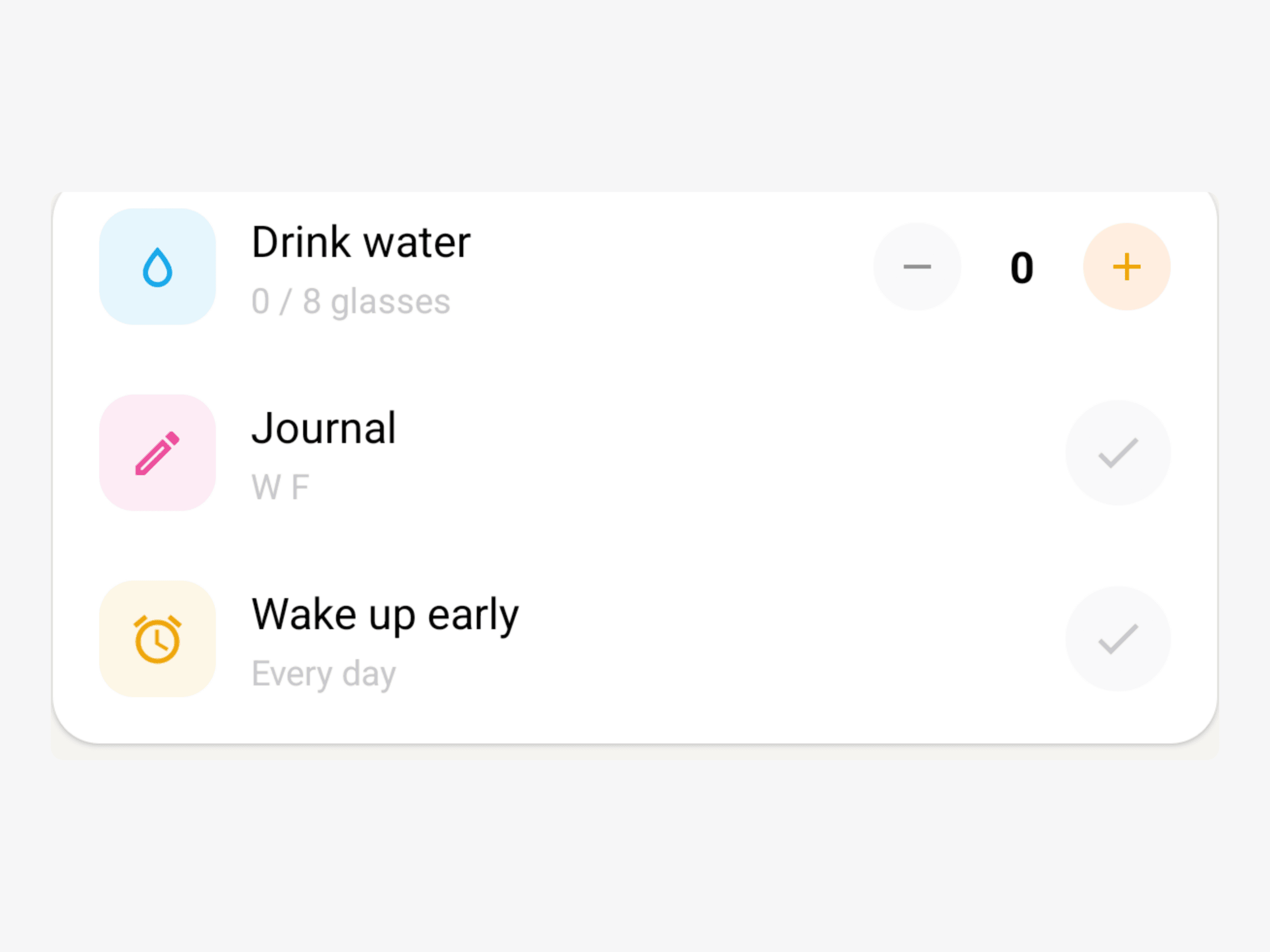
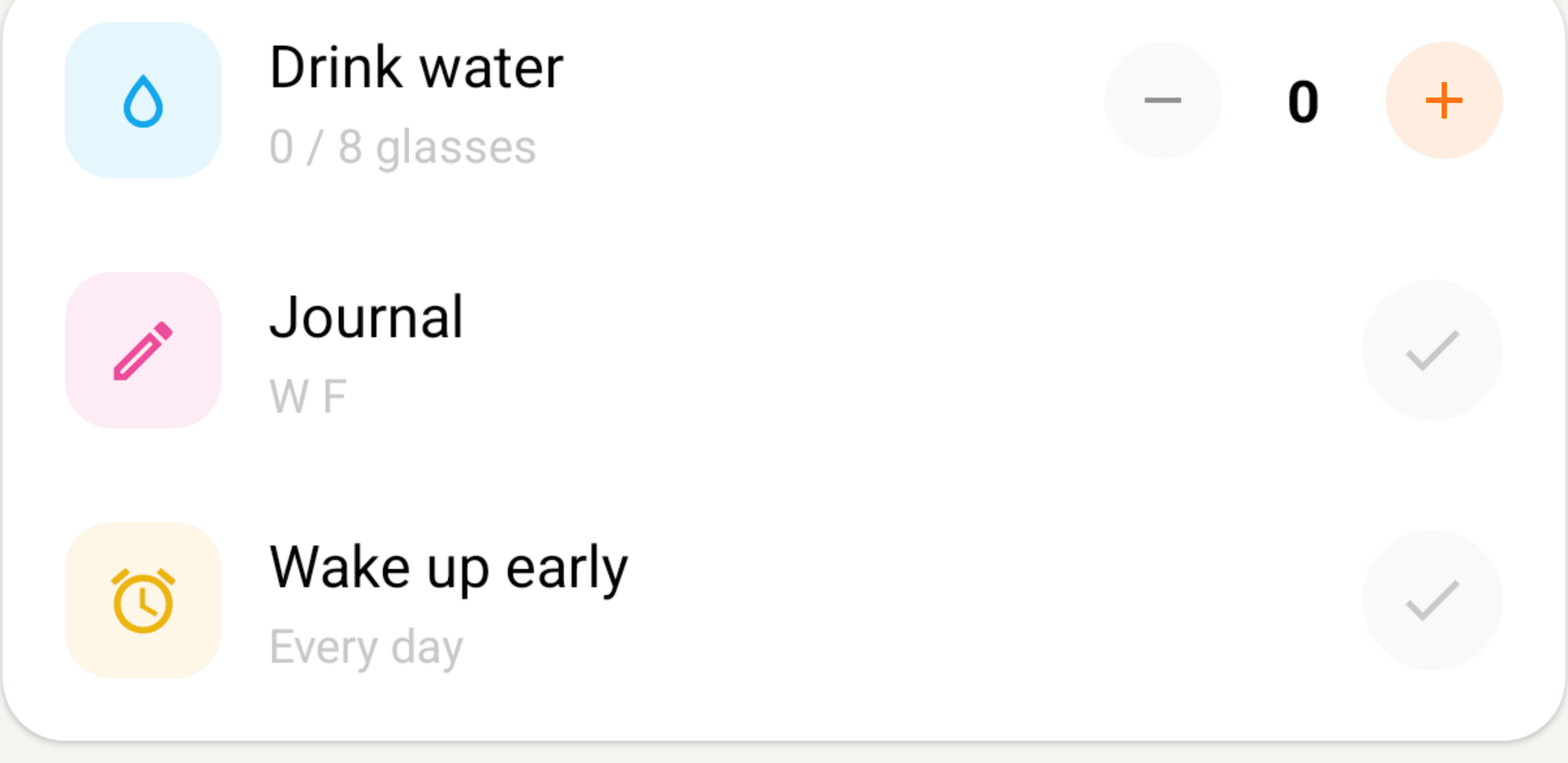
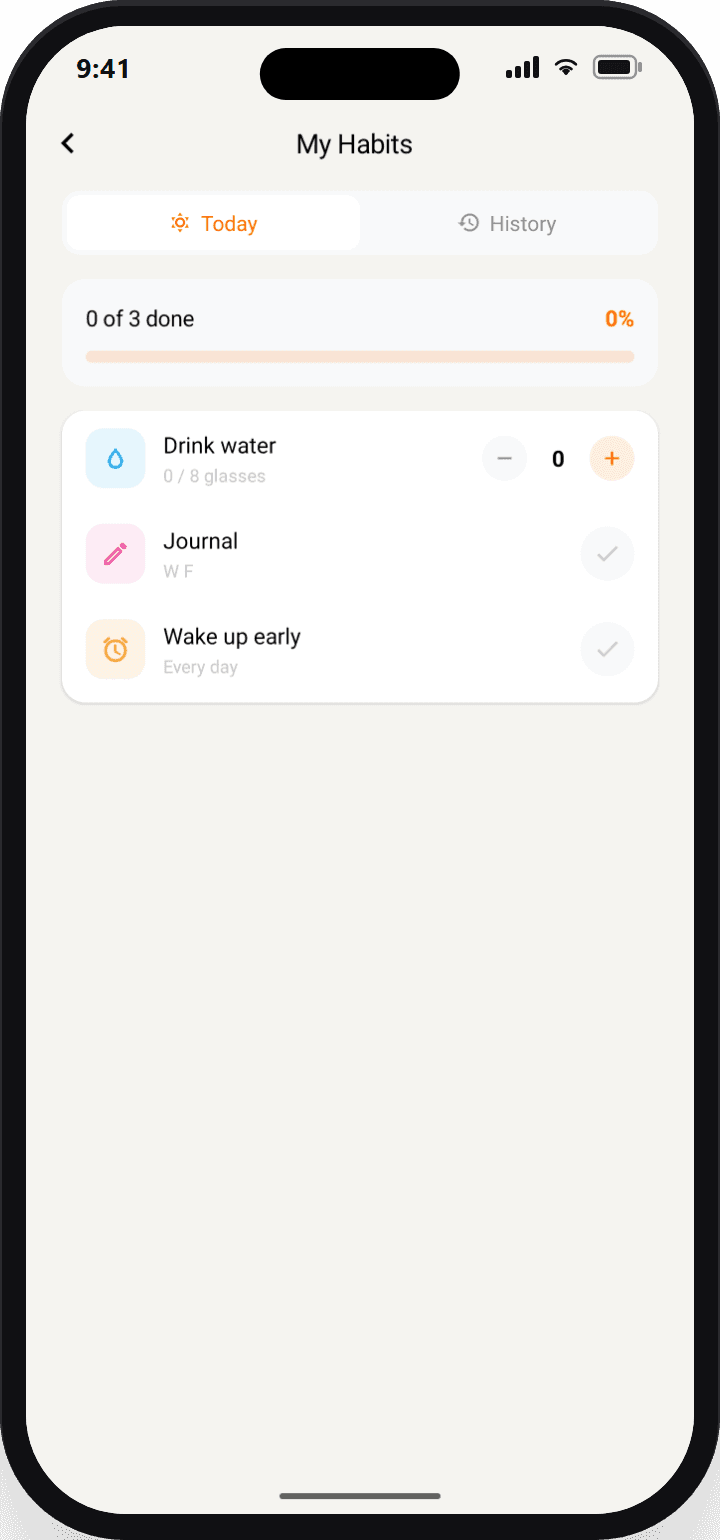
- Clients log in a tap, from the mobile app or the browser: tick a checkbox or nudge a number up.
- You see current streak, best streak and completion rate, plus a month calendar of done, missed and off-days for every habit.
Assign habits from a ready-made library, let clients log in one tap, and see who is actually doing the work. Free to start.
Start freeFrequently asked questions
What is a habit tracker for personal trainers?
It is a tool that lets a trainer assign specific daily behaviours — hydration, steps, protein, sleep, training sessions — to individual clients, and see whether those behaviours were completed. Unlike a consumer habit app, the completion data comes back to the trainer, so habits become something you coach rather than something you suggest.
How many habits should I assign a client?
Two or three at once is the widely used practice, and it holds up. Adding more does not get you more behaviour change — it usually gets you less, because the client stops logging entirely. Add a new habit only once an existing one is running above roughly 80% completion.
Do clients actually use habit trackers?
They use them when logging takes seconds and lives in the app they already open for their workout. They abandon them when it is a separate app, a long list, or a form. Friction is the whole game.
Is habit tracking only for online coaching clients?
No. It arguably matters more for in-person clients, because the gap between sessions is where the result is decided either way. In-person trainers just tend to rely on memory and conversation instead of data.
Can I create my own habits rather than using a library?
In Scraler, yes — name it, pick an icon and colour, and put it in your own category. It then sits alongside the 26 built-in habits and is assigned the same way.