Healthy Grocery List: A Printable Food Shopping Ideas List for Clients
A healthy food shopping ideas list is built from whole foods: protein, vegetables, fruit, whole grains, dairy or alternatives, and healthy fats. Use the free printable below to hand clients a two page grocery list grouped by food group, with daily goals and the label limits worth checking.

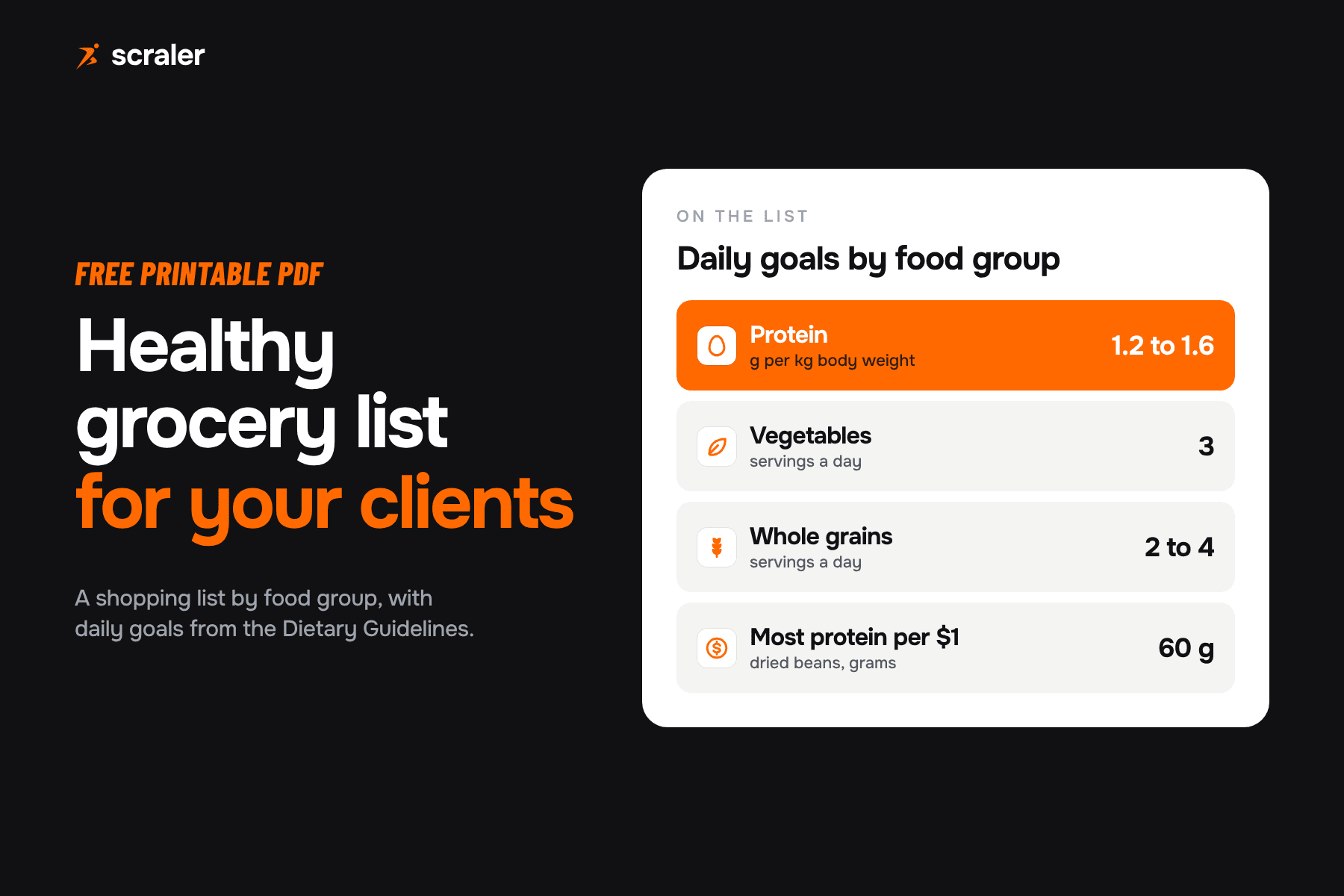
- Download the free two page PDF, tick or write in items, and hand it to clients before their first shop.
- The 2025 to 2030 Dietary Guidelines for Americans give daily goals: 1.2 to 1.6 g of protein per kg, 3 servings of vegetables, 2 of fruit and 2 to 4 of whole grains.
- In our price check, dried beans gave the most protein per dollar at about 60 g, ahead of dry pasta and eggs.
- Frozen, dried and canned vegetables and fruit with no or very limited added sugars are good options.
- Four label numbers to teach: 10 g added sugars per meal, 2,300 mg sodium a day, 10% of calories from saturated fat and 25 g of fiber.
Many clients lose their plan in the supermarket, where it turns into a hundred small choices. A short list they can carry removes most of them. This page gives you a printable list to hand out, the daily goals behind it, a price check on protein and the label numbers worth teaching.
Two A4 pages. Page one is the shopping list by food group with tick boxes and blank lines. Page two adds fats, pantry, drinks, a label check and a notes box for your swaps.
What goes on a healthy food shopping ideas list?
Start from food groups, not from recipes. A list organised that way works for any plan, any cuisine and any budget, and clients can reuse it every week. The printable has these groups, each with example foods and spare lines for your own additions:
- Protein. Eggs, poultry, fish, lean meat, tofu, beans and lentils.
- Vegetables. Leafy greens, broccoli, peppers, carrots, tomatoes and a frozen mix.
- Fruit. Berries, apples, bananas, oranges and frozen fruit with no added sugar.
- Whole grains and starches. Oats, brown rice, whole wheat pasta and bread, quinoa and potatoes.
- Dairy and alternatives. Plain yogurt, milk or unsweetened soy milk, cottage cheese and kefir.
- Healthy fats, pantry and drinks. Olive oil, avocado, nuts, canned tomatoes, herbs and spices, water and tea.
The guidance behind it is simple. The Dietary Guidelines for Americans, 2025 to 2030 tell people to eat whole, nutrient-dense foods and to limit highly processed packaged foods, added sugars and sugar-sweetened drinks. The WHO healthy diet fact sheet says the same thing in other words: a variety of minimally processed foods, with carbohydrates coming mainly from whole grains, vegetables, fruits and pulses.
How much of each food group should clients buy?
Buy for the daily goals, multiplied by seven. The Dietary Guidelines give vegetable, fruit and dairy goals for a 2,000 calorie pattern, protein per kg of body weight, and say to adjust all of them for individual calorie needs. Active clients, larger clients and clients in a deficit will differ, so use them as a starting point and let the plan decide the rest.
- Daily goal
- 1.2 to 1.6 g per kg of body weight
- Worked example for a week
- 70 kg client: 84 to 112 g a day, 588 to 784 g a week
- Daily goal
- 3 servings
- Worked example for a week
- 21 servings
- Daily goal
- 2 servings
- Worked example for a week
- 14 servings
- Daily goal
- 2 to 4 servings
- Worked example for a week
- 14 to 28 servings
- Daily goal
- 3 servings
- Worked example for a week
- 21 servings, full-fat with no added sugars
| Food group | Daily goal | Worked example for a week |
|---|---|---|
| Protein | 1.2 to 1.6 g per kg of body weight | 70 kg client: 84 to 112 g a day, 588 to 784 g a week |
| Vegetables | 3 servings | 21 servings |
| Fruit | 2 servings | 14 servings |
| Whole grains | 2 to 4 servings | 14 to 28 servings |
| Dairy | 3 servings | 21 servings, full-fat with no added sugars |
The weekly column is our arithmetic, not a published figure. WHO adds a floor of at least 400 g of fruit and vegetables and at least 25 g of fiber a day for everyone over age 10. Clients who train hard often need more protein than the general goal, which we cover with the research in how to build a personalized nutrition plan. To turn a goal into grams, try the protein calculator and the macro calculator.
What is the cheapest healthy protein to buy?
Of the foods we checked, dried beans. We took U.S. average prices from the Bureau of Labor Statistics for August 2026 and the protein content per 100 g from USDA FoodData Central, then divided. Dried beans gave about 60 g of protein per dollar. Eggs gave about 33 g, chicken breast about 25 g and ground beef about 12 g.
- Price, August 2026
- $1.63 a lb
- Protein per $1
- 59.9 g
- Price, August 2026
- $2.27 a dozen
- Protein per $1
- 33.3 g
- Price, August 2026
- $4.17 a lb
- Protein per $1
- 24.5 g
- Price, August 2026
- $4.23 a gallon
- Protein per $1
- 29.1 g
- Price, August 2026
- $5.98 a lb
- Protein per $1
- 17.4 g
- Price, August 2026
- $6.92 a lb
- Protein per $1
- 12.2 g
| Food | Price, August 2026 | Protein per $1 |
|---|---|---|
| Dried beans | $1.63 a lb | 59.9 g |
| Eggs, large | $2.27 a dozen | 33.3 g |
| Chicken breast, boneless | $4.17 a lb | 24.5 g |
| Whole milk | $4.23 a gallon | 29.1 g |
| Cheddar | $5.98 a lb | 17.4 g |
| Ground beef, 100% beef | $6.92 a lb | 12.2 g |
Read this chart with care. Pasta, rice and bread rank well because they are cheap, but their protein is a side effect of a carbohydrate food. Grams per dollar also says nothing about protein quality. The Dietary Guidelines recommend a mix of animal and plant protein, so the practical advice is to put a few cheap staples such as beans, lentils and eggs in every basket, then add the meats and fish clients prefer. Prices vary by store and region, so treat these as a national average.
Are frozen and canned foods okay on a healthy grocery list?
Yes. The Dietary Guidelines say frozen, dried or canned vegetables and fruit with no or very limited added sugars can also be good options. That matters for clients on a budget or with little time. A bag of frozen vegetables does not spoil by Thursday, and vegetables that get eaten beat fresh ones that get binned.
The condition is the ingredient list. Tell clients to look for fruit canned without syrup and vegetables with little added salt. The guidelines suggest scanning for the word "sugar", the word "syrup" and any ingredient ending in "-ose", which flags most added sugars.
How do you adjust a healthy grocery list for a client's goal?
Keep the groups and change the quantities. The list is a frame, and the plan decides how much of each item goes in the basket. Three common adjustments:
- Fat loss. Keep protein and vegetables at the top of the basket, since both fill the plate for fewer calories. Cut back on calorie-dense extras such as nuts, oils and nut butters to the portions the plan sets, and keep sugar-sweetened drinks off the list.
- Muscle gain. Add more of the whole grains and starches, dairy and healthy fats, and make sure the protein line reaches the client's goal. The personalized nutrition plan guide covers how coaches set those numbers.
- Busy weeks. Lean on frozen vegetables, canned beans, eggs and pre-washed greens. A list that gets cooked beats a perfect list that does not.
Cooking method matters as much as the shop. The Dietary Guidelines suggest swapping deep-fried cooking for baked, broiled, roasted, stir-fried or grilled food, which is an easy line to add to the notes box on page two.
What mistakes do clients make at the supermarket?
The same few come up in most coaching conversations. These are our observations from coaching practice rather than research, but each one has a simple fix on the list:
- Shopping without a list. Clients buy what is on offer, not what the plan needs. The fix is the printable and a rule to buy only what is ticked, plus one treat.
- Buying for the person they want to be. A basket full of ingredients for recipes the client will never cook goes in the bin. Start with five meals they already like.
- Trusting the front of the pack. Words like "protein", "natural" and "light" are not a nutrition label. Teach the ingredient list and the four label numbers above.
- Forgetting drinks. The guidelines advise avoiding sugar-sweetened beverages such as sodas, fruit drinks and energy drinks, so drinks belong on the list as water, sparkling water and tea.
- Skipping the staples. Running out of eggs, oats or frozen vegetables midweek is how a plan slips. Mark the staples that must never run out.
What should clients check on a nutrition label?
Four numbers cover most of what a healthy food shopping list needs. The first three are limits from the Dietary Guidelines and the fourth is a floor from WHO.
- Added sugars: one meal should contain no more than 10 g, and the guidelines recommend no amount of added sugars as part of a healthy diet.
- Sodium: under 2,300 mg a day for ages 14 and up. The guidelines note highly active people may need more to replace sweat losses.
- Saturated fat: no more than 10% of daily calories.
- Fiber: WHO says at least 25 g a day for everyone older than 10, from whole grains, vegetables, fruit and pulses.
How do coaches use a grocery list with clients?
- 1.Hand it over before the first shop. Put it next to the meal plan so the two agree.
- 2.Cross out and add. Strike foods the client dislikes or cannot eat, and write in the swaps in the notes box.
- 3.Build it from the plan. If a client has a weekly plan, tick only what that plan needs. The meal plan template shows how to lay one out, and macro friendly recipes gives meals that fit a list like this.
- 4.Review the basket. Ask for a photo of the receipt or the fridge in the weekly check-in and adjust.
- 5.Repeat the staples. Most weeks should reuse 70 to 80% of the list. Fewer decisions mean better adherence.
The 70 to 80% repeat in step five is our rule of thumb from coaching practice, not a researched figure. Adjust it to the client.
Scraler's meal planner lets you build meal plans and a recipe library for each client, and your clients see them in the client app next to their training.
See the meal plannerFrequently asked questions
- What should be on a healthy grocery list?
- Protein such as eggs, fish, poultry, beans and tofu; vegetables and fruit, fresh or frozen; whole grains such as oats and brown rice; dairy or unsweetened alternatives; and healthy fats such as olive oil, nuts and avocado. Add herbs, spices and water.
- How do I make a healthy grocery list on a budget?
- Build it around cheap staples. In our August 2026 price check, dried beans gave about 60 g of protein per dollar and eggs about 33 g. Frozen vegetables and fruit without added sugar also reduce waste. Buy store brands and check the price per pound.
- How much protein should a client buy for a week?
- The 2025 to 2030 Dietary Guidelines for Americans set 1.2 to 1.6 g per kg of body weight a day. A 70 kg client needs about 84 to 112 g a day, or 588 to 784 g a week. Active clients may need more, so follow the plan.
- Is a printable grocery list free to use with clients?
- Yes. The PDF on this page is free to download, print and hand to your clients. You can write your own notes and swaps in the box on page two.
- Are frozen vegetables as healthy as fresh?
- The Dietary Guidelines say frozen, dried or canned vegetables and fruit with no or very limited added sugars can be good options. Check the label for added sugar and salt, then pick whichever form the client will actually eat.
- How many servings of fruit and vegetables should clients eat?
- The Dietary Guidelines for a 2,000 calorie pattern list 3 servings of vegetables and 2 of fruit a day. WHO sets a floor of at least 400 g of fruit and vegetables a day for everyone older than 10.