Macro Friendly Recipes: 10 High Protein Meals With Macros
Macro friendly recipes are meals with calories, protein, carbs and fat worked out per serving, so they fit a daily target. Below are 10, from 274 to 620 kcal and 26 to 55 g of protein each, a 2,000 calorie day built from four of them, and a printable recipe card PDF.

- A recipe is macro friendly when you know its macros per serving and it gives you a useful amount of protein for its calories. Ours give 6.3 to 9.6 g of protein per 100 kcal.
- Tuna, egg whites, shrimp, chicken breast and nonfat Greek yogurt give the most protein per calorie. Oils, nuts and sauces are where calories hide.
- Four of the recipes add up to 1,964 kcal, 150 g protein, 207 g carbs and 62 g fat: a worked example of a macro friendly meal plan day.
- All numbers are worked examples computed from USDA FoodData Central values. Weigh your own food and treat them as approximate.
Coaches get the same request again and again: give me recipes that fit my macros. This article gives you ten, with the arithmetic shown, plus a free printable set of recipe cards you can hand to a client. The numbers are worked examples. We computed them from USDA FoodData Central values, and the weights are on every card.
What are macro friendly recipes?
A macro friendly recipe is one whose calories, protein, carbs and fat are known per serving. That is what makes it easy to fit into a macro diet meal plan: you can slot it into a day and check the total. Most also lean on lean protein, so a normal portion gives a meaningful protein number without a lot of calories.
How much protein is meaningful? The International Society of Sports Nutrition position stand says 1.4 to 2.0 g of protein per kg of body weight per day is sufficient for most exercising people. For an 80 kg client that is 112 to 160 g a day, so a recipe with 30 to 55 g covers a large share in one meal. Use our protein calculator or macro calculator to set the client's own targets first.
How we worked the numbers out: for each ingredient we took the USDA FoodData Central (SR Legacy) values per 100 g for energy, protein, carbs and fat, multiplied by the grams in the recipe, and added them up. The results are approximate. Brands, cooking losses and how you weigh food will move them, and USDA's energy value will not exactly equal 4 x protein + 4 x carbs + 9 x fat.
How do you make a recipe macro friendly?
- 1.Start with the protein. Pick a lean source and set the portion first: chicken breast, tuna, shrimp, egg whites, nonfat Greek yogurt, cottage cheese or tofu.
- 2.Add one carb and plenty of vegetables. Rice, potatoes, oats or beans give you energy, and vegetables add volume for few calories.
- 3.Count the fat you add. Olive oil has 884 kcal per 100 g in the USDA data, so 8 g is about 71 kcal. Weigh oil, nuts and nut butters, do not eyeball them.
- 4.Weigh in the state the data uses. Raw, cooked, drained and canned weights differ. Pick one and keep it the same every time.
- 5.Write the macros per serving. If you cannot say what one portion contains, the recipe is not macro friendly yet.
Which macro friendly recipes have the most protein per calorie?
The tuna and white bean salad leads with 9.6 g of protein per 100 kcal, just ahead of the veggie egg scramble and the berry yogurt bowl. The chicken and rice bowl gives the most protein per serving at 55 g. Salmon and oats rank lowest on the ratio because salmon carries more fat and oats more carbs, which is fine if that is what the client needs.
- kcal
- 330
- Protein (g)
- 32
- Carbs (g)
- 31
- Fat (g)
- 10
- Protein per 100 kcal
- 9.6
- kcal
- 274
- Protein (g)
- 26
- Carbs (g)
- 8
- Fat (g)
- 15
- Protein per 100 kcal
- 9.5
- kcal
- 310
- Protein (g)
- 29
- Carbs (g)
- 32
- Fat (g)
- 9
- Protein per 100 kcal
- 9.4
- kcal
- 595
- Protein (g)
- 55
- Carbs (g)
- 59
- Fat (g)
- 14
- Protein per 100 kcal
- 9.2
- kcal
- 328
- Protein (g)
- 28
- Carbs (g)
- 29
- Fat (g)
- 12
- Protein per 100 kcal
- 8.6
- kcal
- 482
- Protein (g)
- 41
- Carbs (g)
- 40
- Fat (g)
- 19
- Protein per 100 kcal
- 8.5
- kcal
- 402
- Protein (g)
- 29
- Carbs (g)
- 54
- Fat (g)
- 8
- Protein per 100 kcal
- 7.2
- kcal
- 620
- Protein (g)
- 43
- Carbs (g)
- 61
- Fat (g)
- 26
- Protein per 100 kcal
- 7.0
- kcal
- 565
- Protein (g)
- 36
- Carbs (g)
- 48
- Fat (g)
- 26
- Protein per 100 kcal
- 6.4
- kcal
- 476
- Protein (g)
- 30
- Carbs (g)
- 72
- Fat (g)
- 9
- Protein per 100 kcal
- 6.3
What are good macro friendly breakfast recipes?
Berry yogurt power bowl
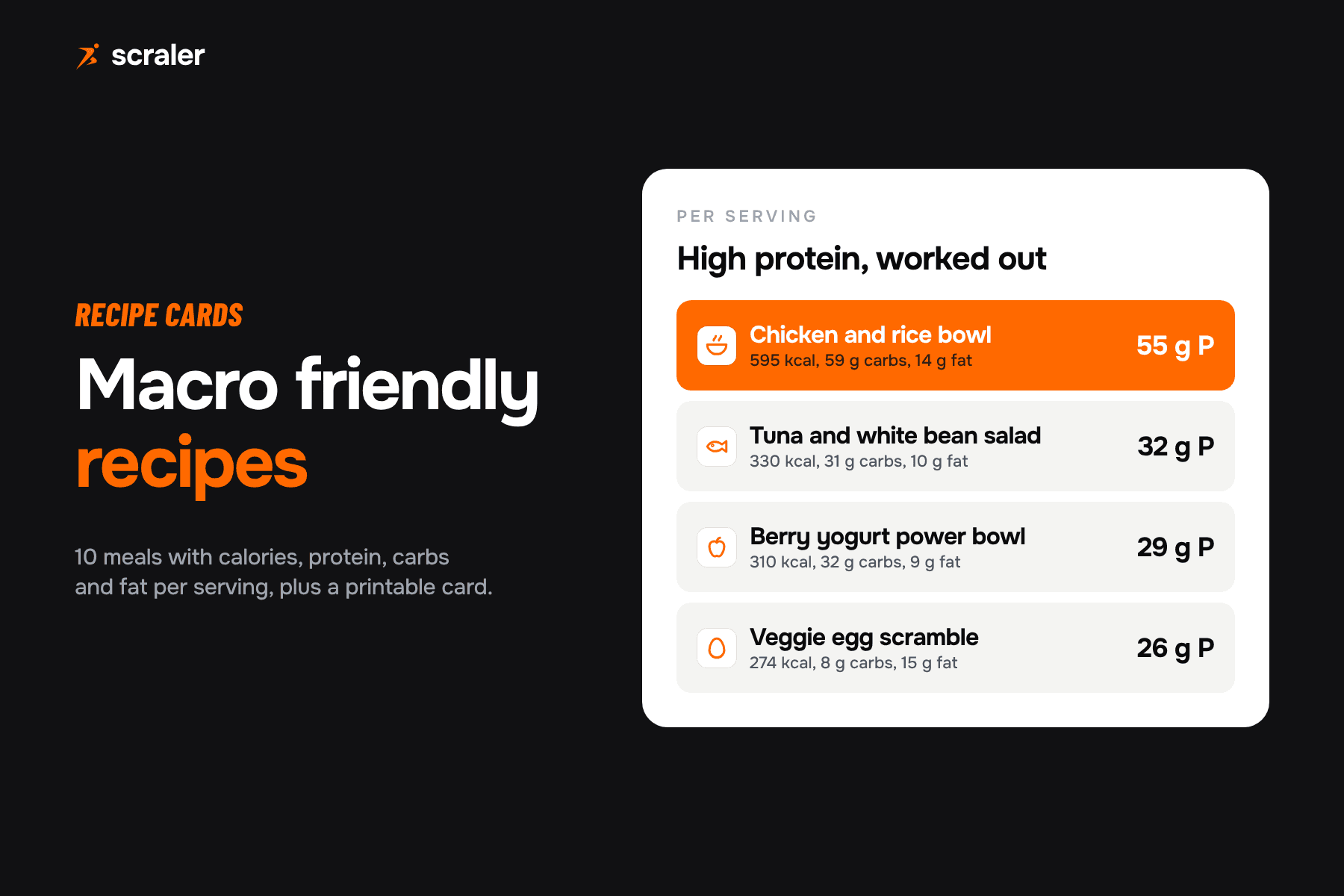
310 kcal, 29 g protein, 32 g carbs, 9 g fat. One serving: Greek yogurt, plain, nonfat 250 g; Blueberries 80 g; Almonds 15 g; Honey 10 g. Spoon the yogurt into a bowl. Top with the blueberries and chopped almonds. Drizzle with the honey.
Veggie egg scramble
274 kcal, 26 g protein, 8 g carbs, 15 g fat. One serving: Whole eggs, raw 100 g; Egg whites, raw 100 g; Spinach, raw 60 g; Red bell pepper, raw 80 g; Olive oil 5 g. Heat the oil in a pan on medium heat. Cook the pepper for 3 minutes, then add the spinach until it wilts. Pour in the beaten eggs and egg whites and stir until set.
Banana yogurt oats
476 kcal, 30 g protein, 72 g carbs, 9 g fat. One serving: Rolled oats, dry 50 g; Skim milk 150 g; Banana, raw 100 g; Greek yogurt, plain, nonfat 150 g; Almonds 10 g. Cook the oats in the skim milk for 3 to 4 minutes. Stir in the sliced banana, then top with the yogurt and almonds.
What are good macro friendly lunch recipes?
Chicken and rice bowl
595 kcal, 55 g protein, 59 g carbs, 14 g fat. One serving: Chicken breast, roasted 150 g; White rice, cooked 180 g; Broccoli, boiled 100 g; Olive oil 8 g; Soy sauce 15 g. Slice the chicken. Warm the rice and broccoli. Put everything in a bowl and finish with the olive oil and soy sauce.
Tuna and white bean salad
330 kcal, 32 g protein, 31 g carbs, 10 g fat. One serving: Light tuna in water, drained 110 g; Canned white beans 130 g; Tomato, raw 80 g; Olive oil 8 g; Lemon juice 10 g. Mix the tuna, beans and chopped tomato. Dress with the olive oil and lemon juice.
What are good macro friendly dinner recipes?
Turkey bean chili
482 kcal, 41 g protein, 40 g carbs, 19 g fat. One serving: Ground turkey 93% lean, raw 150 g; Canned kidney beans, drained and rinsed 130 g; Canned tomatoes 200 g; Onion, raw 60 g; Olive oil 5 g. Brown the turkey with the chopped onion in the oil. Add the beans and tomatoes and simmer for 20 minutes. Multiply by the number of servings for a batch.
Salmon, potatoes and green beans
565 kcal, 36 g protein, 48 g carbs, 26 g fat. One serving: Atlantic salmon, farmed, raw 150 g; Potatoes, boiled in skin 200 g; Green beans, boiled 100 g; Olive oil 5 g. Brush the salmon with the oil and roast until cooked through. Serve with the boiled potatoes and green beans.
Shrimp stir-fry with rice
402 kcal, 29 g protein, 54 g carbs, 8 g fat. One serving: Shrimp, raw 150 g; White rice, cooked 150 g; Red bell pepper, raw 80 g; Broccoli, raw 80 g; Sesame oil 5 g; Soy sauce 15 g. Heat the sesame oil and cook the shrimp for 2 to 3 minutes until pink. Add the vegetables for 3 minutes, then the rice and soy sauce.
Tofu and vegetable stir-fry
620 kcal, 43 g protein, 61 g carbs, 26 g fat. One serving: Firm tofu 200 g; Broccoli, raw 100 g; Carrot, raw 60 g; White rice, cooked 150 g; Soy sauce 15 g; Olive oil 8 g. Cube the tofu and fry in the oil until golden. Add the broccoli and carrot, stir-fry, then add the soy sauce and serve over the rice.
The chili is written for one serving, so multiply it for a batch. All weights are for the state listed on the recipe card, for example raw ground turkey and cooked rice.
A macro friendly snack
Cottage cheese and pineapple bowl
328 kcal, 28 g protein, 29 g carbs, 12 g fat. One serving: Cottage cheese, 2% fat 250 g; Pineapple, raw 120 g; Walnuts 10 g. Spoon the cottage cheese into a bowl. Top with the pineapple and chopped walnuts.
All 10 recipes with ingredients in grams, method, calories and macros per serving, plus the 2,000 calorie day and a blank day planner. Free, no email needed.
What does a macro friendly meal plan look like for one day?
Here is a worked example. Four of the recipes above give a day of 1,964 kcal, 150 g protein, 207 g carbs and 62 g fat. That is about 30% of calories from protein, 42% from carbs and 28% from fat, calculated with 4, 4 and 9 kcal per gram. It is a starting point to show how recipes stack, not a prescription for any one client.
To fit a different target, change portions, not recipes. Scale the rice or potatoes for carbs, the oil or nuts for fat, and keep the protein portion close to what the client needs. If you want a weekly layout with a grocery list, use the free meal plan template, and read how to write a personalized nutrition plan for the steps before you start picking recipes. A healthy grocery list helps clients buy for the week.
How do coaches use macro friendly recipes with clients?
Macro coaching means giving a client daily targets for protein, carbs and fat, then helping them hit those numbers with food they like. Recipes with known macros remove the hardest part: the client does not have to build each meal from raw ingredients. A short list of 10 to 15 repeatable meals is often enough to cover a week.
- Give options, not one menu. Offer two breakfasts, two lunches and two dinners so the client can swap and still hit the day total.
- Share the macros with the recipe. A recipe card that shows kcal, protein, carbs and fat beats a link to a food blog.
- Match the client's language. Recipe text, ingredients and names should read in the client's own language, not yours.
- Check what they actually eat. Targets only work if you see the food log, so review it at each check-in.
This is where a coaching platform saves time. In Scraler you build plans from a recipe library or your own recipes, bundle them into cookbooks and assign them, and clients see the macros and log their food in the app. The recipe library is available in 12 languages, as listed in our client languages update. See the meal planner and macro management pages for how it works. If you want to sell your recipes, see how to make a cookbook.
Build plans from a recipe library, set macro targets and see what clients log, next to their training. Try Scraler free.
See the meal plannerFrequently asked questions
- What are macro friendly recipes?
- Recipes whose calories, protein, carbs and fat are known per serving, so they can be fitted into a daily macro target. Most are built on lean protein, vegetables and a measured amount of carbs and fat.
- How do I make a recipe macro friendly?
- Set the protein portion first, add one carb and vegetables, weigh the oil and sauces, and write the macros per serving. Use the same raw or cooked weights every time.
- How much protein should a macro friendly meal have?
- It depends on the client. The International Society of Sports Nutrition says 1.4 to 2.0 g per kg of body weight per day is sufficient for most exercising people, so an 80 kg client needs 112 to 160 g a day, which is 28 to 40 g per meal across four meals.
- Are the macros on these recipes exact?
- No. They are worked examples computed from USDA FoodData Central values per 100 g and the weights shown. Brands, cooking and weighing change them, so treat them as close estimates and weigh your own food.
- What is a macro diet meal plan?
- A plan that sets daily targets for protein, carbs and fat, then fills the day with meals that add up to those numbers. The one-day example above totals 1,964 kcal, 150 g protein, 207 g carbs and 62 g fat.