Personal Trainer Marketing: 30 Ideas That Get Clients
Personal trainer marketing works when it follows one path: people find you, take a free first step, talk to you, sign up, then bring a friend. Start with free, fast ideas such as client introductions and Google reviews. Add content, a landing page and paid ads once the basics work.

- Every idea fits one of five steps: content, lead magnet, consult, client, referral. Fix the weakest step before adding a new channel.
- Start with free and quick ideas. Asking your current clients for an introduction or a review costs nothing and works this week.
- In BrightLocal's 2026 survey, 83% of people asked for a review left one, and 47% will not use a business with fewer than 20.
- A landing page with one clear offer turns clicks, posts and ads into booked calls. Paid ads only make sense once that page works.
Most trainers do not have a marketing problem, they have a path problem. They post, hand out a card, run an ad, and nothing connects the attention to a booked call. This guide gives you 30 ideas, sorted by what they cost and how fast they work, and a simple path to hang them on. Pick three, run them for a month, then add more.
What is the simplest marketing plan for a personal trainer?
One path, five steps. Content gets you seen. A lead magnet, a free first step, gets you a name and a way to reach them. A consult, a short call or a free first session, lets them meet you. A client signs up for a package or membership. A referral is the happy client who brings a friend, and the cheapest new client you will ever get.
When new clients stall, find the step where people drop off. Plenty of posts but no calls booked means the lead magnet or the booking link is the problem. Plenty of calls but few sign-ups means the offer or the price conversation is the problem. Adding another channel will not fix either.
What are the best marketing ideas for personal trainers?
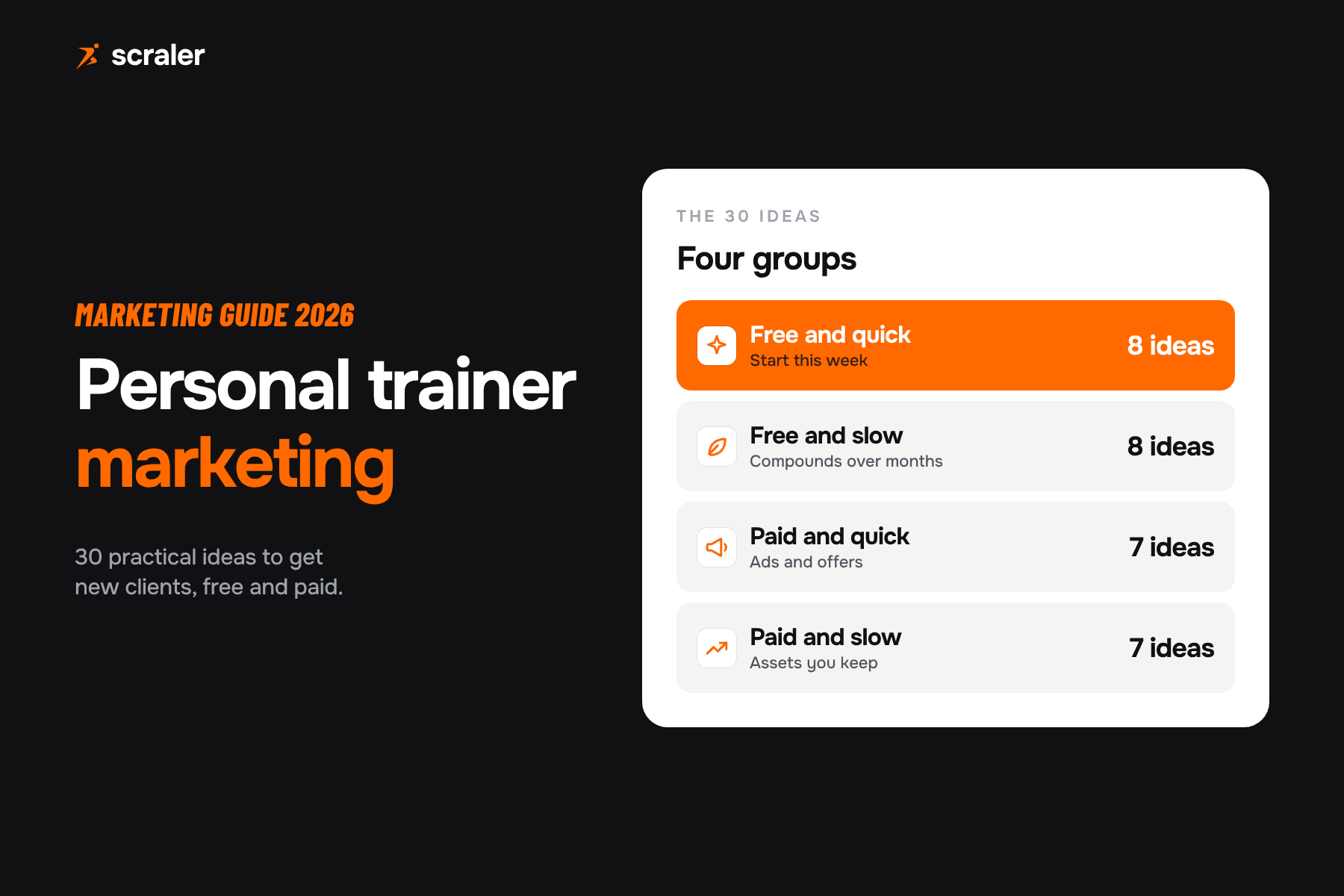
Here are 30, in four groups. "Free" means no cash cost, not no effort.
Free and quick: start this week
- Ask every client for one introduction. One name each, asked in person at the end of a good session.
- Offer a bring a friend session. The friend trains free once, with your client.
- Message past clients and old leads. A short, personal note: "I have two spots opening in November."
- Post one client win a week. With their permission, and the result they care about, not just a photo.
- Claim your Google Business Profile. Covered below, it matters most if you train in a place.
- Ask happy clients for a Google review. Send the link the same day as the compliment.
- Be useful in local Facebook groups. Answer questions, follow the group rules, never spam.
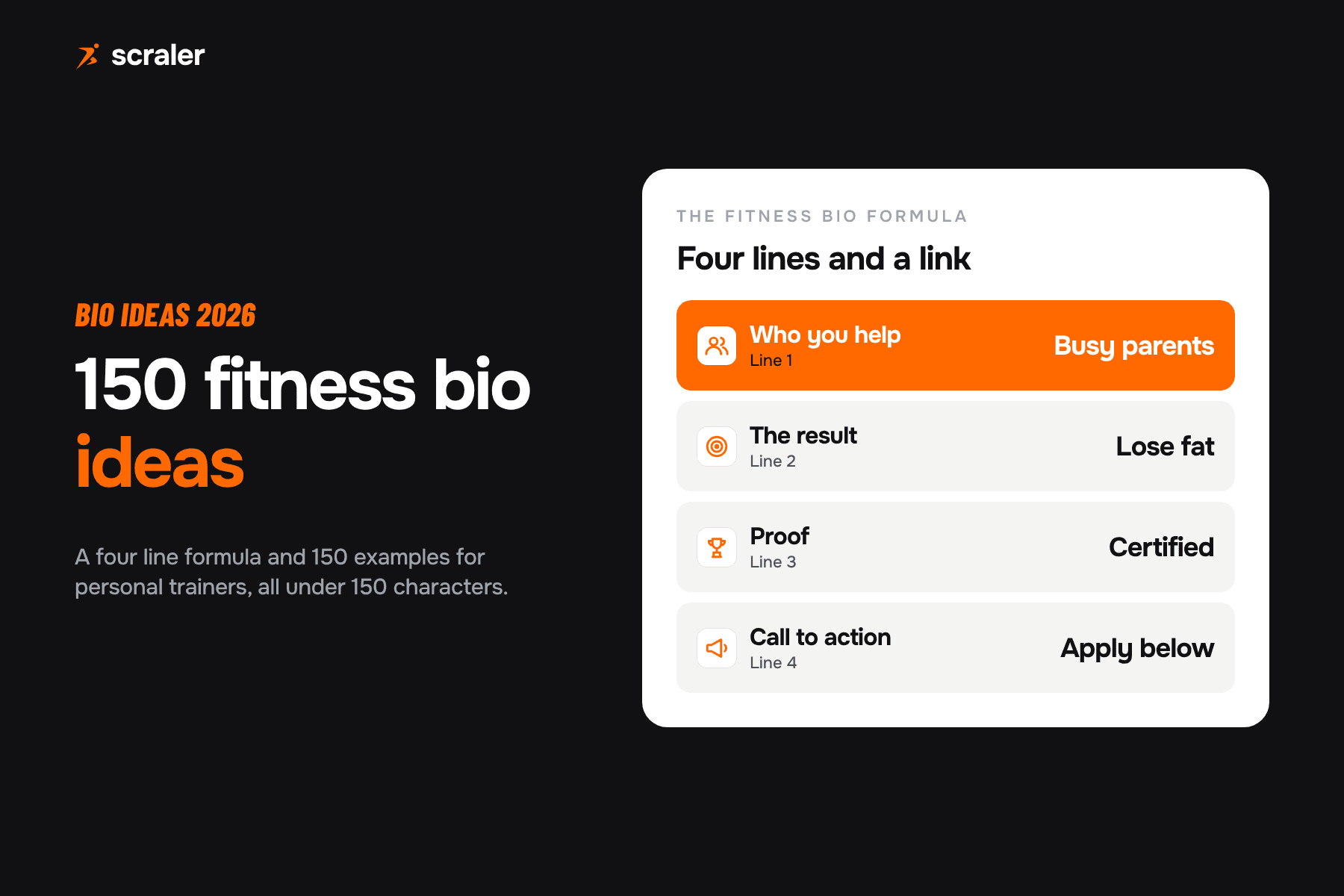
- Put a booking link in every bio and email signature. One link, one next step. Our fitness Instagram bio ideas show how to write the rest of it.
Free and slow: compounds over months
- Short videos that teach one thing. One exercise, one mistake, one fix. Tag them with care, using our fitness hashtags for Instagram.
- An email list with a lead magnet. A free 4 week plan or a fitness challenge in return for an email. Our fitness newsletter guide shows what to send once they sign up.
- A local search page. A page that says what you do and where, for the people searching "personal trainer in your town".
- Partnerships with physios and chiropractors. They send clients who finished rehab and need a coach.
- Work with local businesses. Offices, running clubs and schools often want a trainer for a session.
- A free community challenge. Four weeks, one group chat, a clear finish line.
- Workshops at a club or office. A 45 minute talk on one topic, with a sign-up sheet at the end.
- Collect testimonials as you go. Ask at week 6 and week 12, not after they leave.
Paid and quick: money in, leads out
- Facebook and Instagram ads. Pay Meta to show one offer to people nearby. We cover this in Facebook ads for personal trainers.
- Google search ads. You pay when someone searches for a trainer near them and clicks.
- A referral reward. A credit or a free session for the client who brings a new one.
- A paid trial offer. Three sessions for a fixed price, with a clear path into a package.
- Flyers with a QR code. Left at cafes, physios and gyms, pointing to your landing page.
- Boost a post that already works. Spend on content that earned attention without ads.
- A giveaway with a local business. A month of coaching and a partner's prize, one entry per email.
Paid and slow: assets you keep
- A landing page on your own domain. The place every other idea sends people to.
- A photo and video shoot. One afternoon of content you reuse for a year.
- A paid group challenge. An 8 week programme sold as an event, then converted to a membership.
- Local sponsorship. A kit sponsor for a running club or a school team.
- A podcast guest spot or your own show. Slow, but the audience trusts you.
- Networking membership. A local business group where owners refer to each other.
- Email automation. A welcome sequence that runs without you.
Which marketing ideas should you start with?
It depends on where you are. Use this as a starting point, then keep what produces booked calls and drop what does not.
- Start with
- Introductions, past leads, booking link in every bio, Google Business Profile
- Add next
- Short videos, a free challenge
- Start with
- Reviews, testimonials, a referral reward, a landing page
- Add next
- Email list, physio partnerships
- Start with
- A landing page with an offer, paid ads, email automation
- Add next
- Paid challenge, sponsorship
| Where you are | Start with | Add next |
|---|---|---|
| Empty diary | Introductions, past leads, booking link in every bio, Google Business Profile | Short videos, a free challenge |
| Some clients, no waiting list | Reviews, testimonials, a referral reward, a landing page | Email list, physio partnerships |
| Steady clients, want more | A landing page with an offer, paid ads, email automation | Paid challenge, sponsorship |
How do you get personal training clients from reviews?
Reviews are the cheapest marketing in the list. BrightLocal's Local Consumer Review Survey 2026 covers local businesses in general, not only trainers, but the pattern applies to anyone people search for by name or by area.
The takeaway is simple. Asking works, so ask every client at a happy moment, such as a personal best or the end of a programme, and send the link right away. Aim for 20 reviews before you spend anything on ads, because a stranger who clicks an ad will check them.
Google's own Business Profile tips say the same four things: verify the profile, keep the information complete and accurate, reply to reviews, and add photos and videos. It takes an hour and it is free. If you work online only, a profile matters less, and your testimonials page and landing page do this job.
How do you set up a personal trainer referral program?
Keep it small and written down. Pick one reward, tell every client about it at sign-up, and ask again when they hit a milestone. Three rules make it work:
- 1.Reward both people. The new client gets a better start, the referrer gets a thank you.
- 2.Pay after the new client pays. The reward follows the first paid month, not the first message.
- 3.Make it easy to say. "Know someone who would like this? Send them my link."
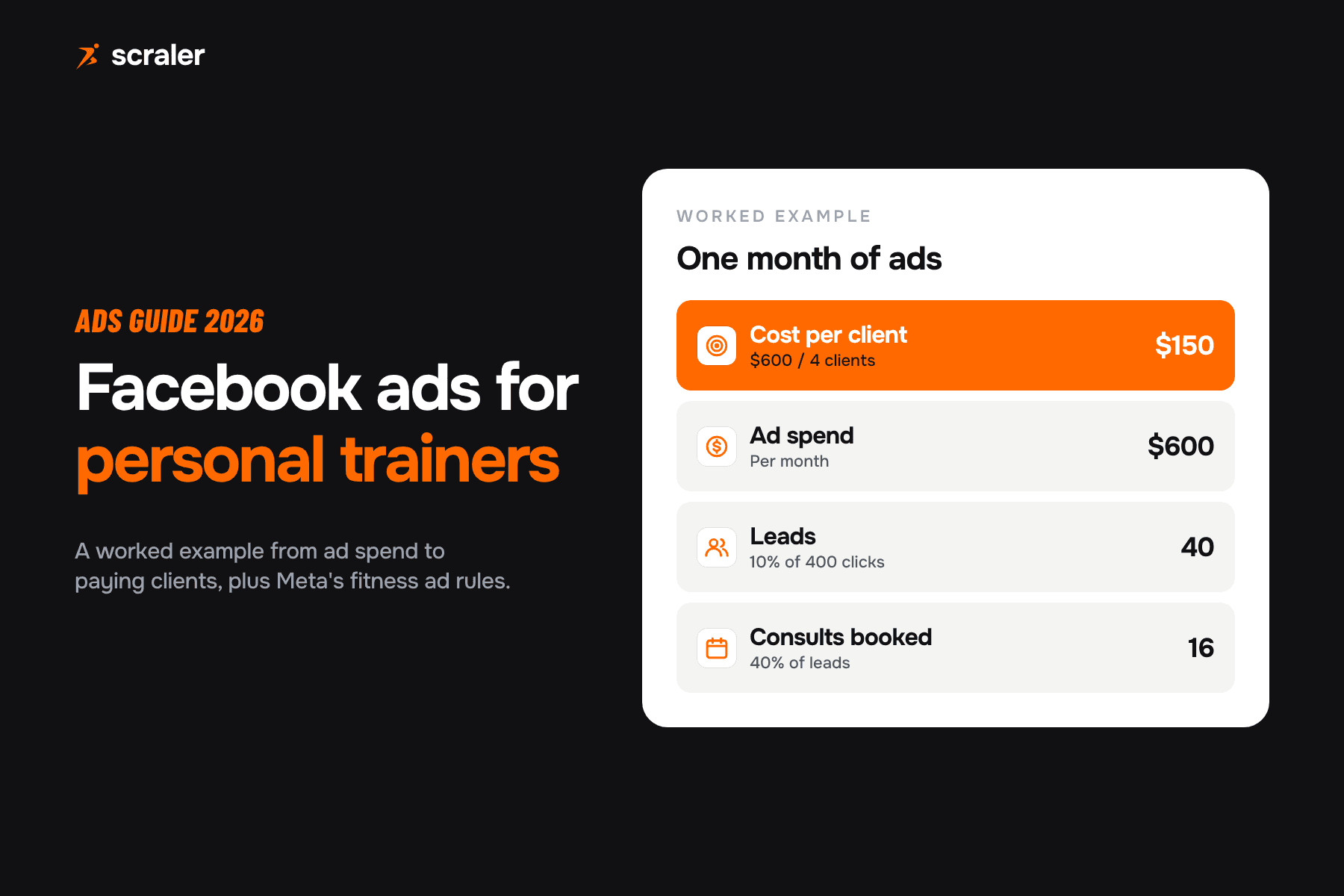
A worked example, not survey data. Say a client pays $200 a month and you offer a $50 credit to the referrer once the new client has paid their first month. The reward costs $50. Compare that to what you pay to win a client through ads: in our worked example in Facebook ads for personal trainers it is $150. Use your own numbers.
A community helps here, because clients who feel part of something talk about it. Scraler's community gives you a default space for all active clients and invite-only groups for a cohort or a VIP tier, so wins get shared where your clients already are. Scraler does not track referrals for you, so keep a simple note of who sent whom.
Do personal trainers need a landing page?
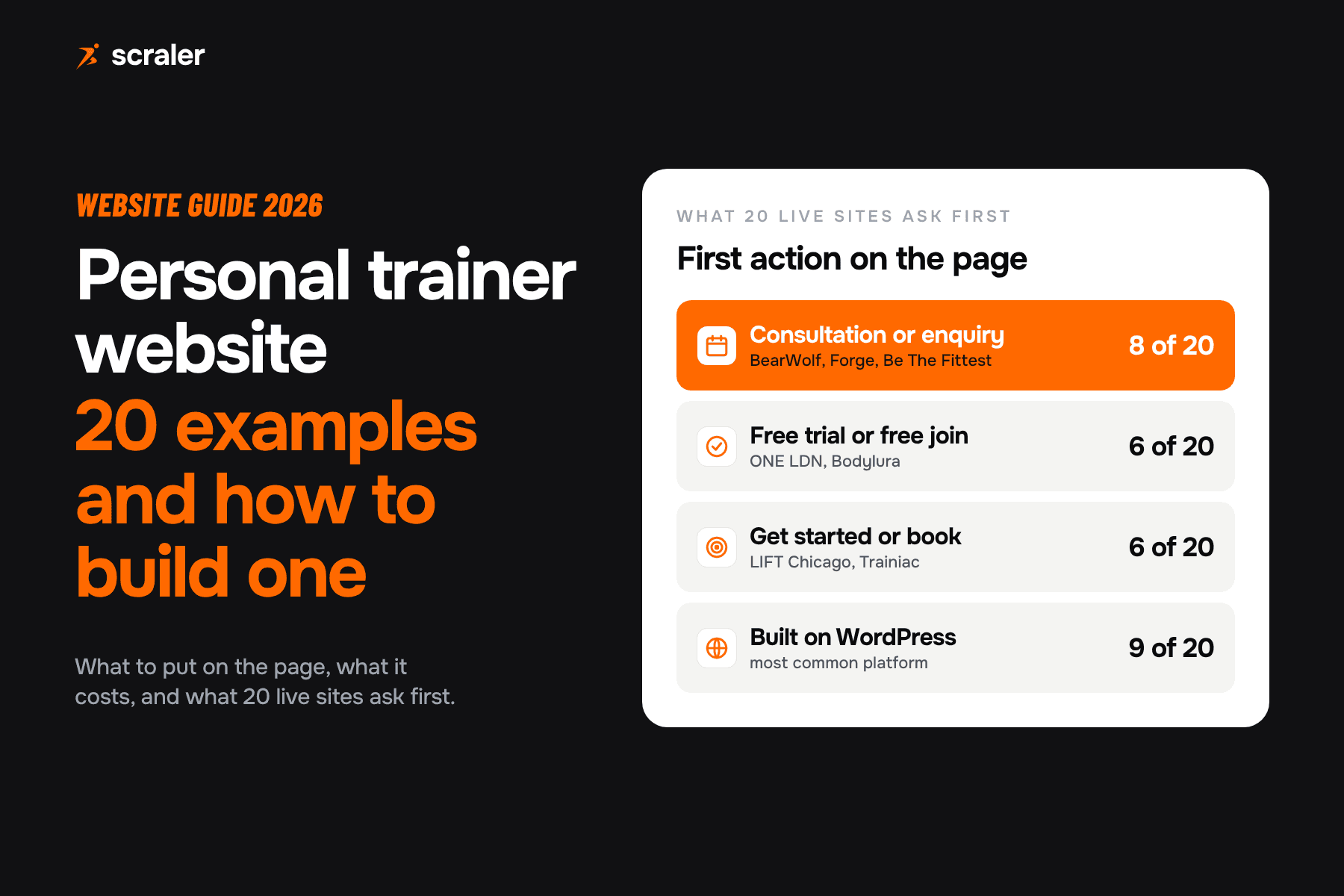
Yes, once you send traffic anywhere. A post, an ad or a flyer needs one place to land, with one offer and one button. A full website is optional, a landing page is not. BrightLocal found that 54% of consumers visit a business's website after reading positive reviews, so the page is where your reviews turn into calls. Our guide to the personal trainer website shows 20 real examples.
A good page for a trainer has a headline that names who it is for, three or four testimonials, how it works in three steps, the price or a clear next step, an FAQ, and one booking or sign-up button. Scraler's landing page builder includes sections for testimonials, transformations, FAQ and contact, plus memberships, programs, events and appointments that clients can buy or book on the page.
Build a landing page with your offer, testimonials and a live buy or booking button, then publish it on your Scraler address (or your own domain on Ultimate). Landing page builder is included in Premium and Ultimate.
See the landing page builderHow can automations help with personal trainer marketing?
Marketing does not end at sign-up. A new client who gets a welcome message, a first workout and a check-in in week one is far more likely to stay and to refer. Scraler's automations include a New Client Onboarding template that sends a welcome message, and triggers such as a new client, a missed workout, a submitted check-in and inactivity, so the follow-up happens without you remembering it. Automations are part of the Ultimate plan.
- New client: welcome message and first steps, the same day.
- Missed workouts: a short check-in message before they drift away.
- A milestone or finished programme: the moment to ask for a review and an introduction.
How do you know which marketing works?
Count three things a month: new leads, booked calls and new clients, and write down where each one came from. Ask every new client "how did you find me?" and note the answer. After two months you will see which two ideas deserve more of your time. Drop the one that brought nobody, and do not judge a slow idea such as videos or an email list after two weeks.
A worked example, not survey data. A month of marketing might be: 12 leads, 6 booked calls and 2 new clients. If most leads came from introductions and reviews and none from posts, spend the next month asking for more introductions and posting less.
Frequently asked questions
- What is the best way to market a personal training business?
- Referrals and reviews from your current clients, then a landing page that turns attention into booked calls. They cost nothing, work this week, and build the proof every other channel needs. Add content and paid ads after that.
- How do I get my first personal training clients?
- Tell people you know, ask for one introduction from each, message past contacts, and offer a free first session or a short free challenge. Put a single booking link in every bio and email signature.
- Are Facebook ads worth it for personal trainers?
- They can be, once you have a landing page, reviews and a clear offer. Ads buy attention, they do not fix a weak offer. Work out your cost per client first, as shown in our Facebook ads guide.
- How much should a personal trainer spend on marketing?
- Start with the free ideas and spend only on what has already worked. When you add ads, begin with a small test budget you can afford to lose and judge it by cost per paying client, not by clicks.
- Does a personal trainer referral program work?
- It works when the reward is clear and easy to say, and when you ask at the right moment, such as a milestone. Pay the reward after the new client pays, and reward both people.
- Do personal trainers need social media?
- It helps, but it is not the only route. Referrals, reviews, a Google profile and local partnerships bring clients without posting every day. Use social media for proof and personality, and always link to one booking page.