How Much Do Personal Trainers Make in 2026? Real Numbers and How to Earn More
How much do personal trainers make? The median US personal trainer earns $47,160 a year, or $22.67 an hour, according to O*NET using BLS 2025 wage data. The lowest 10 percent earn $28,800 or less and the top 10 percent $83,100 or more. The earnings of a personal trainer depend mostly on how many paid hours they fill.

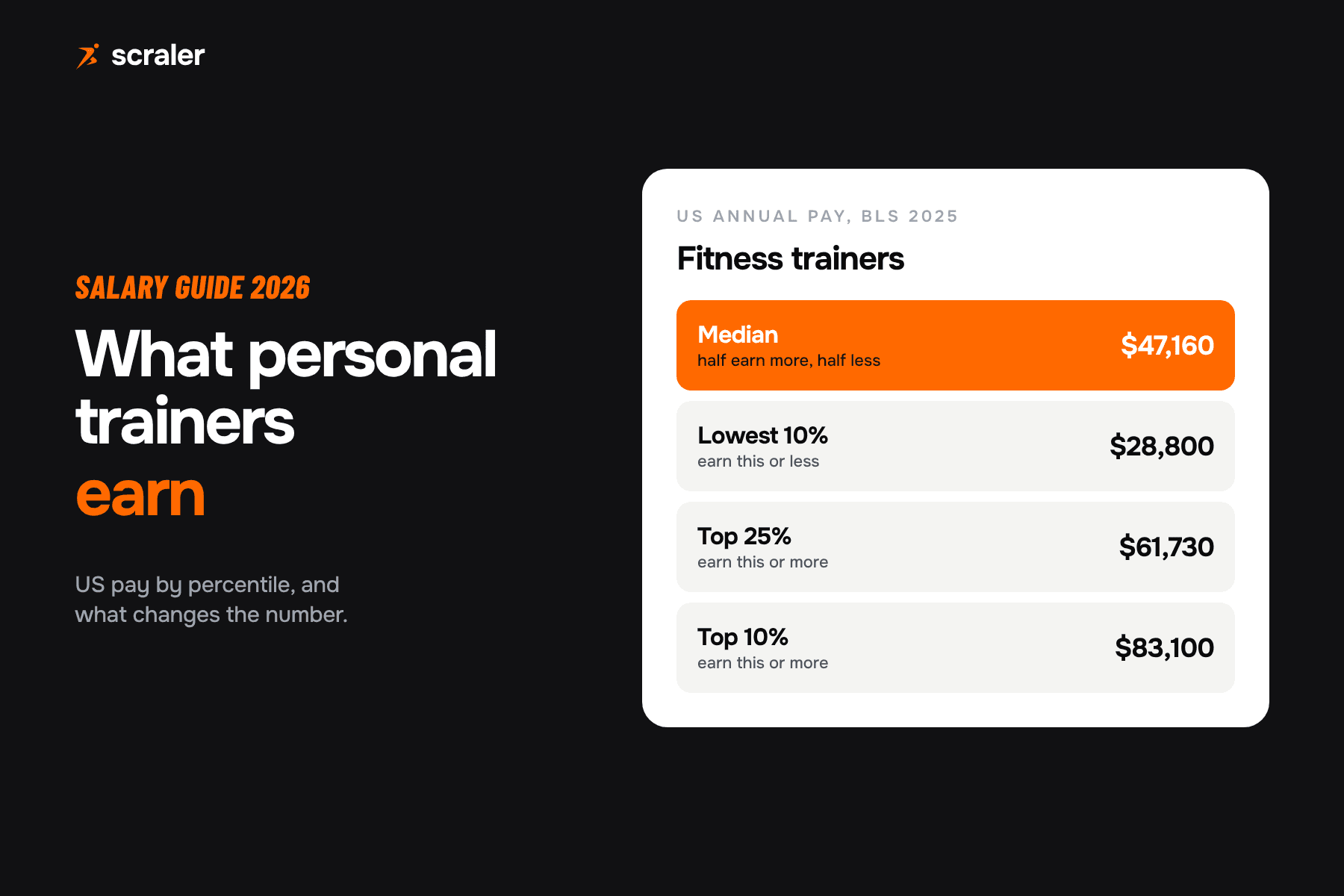
- US median pay is $47,160 a year ($22.67 an hour). The top 10 percent earn $83,100 or more and the lowest 10 percent $28,800 or less.
- Clients pay about $55 an hour on average (Thumbtack). The gap to a $22.67 wage is the gym’s share plus the unpaid time around sessions.
- Independent trainers earn more per hour but carry rent, insurance and empty slots. Online coaches earn more only if they cut the hours each client takes.
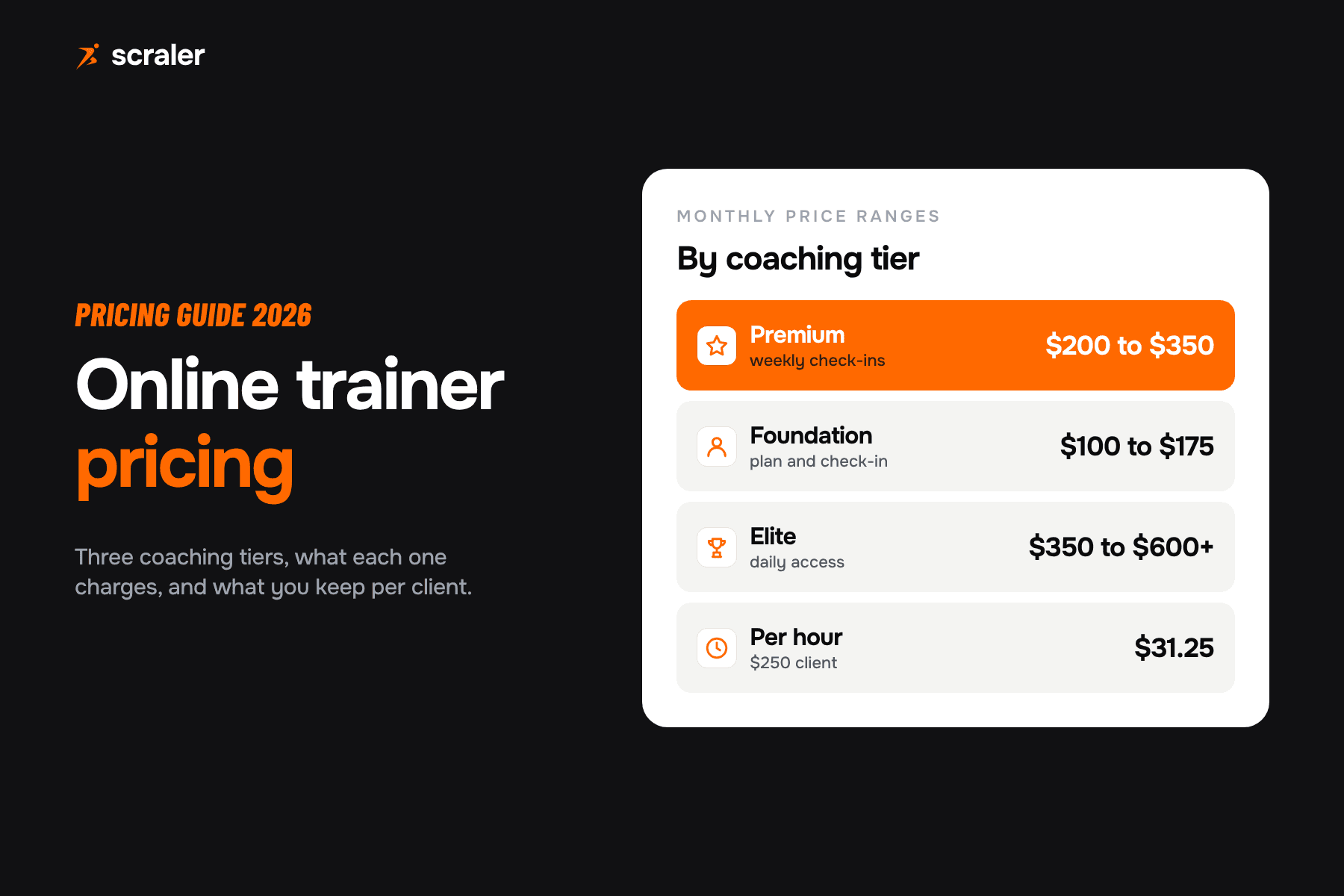
- Full-service online coaching costs clients $150 to $350 a month and takes a coach 1.5 to 3 hours per client per week (FitBudd).
There is no single number for what a personal trainer makes. A trainer employed at a big gym, one renting a studio floor and one coaching 40 people online all report the same job title. This guide uses the official wage data for the middle of the market, then shows with worked examples what changes the figure and what you can do about it.
What are the earnings of a personal trainer in the US?
According to O*NET, which publishes Bureau of Labor Statistics 2025 wage data for exercise trainers and group fitness instructors, the median is $47,160 a year. Half of US trainers earn less, and half earn more. The spread is wide: the lowest 10 percent earn $28,800 or less, and the top 10 percent earn $83,100 or more.
- Annual pay
- $28,800
- Hourly pay
- $13.85
- Annual pay
- $35,280
- Hourly pay
- $16.96
- Annual pay
- $47,160
- Hourly pay
- $22.67
- Annual pay
- $61,730
- Hourly pay
- $29.68
- Annual pay
- $83,100
- Hourly pay
- $39.95
| Percentile | Annual pay | Hourly pay |
|---|---|---|
| Lowest 10 percent | $28,800 | $13.85 |
| 25th | $35,280 | $16.96 |
| Median | $47,160 | $22.67 |
| 75th | $61,730 | $29.68 |
| Top 10 percent | $83,100 | $39.95 |
The jump from the median to the 75th percentile is $14,570 a year. The jump from the 75th to the 90th is $21,370. The top of the range is where trainers stop trading hours for a wage and start selling packages, memberships or a client list they own.
How much do personal trainers make per hour?
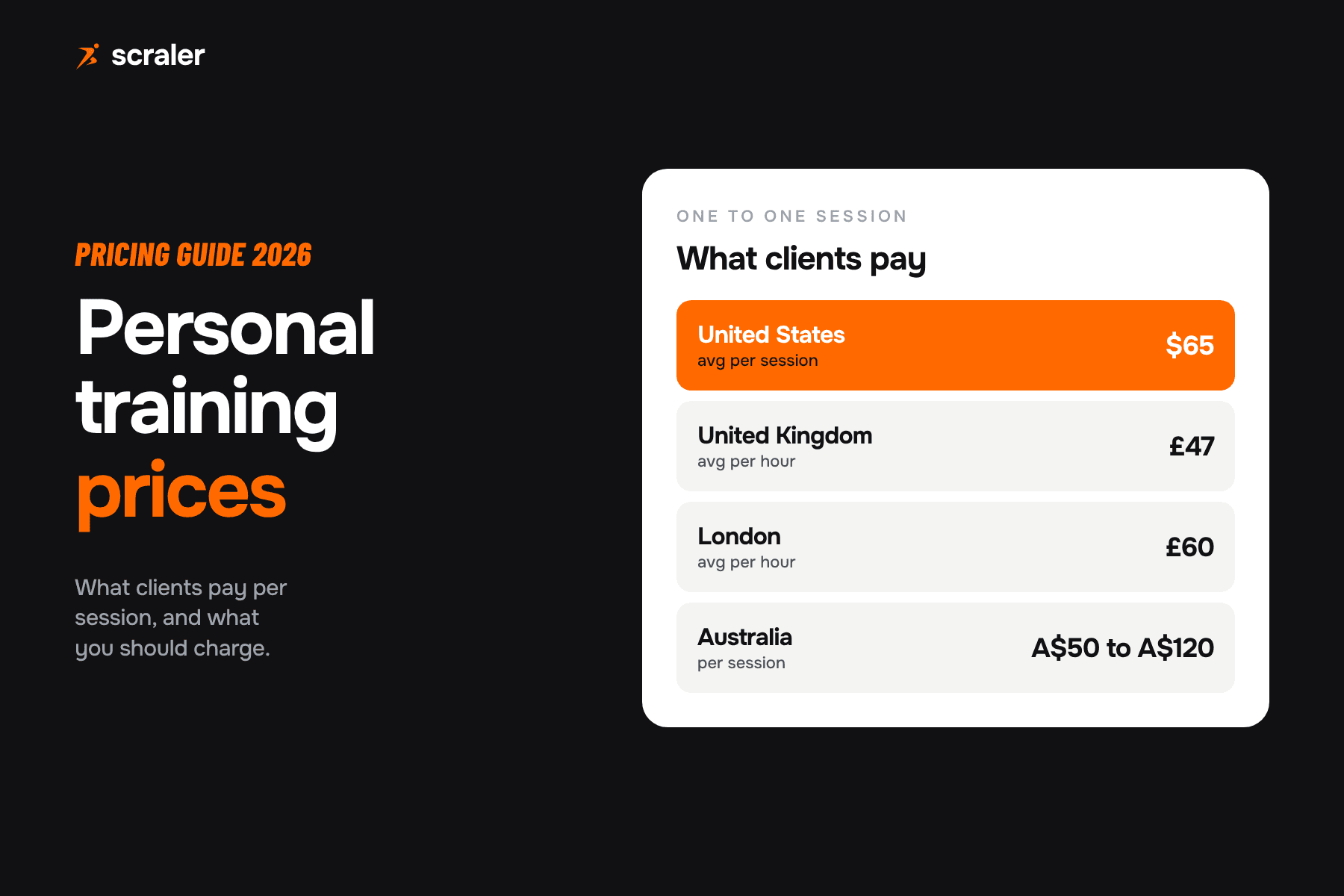
The median hourly figure is $22.67, and 9 in 10 earn at least $13.85. That is what the trainer is paid, not what the client pays. Thumbtack puts the national price of a personal training session at $40 to $100 an hour, with an average of $55.
So why does the client pay $55 and the trainer take home $22.67? Three things sit in the gap. The gym or studio keeps a share to cover floor space, equipment and marketing. A paid session hour is not a paid working hour, because planning, messaging and admin happen around it. And on an hourly or split arrangement, cancelled and empty slots earn nothing. We cover the client side of the price in personal training prices in 2026.
How much do gym, independent and online trainers make for the same hours?
Here is a worked example, not survey data. It takes 25 working hours a week over 4 weeks a month and applies the sourced figures above. It ignores tax and business costs so the models are easy to compare.
- How it is calculated
- 100 hours at the $22.67 US median wage
- Per month
- $2,267
- Per hour worked
- $22.67
- How it is calculated
- 100 paid sessions at $55, the Thumbtack average
- Per month
- $5,500
- Per hour worked
- $55.00
- How it is calculated
- 12.5 clients at $250 a month
- Per month
- $3,125
- Per hour worked
- $31.25
- How it is calculated
- 25 clients at $250 a month
- Per month
- $6,250
- Per hour worked
- $62.50
| Model | How it is calculated | Per month | Per hour worked |
|---|---|---|---|
| Gym employee | 100 hours at the $22.67 US median wage | $2,267 | $22.67 |
| Independent, in person | 100 paid sessions at $55, the Thumbtack average | $5,500 | $55.00 |
| Online, 2 hours per client a week | 12.5 clients at $250 a month | $3,125 | $31.25 |
| Online, 1 hour per client a week | 25 clients at $250 a month | $6,250 | $62.50 |
Three things stand out. The independent trainer earns more than twice the employee for the same hours, but only if all 100 hours are paid sessions, and they pay for the room, insurance and marketing out of that figure. The online coach on a heavy workload earns less per hour than the independent trainer. And the same online coach at half the time per client earns twice as much. Online coaching does not pay more by itself. Time per client decides it.
How much do online personal trainers make?
Online coaches are usually paid by subscription. FitBudd, a coaching software company, published 2026 ranges of $100 to $175 a month at entry level, $150 to $350 for mid-level full-service coaching and $350 to $800 or more for specialists for full-service coaching. Its benchmark table lists a lower $75 to $150 at entry level for check-ins and programming only. Multiply by your client count and you have your revenue before costs.
The catch is time. The same FitBudd guide says a full-service client typically takes 1.5 to 3 hours a week to coach, counting programming, check-ins, messages and video calls. At $150 a month and 2 hours a week that is $18.75 an hour in their own calculation, and at $250 a month it is $31.25. Both are below what many in-person trainers charge. The coaches who earn well online either charge for a niche, as the specialist tier shows, or build systems that cut the time per client. Our online personal trainer pricing guide builds tiers around that time.
Many trainers now blend the two, with a few sessions a month plus an app in between. The numbers for that model are in hybrid personal training packages, and the online coaching platforms guide compares the tools.
How much do personal trainers make in the UK and Australia?
We could not find a UK or Australian wage source we could read and verify, so we will not quote a salary. What we can give you is what clients pay, which sets the ceiling for an independent trainer. Bark puts the UK average at £47 an hour, and £60 in London. Yellow Pages Australia gives A$50 to A$120 per one to one session, with Sydney at A$70 to A$120 an hour.
What costs reduce what a personal trainer takes home?
Every figure above is before tax, and each model carries different costs. An employee has few: the cost is the share the gym keeps. An independent trainer pays for floor rent or a studio fee, liability insurance, education, marketing and the time lost to cancellations. An online coach pays for software, payment fees and content tools.
FitBudd gives an example of the online side: software at $79 a month, $50 a month for content tools and a 2.9 percent payment fee add up to, in their words, well over $130 a month before a single coaching hour. As a worked example, 25 clients at $250 bring in $6,250 a month. The same overhead is $129 plus a 2.9 percent fee of $181, so about $310, or 5 percent. That is small next to gym rent, but it is real, and it is why the price per client matters as much as the client count.
Is personal training a good career for income?
It can be, but the median figure tells you that most trainers do not get rich on a wage. The route up is not working more hours in the same model. It is moving from the left of the table to the right: from hourly pay, to charging clients directly, to selling programmes that do not need you in the room for every hour. Trainers who track income per working hour, not per session, find the weak spot in their week much faster. If you are planning that move, see how to start a personal training business.
How can a personal trainer earn more?
Pay rises come from raising the price per hour, raising the number of paid hours, or lowering the unpaid hours. Here are the levers that move the numbers above.
- Go independent, or renegotiate your split. The gap between the $55 clients pay and the $22.67 median wage is the biggest single lever.
- Pick a niche. FitBudd’s specialist tier is $350 to $800 or more a month against $100 to $175 at entry level. Specialists compete on fit, not price.
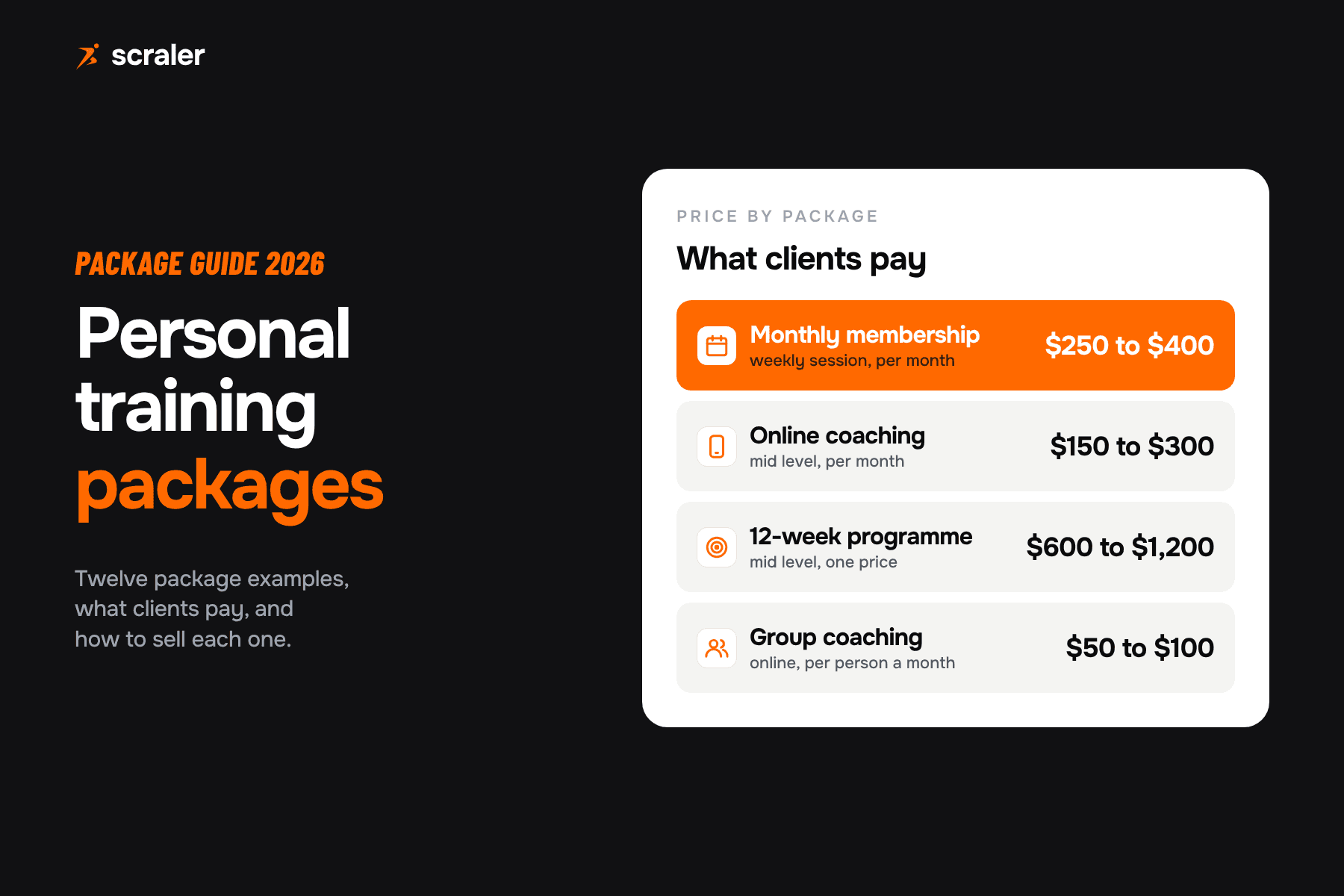
- Sell packages and memberships. A monthly membership turns a client who rebooks week to week into steady income. See personal training prices for a packages example.
- Add semi-private or group sessions. More paying people per hour of floor time.
- Add online or hybrid clients. You serve people on days you are not in the room.
- Cut unpaid time per client. Automate check-ins, reuse programme templates and answer messages in set blocks. This is the lever the 1 hour versus 2 hour example shows.
Scraler automates check-ins, programme delivery and reminders, so you can coach more clients in the same working week without losing the personal touch.
See automation featuresWhichever route you pick, track the number that matters: income per working hour, including admin. If you do not know it, the income calculator is a five minute start. Two things also move your starting pay: a recognised qualification (see personal trainer certification) and a clear personal trainer resume when you apply to gyms.
Frequently asked questions
- How much do personal trainers make a year?
- The US median is $47,160 a year, according to O*NET using BLS 2025 wage data. The lowest 10 percent earn $28,800 or less, the 75th percentile $61,730 and the top 10 percent $83,100 or more.
- How much does a personal trainer make per hour?
- The US median is $22.67 an hour, with 10 percent earning $13.85 or less and 10 percent earning $39.95 or more. Clients pay about $55 an hour on average, so the trainer’s pay is lower than the session price.
- How much do online personal trainers make?
- It depends on price and client numbers. FitBudd lists $100 to $175 a month per client at entry level, $150 to $350 at mid level and $350 to $800 or more for specialists. Income is that price times your client count, minus costs, and it depends on how much time each client takes.
- Do independent personal trainers earn more than gym trainers?
- Per paid hour they usually do, because they keep the full session price. In our worked example 100 paid hours at $55 gives $5,500 a month against $2,267 at the $22.67 median wage. But independent trainers pay for rent, insurance and marketing, and fill their own diary.
- Is the BLS figure for personal trainers only?
- It covers the category exercise trainers and group fitness instructors, so it includes group fitness instructors alongside personal trainers. Treat it as the middle of the market, not a quote for one role.
- How can I work out my own personal trainer income?
- Multiply your paid hours by your price, add other income such as memberships and online clients, then subtract gym fees and business costs. The free personal trainer income calculator does the sum with your own numbers.