Personal Training Contract Template and Liability Waiver (Free PDF)
A personal training contract template is a written agreement covering what you will deliver, what the client pays, how cancellations work and who is responsible if something goes wrong. Ours is a free 12 clause PDF, with a separate liability waiver. Both are general templates, not legal advice, so have a local lawyer review them.

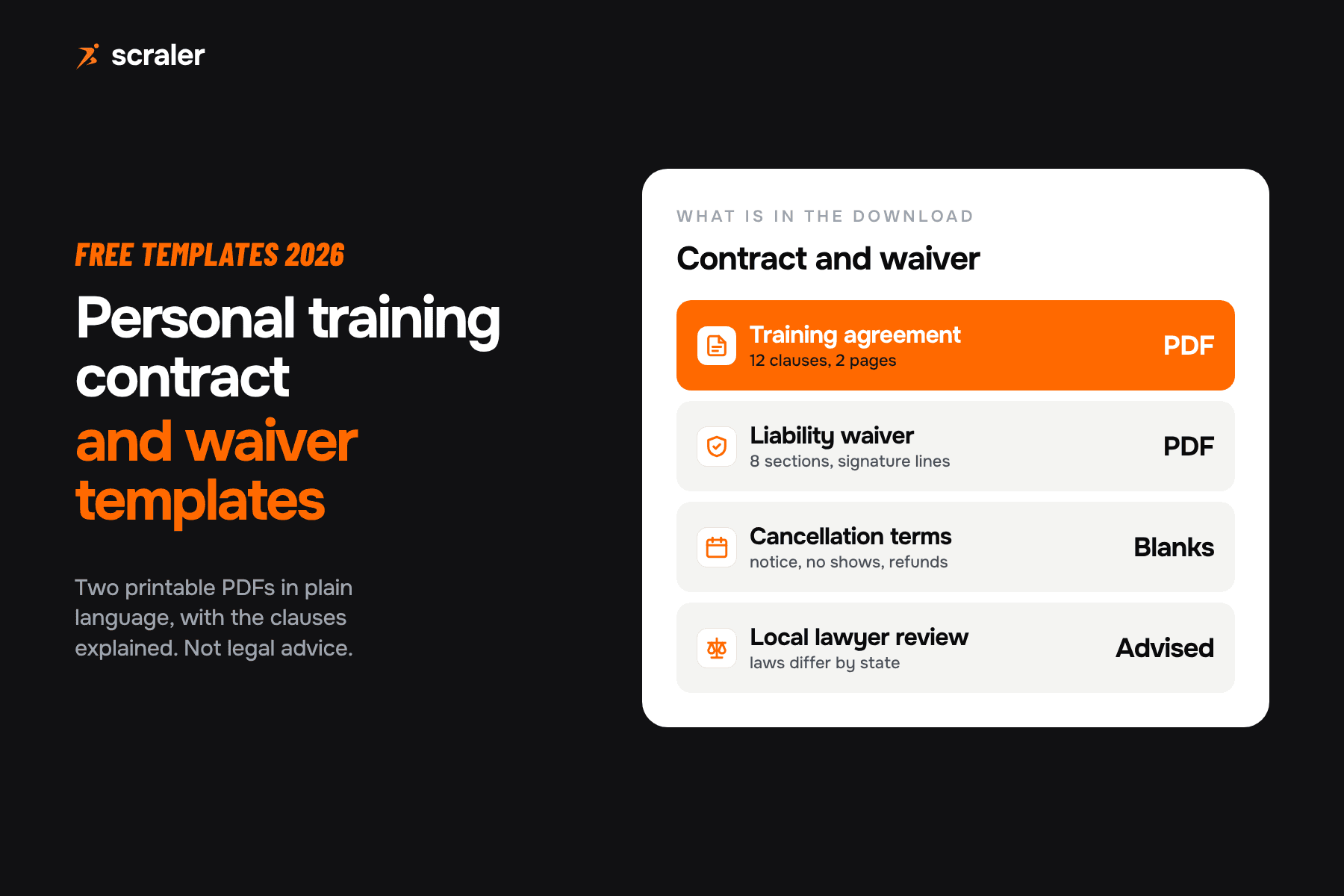
- A personal training contract covers services, fees, cancellations, refunds, health duties, liability, privacy, term and disputes. Our free PDF has 12 clauses.
- The liability waiver is a separate signed page. It records that the client understands the risks of exercise and accepts them.
- A waiver is not a guarantee. Courts look hard at them and can refuse to enforce one that is too broad or tries to cover gross negligence.
- These are general templates in our own wording, not legal advice. Laws differ by country and state, so have a lawyer where you work review them.
Most trainers start with a handshake and a payment link. That works until a client stops showing up after three sessions and disputes a prepaid package, or gets hurt and you cannot show what they agreed to. A written agreement turns those arguments into a page you can point to. This page gives you two templates and explains what each clause is for.
What is a personal training contract?
A personal training contract, also called a personal training agreement, is the document that sets the terms between you and a client. It names both sides, says what training the client gets, what it costs and when it is due, what happens when a session is cancelled, and how either side can end the arrangement. It protects you, and it protects the client, because it sets clear expectations from the first day. The program itself lives in a separate document, such as our workout plan template.
It is different from a liability waiver. Trainerize puts the split this way in its own guide: a contract covers the whole business relationship, a waiver deals specifically with risk, and most trainers need both, often combined in one document. We keep them as two pages so the waiver stands out and the client reads it on its own.
A two page, 12 clause training agreement and a separate liability waiver, both A4 with fill-in blanks and signature lines. General templates in plain language. Not legal advice: have a local lawyer review them before you use them.
What should a personal training contract include?
Trainerize lists eight core clauses: identification and contact details, scope of services, payment terms, cancellation and no-show policy, liability waiver, confidentiality, termination and dispute resolution. Our template covers those and adds four that trainers ask us about: package expiry, refunds, health duties and insurance. Here is what each one does and what you fill in.
- What it does
- Says what the client is buying
- What you fill in
- Session type, number, length, location, what is not included
- What it does
- Sets price and due dates
- What you fill in
- Amount, schedule, payment methods, late payment rule
- What it does
- Stops open ended prepaid sessions
- What you fill in
- Weeks until sessions expire
- What it does
- Protects your time
- What you fill in
- Notice hours, charge for late cancels and no shows
- What it does
- Says what comes back and when
- What you fill in
- Refund rule for undelivered sessions
- What it does
- Makes the client disclose and report changes
- What you fill in
- Nothing, but needs a PAR-Q and intake form
- What it does
- Links to the signed waiver
- What you fill in
- Nothing, check wording with a lawyer
- What it does
- Records your cover and certificates
- What you fill in
- Tick what you hold
- What it does
- Says how data and photos are used
- What you fill in
- Photo consent choice
- What it does
- Says how the agreement stops
- What you fill in
- Fixed term or rolling, notice days
- What it does
- Sets how to resolve problems
- What you fill in
- Governing law and mediation route
- What it does
- Records agreement
- What you fill in
- Names, signatures, dates
| Clause | What it does | What you fill in |
|---|---|---|
| 1. Services | Says what the client is buying | Session type, number, length, location, what is not included |
| 2. Fees and payment | Sets price and due dates | Amount, schedule, payment methods, late payment rule |
| 3. Packages and expiry | Stops open ended prepaid sessions | Weeks until sessions expire |
| 4. Cancellations | Protects your time | Notice hours, charge for late cancels and no shows |
| 5. Refunds | Says what comes back and when | Refund rule for undelivered sessions |
| 6. Health and duties | Makes the client disclose and report changes | Nothing, but needs a PAR-Q and intake form |
| 7. Risk and liability | Links to the signed waiver | Nothing, check wording with a lawyer |
| 8. Insurance | Records your cover and certificates | Tick what you hold |
| 9. Privacy and photos | Says how data and photos are used | Photo consent choice |
| 10. Term and ending | Says how the agreement stops | Fixed term or rolling, notice days |
| 11. Disputes and law | Sets how to resolve problems | Governing law and mediation route |
| 12. Signing | Records agreement | Names, signatures, dates |
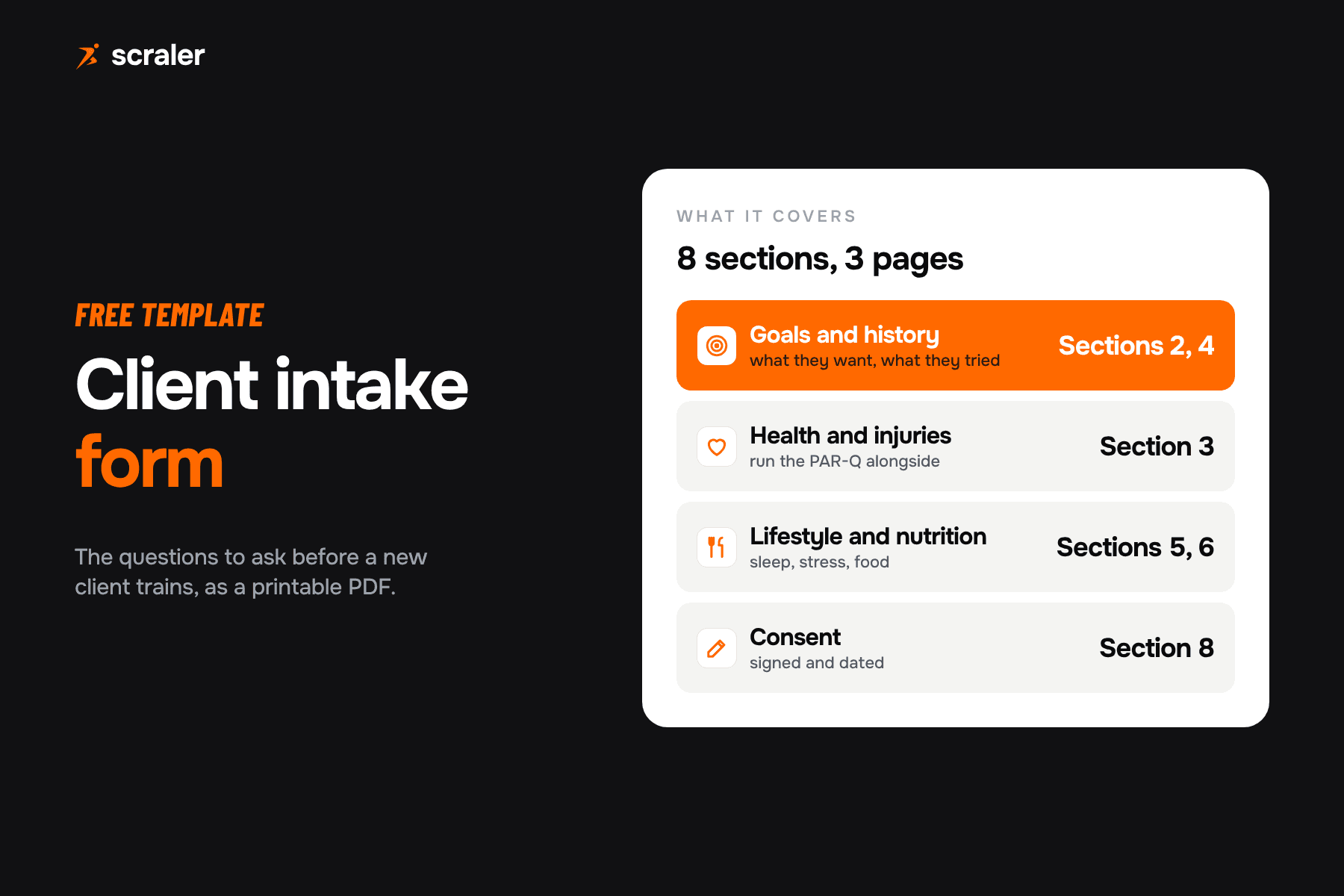
The health and data clauses work best alongside a signed health screening and an intake form. Our free client intake form template and PAR-Q form template are built to sit next to this contract.
What goes in a personal trainer liability waiver?
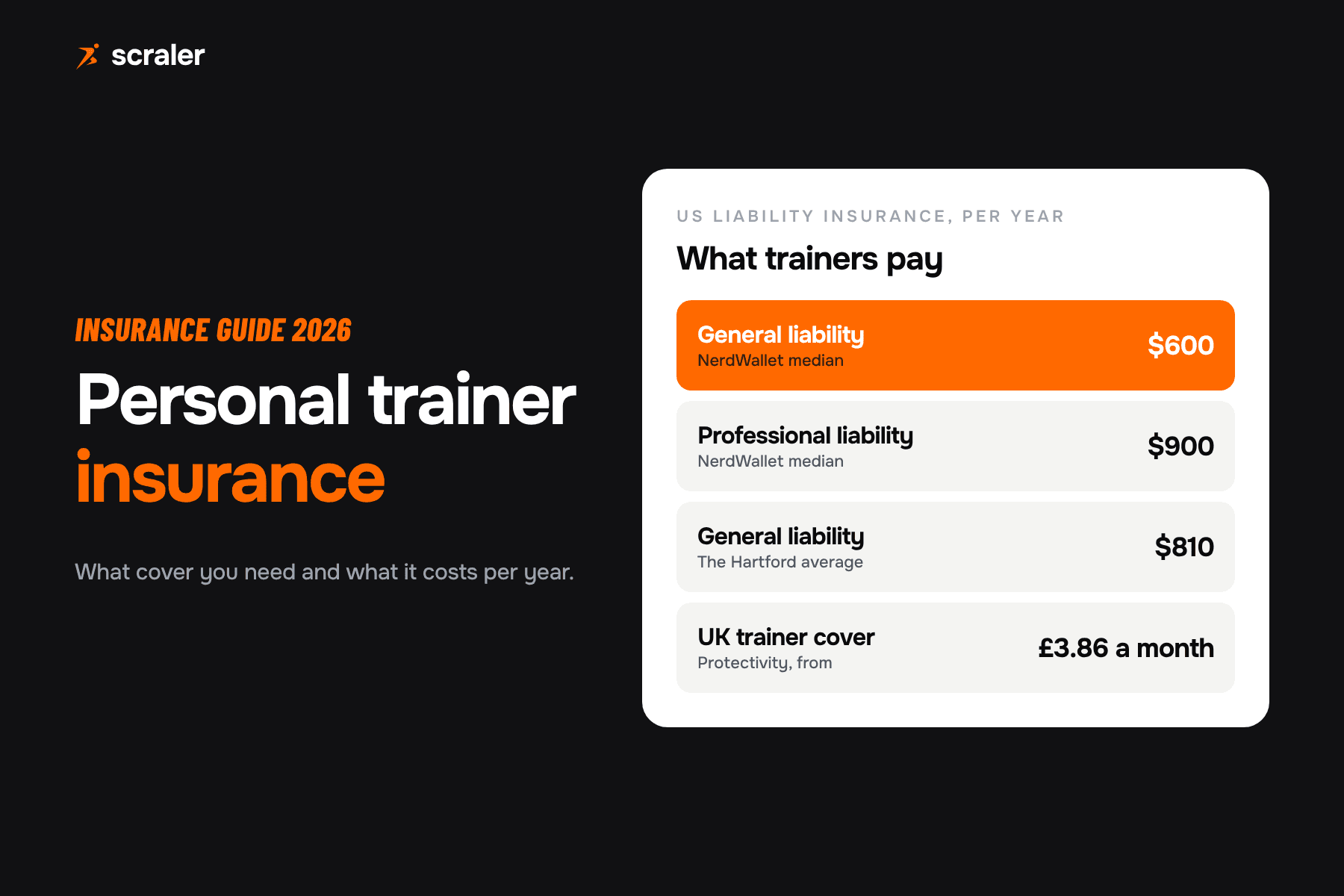
A personal trainer liability waiver, sometimes called a personal training waiver, is a short document where the client states they understand the risks of exercise and accept them. Our template has eight sections: the activity, the client’s health statement, the risks, voluntary participation, the release, emergencies, a parent or guardian line for under 18s and signing. A waiver does not replace cover, so read our guide to insurance for personal trainers too.
- Describe the activity, including training done alone from an app or programme.
- Have the client confirm their health answers are true and that they will report changes.
- List the real risks in plain words, from strains and falls to rare serious events.
- State that the client takes part freely and will stop if they feel pain or dizziness.
- Add the release itself, in clear wording, and keep it as narrow as you can.
- Cover emergency medical help and a parent or guardian signature for minors.
Our waiver deliberately keeps the release modest. It covers ordinary negligence and says it does not cover gross negligence, recklessness or deliberate harm. That is not just caution. Courts treat these clauses carefully, as the next section explains.
Will a liability waiver hold up in court?
Sometimes, but not always, and it depends on where you are. The Legal Information Institute at Cornell calls a waiver an exculpatory clause, a clause that releases or limits one party’s liability. It says courts scrutinize them, and may refuse to enforce one that is overly broad, violates public policy, is not clearly disclosed to the person signing, or tries to waive liability for gross negligence or intentional misconduct.
It also notes that an express assumption of risk, typically done through a signed waiver, generally prevents an injured person recovering beyond the waiver’s terms so long as it is not against public policy. The related idea of implied assumption of risk has been merged into comparative negligence in many places, and abolished in some, such as Oregon. So a waiver helps, and it is evidence the client was told the risks, but it is not a shield. Insurance and good practice, such as a screening before training and sensible progressions, still do the heavy lifting.
Waiver, contract or PAR-Q: which do you need?
Most trainers need all three, and each does a different job. The contract sets the commercial terms. The waiver records the client’s acceptance of risk. The PAR-Q, or another health screening, tells you whether the client should see a doctor before you train them.
- 1Agree the offer
Share the package and price, then send the contract.
- 2Sign the contract
Both sides sign. Keep a copy with the client.
- 3Sign the waiver
A separate page, read on its own, signed before training.
- 4Screen health
PAR-Q and intake form. Any yes answer is handled first.
- 5Start training
First session only after the three are on file.
How should a cancellation clause work?
A good cancellation clause names a notice period, says what a late cancellation or no show costs, and says what you owe when you cancel. Our template leaves the hours blank because 12, 24 and 48 hours all work depending on your schedule. Pick a rule you will actually apply.
Worked example: you set 24 hours notice at a $75 session. A client cancels 3 hours before, and the clause says a late cancellation is charged in full, so $75 comes off their package. Make an exception for illness and emergencies, and say that in the clause so it is your decision, not an argument.
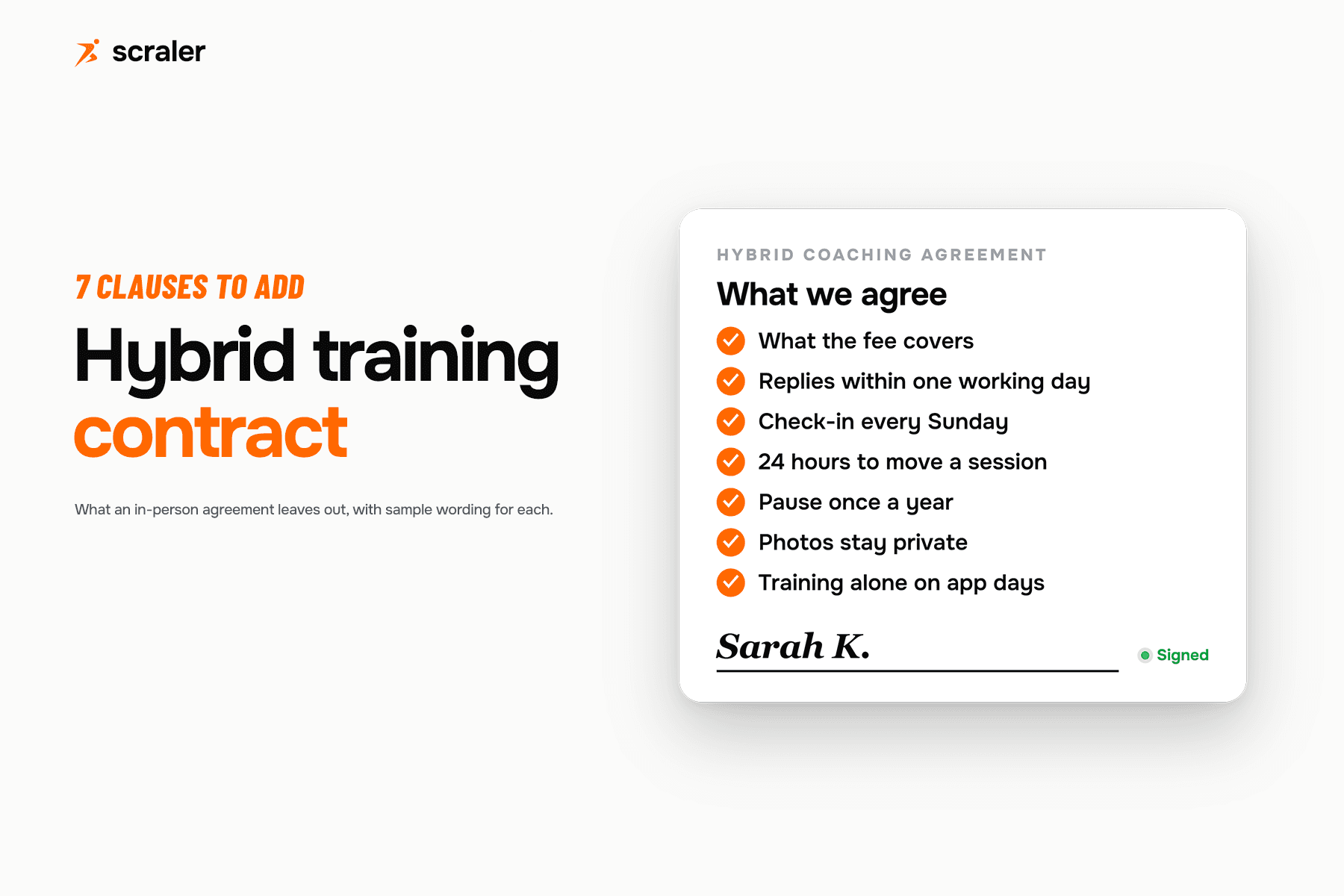
If you sell hybrid memberships, where clients get both in person sessions and app coaching, cancellations get more complicated, plus you need clauses on reply times, check-ins and workouts done alone. Those are covered in our hybrid personal training contract guide. Before you set the fees in clause 2, check what you should charge with the personal trainer rate calculator and our personal training prices guide.
Can clients sign a personal training contract electronically?
In the US, generally yes. Under federal law, 15 U.S. Code section 7001, a contract may not be denied legal effect, validity or enforceability solely because an electronic signature or electronic record was used in its formation. Other countries have their own e-signature rules, and some documents have extra requirements, so ask your lawyer. Trainerize also lists digital signatures as a practical step, because clients sign during onboarding instead of leaving it for the first session.
Whatever you use, keep a dated copy of what the client signed. If you change the contract later, have existing clients agree to the new version in writing, and review the documents at least once a year.
How do you use this personal training contract template?
- 1.Download both PDFs and read them in full. Delete any clause that does not fit your business.
- 2.Fill in the blanks once, then copy the wording into your own document or form so you can reuse it.
- 3.Send the pack to a local lawyer for review, with your prices and the way you work.
- 4.Send the final contract and waiver with every new client booking, before the first session.
- 5.Store the signed copies on the client record, next to their intake form and screening.
In Scraler you can build your own onboarding forms and keep client answers on the client profile next to their programme and check-ins, so the paperwork sits where you coach. The signed contract itself still needs your own signing method, such as a signature tool or a printed copy, kept with the client file.
Build your intake and screening forms once, send them to every new client and keep the answers on the client profile.
See client check-ins and formsFrequently asked questions
- Do personal trainers need a contract?
- It is strongly advised. A written contract sets the services, fees and cancellation rules, and gives you a record if a client disputes a payment or an injury. Trainerize says most trainers need both a contract and a liability waiver.
- Is the personal training contract template free?
- Yes. Download the contract and the liability waiver as PDFs from this page. Copy, print and adapt them for your own business. They are general templates, not legal advice, so have a local lawyer review them.
- What is the difference between a waiver and a contract?
- A contract covers the whole business relationship: services, fees, cancellations and ending the agreement. A waiver is narrower. It records that the client understands and accepts the risks of exercise and releases certain claims.
- Is a liability waiver legally binding?
- It depends on where you are. Courts scrutinize these clauses and may refuse to enforce one that is overly broad, against public policy, not clearly disclosed or aimed at gross negligence. Ask a local lawyer how waivers are treated in your area.
- Can a client sign the agreement online?
- In the US, federal law says a contract cannot be denied validity solely because an electronic signature was used. Rules in other countries differ, so check locally and keep a dated copy of whatever the client signs.
- How often should I update my contract?
- Review it at least once a year, and whenever your services, prices, business structure or local rules change. Trainerize gives the same advice.